Activists across the globe are set to hold May Day rallies on Friday, demanding peace, higher wages, and improved working conditions as many workers grapple with rising energy costs and diminished purchasing power tied to the ongoing conflict in Iran.
May Day, a public holiday in numerous countries, will see demonstrations in many of the world's major cities, some of which have historically turned violent.
Rising Energy Prices and Living Costs
The surge in living costs linked to the Middle East conflict is expected to be a central theme in Friday's rallies. In Manila, Philippines, protest organizers anticipate large crowds of workers. Renato Reyes, a leader of the left-wing group Bayan, told the Associated Press: "There will be a louder call for higher wages and economic relief because of the unprecedented spikes in fuel prices."

Josua Mata, leader of the SENTRO umbrella group of labor federations, noted: "Every Filipino worker now is aware that the situation here is deeply connected to the global crisis." In Indonesia, labor unions have warned of worsening economic pressures. Said Iqbal, president of the Indonesian Trade Union Confederation, stated: "Workers are already living paycheck to paycheck."
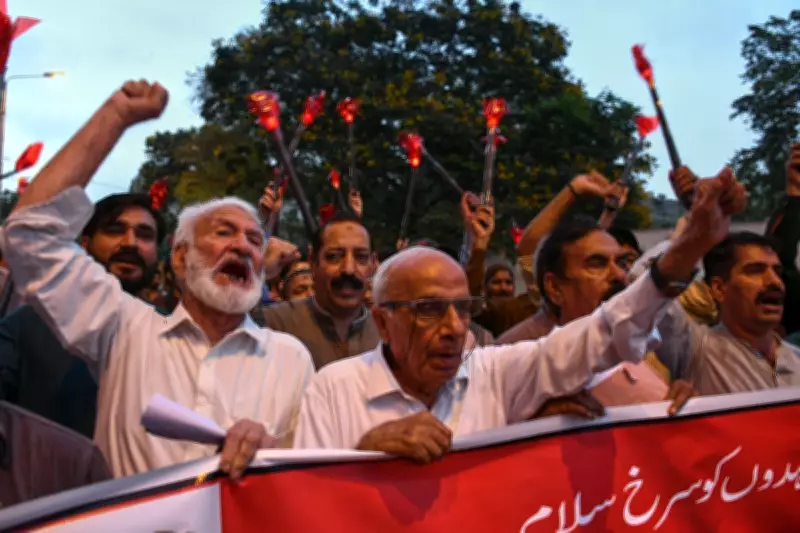
In Pakistan, May Day is a public holiday marked by rallies, but many daily wage earners cannot afford to take time off. Mohammad Maskeen, a 55-year-old construction worker near Islamabad, lamented: "How will I bring vegetables and other necessities home if I don't work?" Rising oil prices have fueled inflation, estimated at about 16%, in a country heavily reliant on financial support from the International Monetary Fund and allied nations.
Demonstrations Across the World
Workers' unions traditionally use May Day to rally around wages, pensions, inequality, and broader political issues. Protests are planned from Seoul, Jakarta, and Istanbul to most European Union capitals and cities across the United States.
In France, unions have called for demonstrations in Paris and elsewhere under the slogan "bread, peace and freedom," linking workers' daily concerns to conflicts in Ukraine and the Middle East. In Italy, the government approved nearly 1 billion euros ($1.17 billion) in job incentives this week, aiming to promote stable employment and curb labor abuses ahead of May Day. The measures extend tax breaks to encourage hiring young people and disadvantaged women, and seek to address exploitation tied to platform-based work. Opposition parties dismissed the package as "pure propaganda."
In Portugal, proposed labor law changes by the center-right government sparked a general strike and street protests last year. There is still no deal after nine months of negotiations with unions and employers. Unions say the proposals would weaken workers' rights, including by expanding overtime limits and reducing some benefits.
France's Mandatory Day Off
May Day carries special meaning this year in France after a heated debate about whether employees should be allowed to work on the country's most protected public holiday — the only day when most employees have a mandatory paid day off. Almost all businesses, shops, and malls are closed, with only essential sectors such as hospitals, transport, and hotels exempt. A recent parliamentary proposal to expand work on the day prompted major outcry from unions and left-wing politicians. "Don't touch May Day," workers' unions said in a joint statement. Faced with the controversy, the government this week introduced a bill meant to expand May Day work to people staffing bakeries and florists. It is customary in France to give lily of the valley flowers on May Day as a symbol of good luck. Small and Medium-sized Businesses Minister Serge Papin said: "May 1 is not just any day. It symbolizes social gains stemming from a century of building social rules that have led to the labor code we know in France. It is indeed a special day."

Calls for Street Protests and Boycotts in the US
Activists and labor unions are organizing street protests and boycotts across the United States, where May Day is not a federal holiday. May Day Strong, a coalition of activist groups and labor unions, has called on people to protest under the banner of "workers over billionaires." Voicing strong opposition to President Donald Trump's policies, organizers listed thousands of May Day actions across the country and are seeking an economic blackout through "no school, no work, no shopping." Demands include taxing the rich and ending the Trump administration's immigration crackdown. While labor and immigrant rights are historically intertwined, the focus of May Day rallies in the U.S. shifted to immigration in 2006, when roughly 1 million people — including nearly half a million in Chicago alone — took to the streets to protest federal legislation that would have made living in the U.S. without legal permission a felony.
Roots in Chicago
May Day, or International Workers' Day, traces back more than a century to a pivotal period in U.S. labor history. In the 1880s, unions pushed for an eight-hour workday through strikes and demonstrations. In May 1886, a Chicago rally turned deadly when a bomb exploded and police responded with gunfire. Several labor activists — most of them immigrants — were convicted of conspiracy and other charges; four were executed. Unions later designated May 1 to honor workers. A monument in Chicago's Haymarket Square commemorates them with the inscription: "Dedicated to all workers of the world." May Day is now observed in much of the world, from Europe to Latin America, Africa, and Asia.