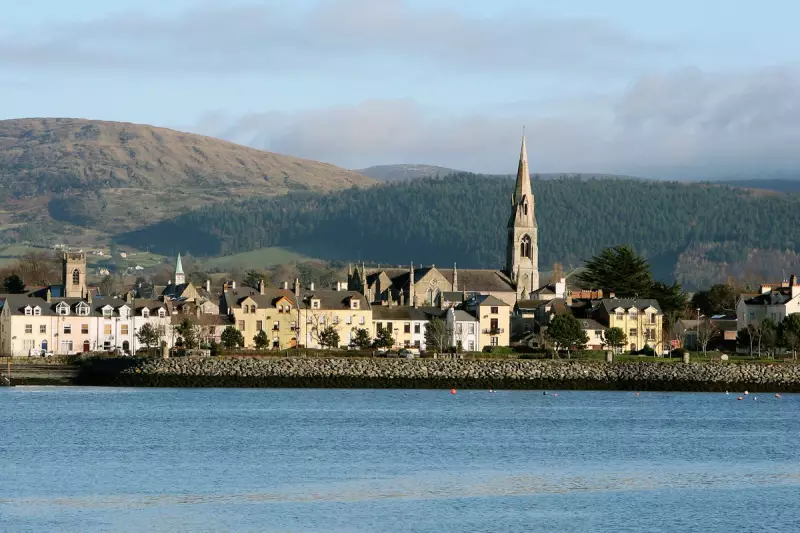
Newly released state papers have revealed the depth of anger within the Irish government following a shocking 1991 incident in which a British marine allegedly held a gun to the neck of a Dublin sailor on the disputed waters of Carlingford Lough.
A Disturbing Pattern of Boardings
The confrontation was not an isolated event. Throughout the early 1990s, there were several instances where leisure boats on Carlingford Lough were approached by British patrols. This included an incident in July 1990 where two British naval officers armed with submachine guns boarded the yacht of then-Taoiseach Charlie Haughey, who was fortunately not on board at the time.
The frequency of these encounters prompted Irish officials to urgently seek clarification from London on the policy underpinning the boardings in the inlet, which lies between County Louth and County Down.
The Lady Jane Confrontation
The most serious event occurred on Saturday, 1 June 1991. Sir Henry Barnwell from Glenageary was sailing his yacht, the Lady Jane, with his wife Joy and a Swiss friend. According to a Garda file, as the vessel passed the Greenore side of the shore, it was approached by two dinghies.
Two soldiers requested permission to board. When Sir Henry refused and asked for identification, they declined and boarded anyway. The statement records that one soldier announced they were arresting him and taking him to Northern Ireland.
During a struggle over the yacht's tiller, one of the soldiers allegedly put a gun to Sir Henry Barnwell's neck and released the safety catch. The altercation damaged the vessel, straining the tiller socket and ripping out the autopilot plug.
The tense standoff ended only after the Irish party heard a radio message stating, "they have you in the Republic", upon which the British marines departed.
Diplomatic Fallout and Official Anger
Deeply disturbed, Sir Henry wrote to Taoiseach Charlie Haughey on 5 June 1991, describing how he and his companions continued to "shake with fear and trepidation for the remainder of the day." He expressed fear that the British would "concoct some denial" and warned of a potential fatality if such patrols continued.
Haughey responded personally on 17 June, assuring Barnwell that his concern had been immediately conveyed to British authorities "in strong terms" via the Anglo-Irish Secretariat. Irish civil servants were scathing in their internal assessments, calling the gun incident a "reckless action that could have had the most serious consequences."
They demanded assurances such events "would not become the norm" and criticised the British response, which initially attempted to frame Barnwell's reluctance to be boarded by armed marines as "suspicious behaviour." Officials also noted it was "entirely unsatisfactory" that Mrs. Barnwell was briefly investigated for misuse of a mayday frequency.
An official investigation by British authorities ultimately stalled, as Sir Henry refused to make a formal statement to the RUC, not recognising their jurisdiction. A government note from September 27 simply concluded, "There the matter rests."
The documents, filed under reference 2025/115/523 in the National Archives of Ireland, provide a stark window into the tensions and security dilemmas that persisted in border areas during the final decade before the Good Friday Agreement.