Afghan Air Defences Engage Pakistani Jets Over Capital as Conflict Intensifies
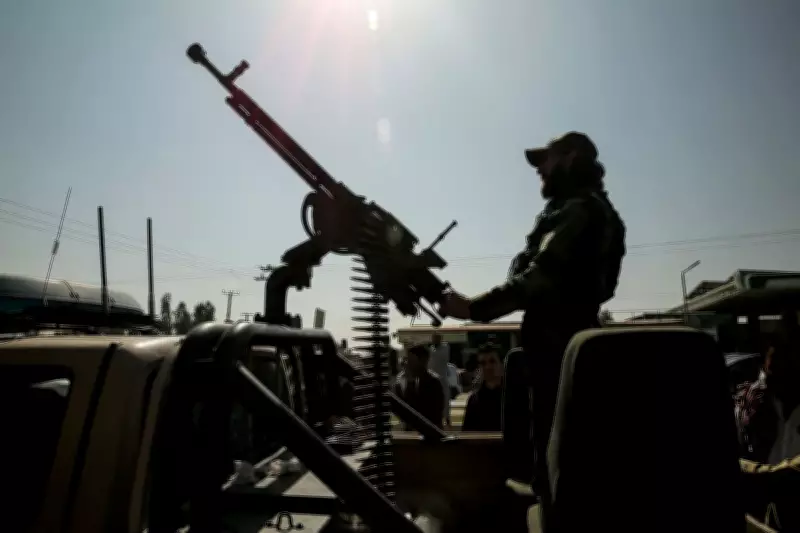
Afghan air defence systems targeted Pakistani military aircraft over Kabul in the early hours of Sunday, marking a significant escalation in hostilities between the two neighbouring nations. The explosions reverberated across parts of the Afghan capital, followed by bursts of gunfire, as what Pakistan's defence minister has described as "open war" entered its fourth consecutive day.
Exchange of Fire and Conflicting Casualty Reports
Zabihullah Mujahid, spokesperson for Afghanistan's Taliban administration, confirmed that Afghan forces had engaged Pakistani jets above the capital. "Air defence attacks were carried out in Kabul against Pakistani aircraft. Kabul residents should not be concerned," he stated. This latest exchange follows Pakistani air strikes inside Afghanistan the previous Sunday, which Islamabad claimed targeted infrastructure linked to Tehreek-e-Taliban Pakistan (TTP), an outlawed militant group.
The conflict has produced dramatically different casualty reports from both sides. Pakistani information minister Attaullah Tarar claimed on Saturday that more than 331 Afghan forces had been killed and over 500 wounded in ongoing strikes, with significant destruction of military infrastructure. Meanwhile, Afghanistan's defence ministry reported that Afghan forces had killed 110 Pakistani soldiers and captured 27 Pakistani posts, according to the Associated Press.

Civilian Impact and Accusations
Afghanistan's deputy government spokesperson, Hamdullah Fitrat, accused Pakistan on Saturday of striking civilian areas across multiple provinces, including Paktika, Khost, Kunar, Nangarhar and Kandahar. He reported 52 fatalities, predominantly women and children, with 66 wounded. In eastern Afghanistan, local authorities stated that Pakistani attacks had destroyed homes and killed at least 11 civilians.
Pakistan maintains that it is targeting only military installations, not civilian areas. The United Nations expressed concern about the reported bombing of major Afghan cities by the Pakistani military on Friday, warning of risks to civilians already living under Taliban rule.
Military Operations and Strategic Statements
Afghan officials stated that their forces launched overnight attacks on Pakistani bases in Miranshah and Spin Wam, destroying installations and inflicting what they described as heavy casualties in response to Pakistani air strikes. Mullah Taj Mohammad Naqshbandi, a commissioner on the Afghan side of the Torkham crossing, declared that "brave forces of the Islamic Emirate destroyed the Pakistani military regime's commissariat, military units, and three important security towers."
Mr Mujahid framed the Afghan attacks on Pakistani military targets as "a message that our hands can reach their throats and that we will respond to every evil act of Pakistan." He added pointedly: "Pakistan has never sought to resolve problems through dialogue."
Broader Context and International Response
The current fighting represents the most intense violence along the 2,600-kilometre frontier in years. Tensions have simmered for months, with border clashes in October killing dozens before a Qatar-mediated ceasefire temporarily halted intense fighting. Subsequent peace talks in Turkey in November failed to secure a lasting agreement.
Since the latest escalation, multiple international actors including Saudi Arabia, Russia, China, the European Union and the United Nations have urged restraint and called for renewed dialogue. Turkey, Saudi Arabia, Qatar and China have offered mediation services. The United States has stated it supports Pakistan's right to defend itself, while Iran, which borders both nations, had offered to facilitate dialogue before recent regional tensions diverted its attention.
Humanitarian Consequences
The conflict has displaced civilians near the northwestern Torkham border crossing, with Pakistani authorities reporting that hundreds of residents have fled their homes. In recent days, Pakistan has also deported dozens of Afghan refugees to Torkham. Ejaz Ul Haq, an Afghan refugee stranded near the crossing with his family, described the difficult situation, noting that many were struggling to secure food during the fasting month of Ramadan.

Afghanistan's interior minister, Sirajuddin Haqqani, warned that the conflict would be "very costly" and noted that only front-line forces had so far been engaged, suggesting the country had yet to fully deploy its military capabilities. Meanwhile, Pakistani security sources indicated that Operation "Ghazab Lil Haq" (Wrath for the Truth) continues, with reports of Afghan posts and camps being destroyed.