The Life and Death of Alexei Navalny: A Fierce Critic of Putin's Regime
Alexei Navalny, a thorn in the side of the Kremlin and Russia's most prominent political dissident, died in prison after being poisoned, according to statements from the United Kingdom and its European allies. Navalny, a fierce critic of Russian President Vladimir Putin, passed away while serving a 19-year jail term in a penal colony located approximately 40 miles from the Arctic Circle. The charges against him were widely regarded as politically motivated.
Navalny's Final Days and International Response
Navalny died in February 2024 after losing consciousness during a walk at the prison facility. He had been incarcerated since January 2021, following his return to Moscow after recuperating in Germany from a nerve agent poisoning that he attributed to the Kremlin. Prior to his arrest, Navalny campaigned vigorously against official corruption, organized major anti-Kremlin protests, and ran for public office.
Now, Britain, France, Germany, Sweden, and the Netherlands have asserted that Navalny succumbed to poisoning with a lethal dart frog toxin. This development has prompted his widow to call for Vladimir Putin to be held accountable for his death. The international community continues to scrutinize the circumstances surrounding his demise.

A Timeline of Navalny's Activism and Legal Battles
1976: Navalny was born on June 4 in a western part of the Moscow region.
1997: He graduated from Russia's RUDN University with a law degree and later earned an economics degree in 2001 while working as a lawyer.
2004: Navalny formed a movement against rampant overdevelopment in Moscow, as documented on his campaign website.
2008: He gained notoriety for alleging corruption in state-run corporations like Gazprom and Rosneft through his blogs and online posts.
2010: Navalny founded RosPil, an anti-corruption project that analyzed spending by state agencies and companies, exposing violations and contesting them in court.
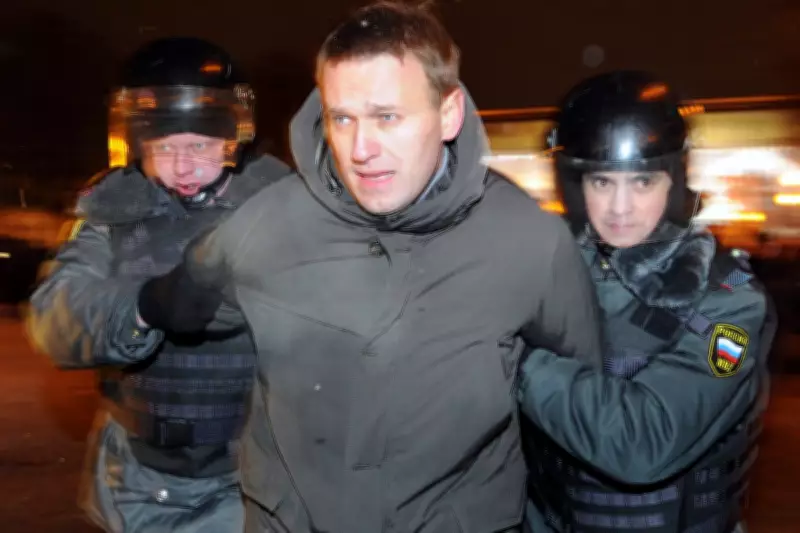
2011: In December, he participated in mass protests sparked by reports of widespread rigging in Russia's parliamentary election, leading to his arrest and a 15-day jail sentence for defying a government official.
2012: In March, following Putin's reelection, mass protests erupted in Moscow. Navalny accused key figures, including then-Deputy Prime Minister Igor Shuvalov and Chechen leader Ramzan Kadyrov, of corruption. In July, he was charged with embezzlement involving Kirovles, a state-owned timber company, which he rejected as politically motivated. In December, another probe was launched into alleged embezzlement at a Navalny-linked subsidiary of Yves Rocher.
2013: Navalny ran for mayor of Moscow, finishing second with 27% of the vote after a successful fundraising campaign. In July, he was convicted in the Kirovles case and sentenced to five years in prison, but released pending appeal. In October, he received a suspended sentence in that case.
2014: In February, Navalny was placed under house arrest in connection with the Yves Rocher case and banned from using the internet. In December, he and his brother Oleg were found guilty of fraud in the Yves Rocher case, with Navalny receiving a suspended sentence and his brother a prison term.
2015: In December, Navalny's Foundation for Fighting Corruption released a YouTube documentary called Chaika, accusing then-Prosecutor General Yury Chaika of corruption, which garnered 26 million views.
2016: In February, the European Court of Human Rights ruled that Russia violated Navalny's right to a fair trial in the Kirovles case. In November, Russia's Supreme Court overturned his sentence and sent the case back for review. In December, Navalny announced his intention to run in the 2018 presidential election.

2017: In February, the Kirov court upheld his suspended sentence. In March, he released a documentary accusing then-Prime Minister Dmitry Medvedev of corruption, sparking protests. In April, unidentified assailants threw a green disinfectant in his face, damaging his right eye. In October, the European Court of Human Rights found his fraud conviction arbitrary. In December, he was barred from running for president.
2019: In July, members of Navalny's team were barred from running for Moscow city council, leading to protests. His team promoted the Smart Voting strategy, which helped the Kremlin's United Russia party lose its majority.
2020: In August, Navalny fell ill on a flight from Tomsk and was hospitalized in a coma. German authorities confirmed he was poisoned with a Soviet-era nerve agent, which he blamed on the Kremlin.
2021: In January, Navalny was arrested upon returning to Russia, triggering protests. In February, a court ordered him to serve 2.5 years in prison for parole violation. In June, his foundation was outlawed as extremist.
2022: In February, Russia invaded Ukraine, and Navalny condemned the war from prison. In March, he was sentenced to an additional nine years for embezzlement and contempt of court. In July, his team relaunched the Anti-Corruption Foundation as an international organization.
2023: Over 400 Russian doctors signed an open letter urging an end to abuse of Navalny. In March, a film about him won an Oscar. In April, he faced new extremism charges. In August, he was sentenced to 19 years for extremism. In December, he was transferred to a penal colony north of the Arctic Circle.
2024: In January, Navalny sarcastically praised the polar conditions at the prison and was placed in solitary confinement. On February 16, Russia's prison agency announced his death at age 47.
Legacy and Ongoing Investigations
Navalny's death has intensified calls for accountability against the Russian state. His activism, marked by relentless opposition to corruption and authoritarianism, leaves a lasting impact on Russian politics. The international community continues to demand justice, with his widow and supporters urging that Putin be held responsible for the alleged poisoning. As investigations proceed, Navalny's legacy as a symbol of resistance endures, challenging the Kremlin's grip on power.