Super Bowl Halftime Showdown: Bad Bunny and Kid Rock Compete for National Attention
The morning after the Seattle Seahawks secured their Super Bowl championship victory, public attention swiftly shifted to another highly anticipated contest of the evening: the dueling halftime performances between global superstar Bad Bunny and conservative icon Kid Rock. While official Nielsen ratings for the NFL's official halftime show featuring Bad Bunny will not be released until Tuesday, early estimates and competing broadcasts have framed the event as a cultural and political battleground.
A Polarizing Cultural Competition
The race to capture national attention during America's most-watched television event has been cast as a competition to define the country's cultural identity. The conservative organization Turning Point USA arranged the alternative "All American Halftime Show" featuring Kid Rock, which was organized with former President Donald Trump's explicit blessing. This was positioned as a protest against the NFL's selection of Bad Bunny, a U.S. citizen born in Puerto Rico, as its headline performer.
Spokesperson Andrew Kolvet told Fox News host Brian Kilmeade that "at one point" approximately 10 million viewers were watching the Kid Rock show live across various social media platforms. Although the organization did not release precise figures when questioned on Monday, YouTube alone reportedly saw around 5 million concurrent live viewers during the broadcast.

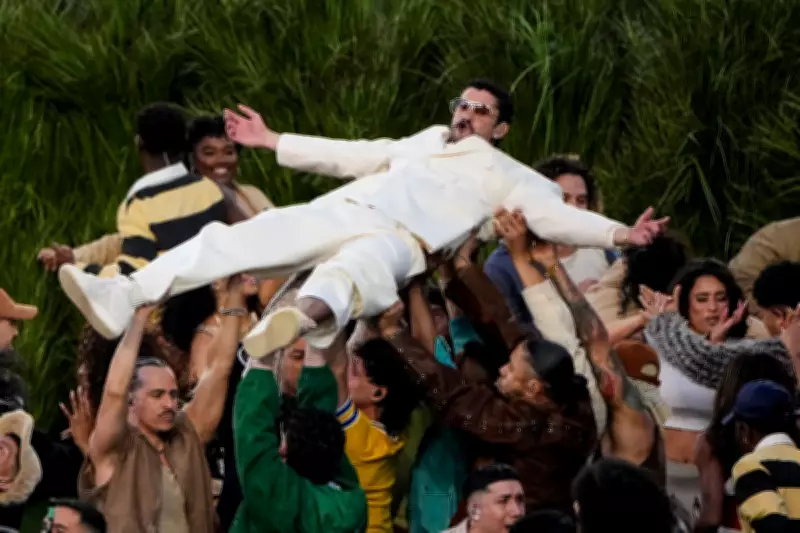
Bad Bunny, born Benito Antonio Martínez Ocasio and recognized as the most streamed artist of 2025, delivered a performance rich with Puerto Rican cultural symbolism at Levi's Stadium in Santa Clara, California. His show emphasized themes of unity, featuring a prominent screen message reading "The only thing more powerful than hate is love." The setlist included tracks from his Grammy-winning album "Debí Tirar Más Fotos," the first all-Spanish album to win Album of the Year, while subtly addressing Puerto Rico's political challenges including chronic power outages and sovereignty discussions.
In contrast, Kid Rock's 30-minute alternative show included a video tribute to the late conservative activist Charlie Kirk and featured country musicians Brantley Gilbert, Gabby Barrett, and Lee Brice. Several performers declared that their show represented "the real America," with Kolvet describing the viewership as a "massive success" that proved "people are paying attention." The program aired on right-leaning networks including OAN News and Trinity Broadcasting Network.
Viewership Comparisons and Political Reactions
While Kid Rock's estimated 10 million viewers would be substantially overshadowed by recent Super Bowl halftime records—Kendrick Lamar attracted 133.5 million viewers in 2025, and Usher drew 123.4 million in 2024—the competing shows highlighted America's deepening political divisions. The performances occurred during a period of heightened polarization surrounding immigration policies and social justice, coming weeks after federal agents killed two white American citizens in Minneapolis, a city previously in the global spotlight during George Floyd protests.
Former President Trump, who skipped the Super Bowl and stated he would not watch Bad Bunny's performance, criticized the official halftime show on Truth Social as "one of the worst, EVER." He wrote: "It makes no sense, is an affront to the Greatness of America, and doesn’t represent our standards of Success, Creativity, or Excellence. This 'Show' is just a 'slap in the face' to our Country."
Bad Bunny has been a vocal opponent of Immigration and Customs Enforcement (ICE), though he made no direct mention of the agency during his performance. Kid Rock remains one of Trump's most prominent celebrity allies, further emphasizing the political undertones of the halftime competition. This cultural showdown demonstrates how major entertainment events increasingly reflect and amplify the nation's political fractures.