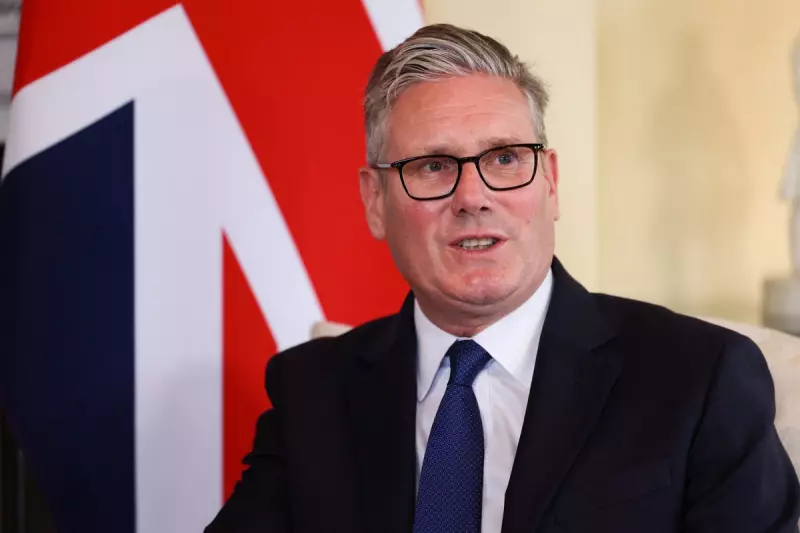
Downing Street has significantly cooled expectations that Britain will formally designate Iran's Islamic Revolutionary Guard Corps (IRGC) as a terrorist organisation, despite intense pressure following a brutal crackdown on protests inside the country.
Symbolic Gesture Versus Practical Impact
The Prime Minister's official spokesman pointed to recent comments by the former head of MI6, Sir Richard Moore, who argued that such a ban would be largely symbolic. Sir Richard, who led the Secret Intelligence Service from 2020 to 2025, suggested the legal instrument for proscription was designed for non-state terror groups, not parts of a foreign state like the IRGC.
"The danger is that something like that is mostly about us feeling better about ourselves," Sir Richard told BBC Radio 4's Today programme. He warned it would not have a real impact on the IRGC's activities.
Government Stance Amid Escalating Crisis
The UK government has condemned the Iranian regime's violent suppression of demonstrations, which began on December 28 over economic woes and have morphed into the most serious challenge to Supreme Leader Ayatollah Ali Khamenei's rule in years. According to the US-based Human Rights Activists News Agency, the death toll has reached at least 544 people, including 496 protesters and 48 security force members, with over 10,000 detained.
When questioned about proscribing the IRGC, the PM's spokesman stated the government's position that designation is reserved for domestic terror groups, not foreign state bodies. Trade Secretary Peter Kyle echoed this, telling Times Radio that using existing domestic legislation against the Iranian military branch would not be "appropriate."
International Pressure and Domestic Calls
Mr Kyle emphasised that the government had used sanctions against Iran "to the full extent we can" and revealed that Sir Keir Starmer is working with international partners to explore how to bring further pressure on Tehran. He affirmed the UK's deep concern for Iranian civilians, stating, "the people of Iran should get the government they choose."
Over the weekend, demonstrators gathered outside Downing Street to demand the IRGC be banned—a move supported by cross-party figures including Labour peer Lord Spellar and former Tory leader Sir Iain Duncan Smith.
Meanwhile, Foreign Secretary Yvette Cooper confirmed she spoke with her Iranian counterpart, Hossein Amir-Abdollahian, on Monday, demanding an immediate end to the violence and the protection of fundamental rights and British nationals.
The situation remains fluid, with US President Donald Trump stating on Sunday that Iran had proposed negotiations, though he did not rule out a potential response to the crackdown. When asked if Britain would support US military action, Mr Kyle told Sky News the government needed to understand what was being proposed, adding, "We have to see how this unfolds."