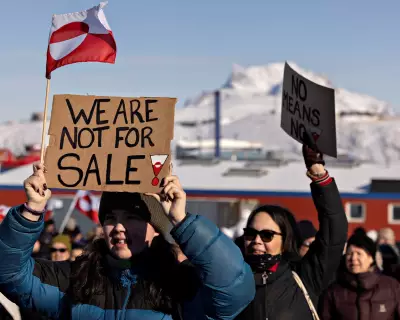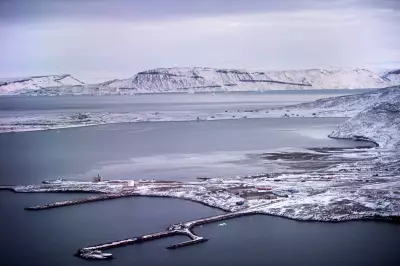
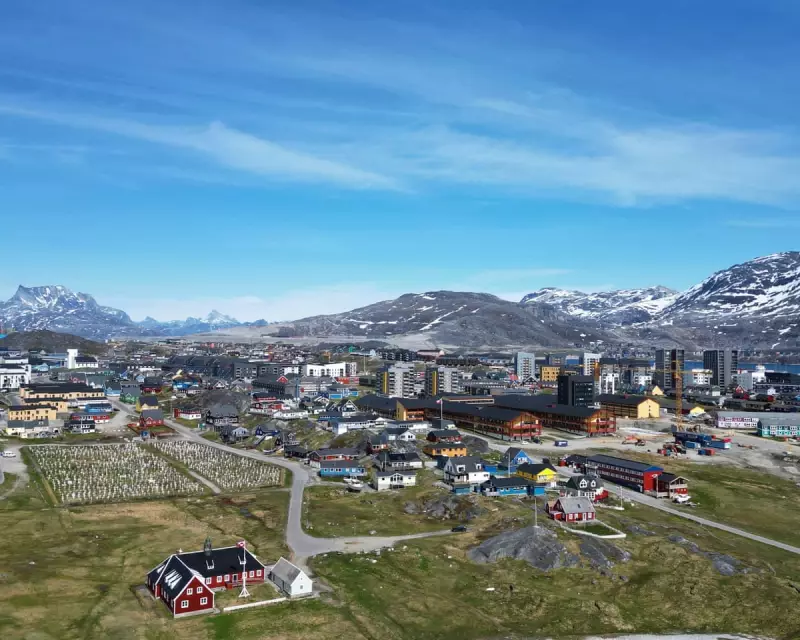
The Trump administration's persistent claims over Greenland, justified on national security grounds, have placed the European Union and NATO in a precarious diplomatic position. The US president has stated that gaining control of the vast Arctic territory is essential and has suggested the US will act "whether they like it or not." This has triggered urgent discussions in European capitals on how to defend the sovereignty of Greenland, a self-governing part of Denmark.
Diplomatic and Military Deterrence Strategies
European governments have initiated a lobbying effort in Washington, led by Denmark's ambassador, Jesper Møller Sørensen, and Greenland's envoy, Jacob Isbosethsen. Their goal is to persuade US lawmakers to dissuade President Trump from his territorial ambitions. A key diplomatic argument centres on an existing US-Danish defence treaty from 1951, updated in 2004, which already permits a significant expansion of the American military footprint on the island.
Furthermore, officials are sending a stark message that any US action against Greenland—effectively an attack on a NATO ally through Denmark—would mean "the end of NATO," as stated by Danish Prime Minister Mette Frederiksen. Concurrently, NATO ambassadors have reportedly agreed to boost military spending and exercises in the Arctic to address stated US security concerns, potentially modelling new initiatives on existing operations like Baltic Sentry.
Economic Leverage and Investment Counteroffers
In theory, the EU wields substantial economic power. It could deploy measures such as the anti-coercion instrument, or "trade bazooka," to bar US goods, apply tariffs, or block investments. However, achieving unanimous agreement among member states to use this tool remains unlikely, given fears of economic self-harm and a desire to maintain US support on other issues like Ukraine.
An alternative strategy involves outbidding US investment promises. The EU is considering a proposal to double its financial commitments to Greenland from 2028, potentially matching the annual Danish grant of around €530 million. This move aims to secure Greenland's economic future and independence aspirations, offering an alternative to reliance on US capital and its associated corporate and social policy risks.
The Prospect of a European Military Signal
Some analysts argue that softer measures may not suffice, given Trump's expressed psychological need for US "ownership" of the island. Think-tank experts Moreno Bertoldi and Marco Buti have proposed that the EU should "proactively protect Greenland from US expansionism" by activating its rapid deployment capacity. This framework can mobilise up to 5,000 troops from member states for crisis response outside the bloc.
Deploying European troops to Greenland, with agreement from Copenhagen and Nuuk, would serve as a tangible signal of commitment to territorial integrity. While not preventing annexation, it would dramatically complicate any US move, creating a scenario where the US would risk taking allied troops prisoner—a spectacle that would devastate US credibility and transatlantic relations. German and French officials have already hinted at plans involving European deterrence in the region.
Ultimately, while a direct military confrontation is deemed unthinkable, the potential consequences of a US move against Greenland—shattering NATO, disrupting markets, and obliterating global trust—are seen as a powerful deterrent. The coming months will test whether European unity and strategic planning can persuade Washington to stand down.