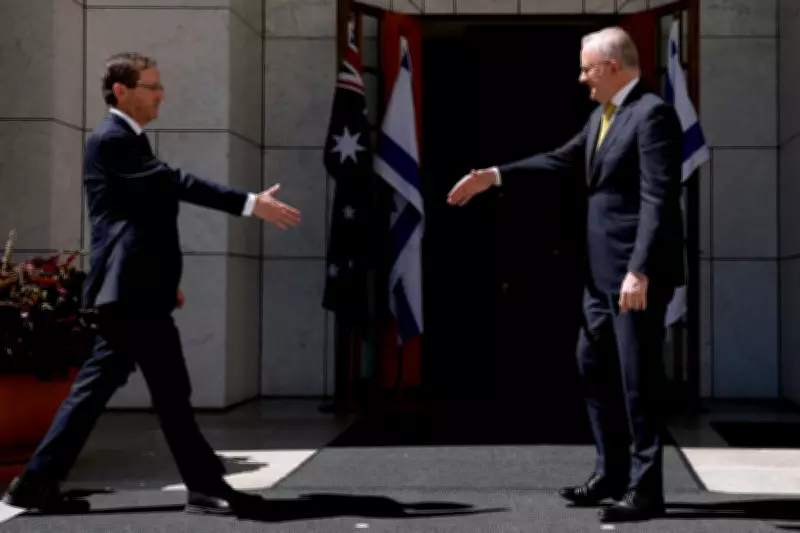
Israeli President Isaac Herzog concluded a four-day visit to Australia on 11 February 2026, leaving him feeling "energised" but sparking a complex mix of solidarity and "serious angst" within the nation's Jewish community. The trip, which included a high-security meeting with Prime Minister Anthony Albanese at Parliament House in Canberra, was primarily intended to console victims of the Bondi beach terror attack, where 15 people were killed during a Hanukah celebration.
Controversy and Clashes Mark Presidential Tour
Herzog's visit was marred by controversy from the outset, with police in Sydney clashing violently with protesters and Muslims praying in the streets, leading to an independent investigation. The Israeli president moved between locations under secrecy and tight security, highlighting the tense atmosphere surrounding his diplomatic mission.
Albanese Emphasises Unity and Sympathy
Prime Minister Anthony Albanese defended the visit, stating it would foster unity in Australia. He emphasised that Herzog came "to offer sympathy and solidarity to people who are mourning and offer his support to members of Australia's Jewish community" following the Bondi attack. Albanese repeatedly noted that Herzog, as Israel's head of state, should not be conflated with the Netanyahu government, urging critics to direct their grievances appropriately.

Herzog's Message of Hope and Diplomacy
In a gathering with Melbourne's Jewish community, Herzog expressed being buoyed by "hope" during his stay, saying he would return to Israel feeling empowered after "seeing first-hand the beauty in this community." He added, "While we came to give strength to you, we leave with more strength. We came to give inspiration and we leave inspired and energised." Herzog also framed the visit as a diplomatic effort "to bring the relations between our nations on a new beginning and a better future," a subtle reference to Australia's recent recognition of Palestine.
Mixed Reactions Within the Jewish Community
While much of Australia's Jewish community supported Herzog's visit, significant disquiet emerged. Alex Ryvchin, co-chief executive of the Executive Council of Australian Jewry, hailed the visit as a "tremendous success," particularly for victims' families, noting, "I could see how much it meant to them. I could see some of them weeping in his arms and the arms of the first lady." David Ossip, president of the NSW Jewish Board of Deputies, called it "an important practical step towards peace."
However, Jesse McNicoll from Jewish Voices of Inner Sydney expressed disgust at the invitation, arguing it created "serious angst" in Palestinian and Arab communities and reinforced antisemitic tropes about dual loyalty. McNicoll highlighted that many Jews in Australia oppose Israel's actions but fear ostracisation, leading to intra-communal tensions.
Family Divisions and Personal Struggles
The visit even divided Jewish families, such as Sarah, who withheld her full name to avoid upsetting her elderly parents. While her parents attended a Herzog event, she protested against it, describing a rift over perceptions of the Palestine Justice Movement. Sarah recounted being called a "self-hating Jew" and condemned for not raising her children Jewish, yet she felt grateful for the welcome at protests against the war in Gaza.
Broader Implications and Community Impact
Herzog's tour underscored the deep-seated divisions within Australia's Jewish community, balancing acts of solidarity with victims against broader political and ethical debates. The protests and security measures reflected ongoing global tensions, while Herzog's diplomatic overtures aimed to reset Australia-Israel relations amidst shifting international stances. As the visit concluded, it left a legacy of both empowerment and conflict, highlighting the complex interplay between national unity, community identity, and international politics in the wake of tragedy.