Iranian Forces Claim Successful Attack on US Naval Vessel
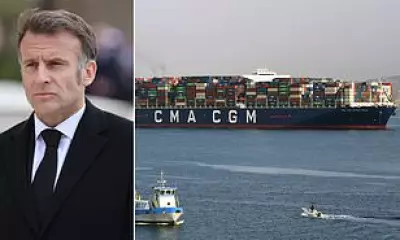
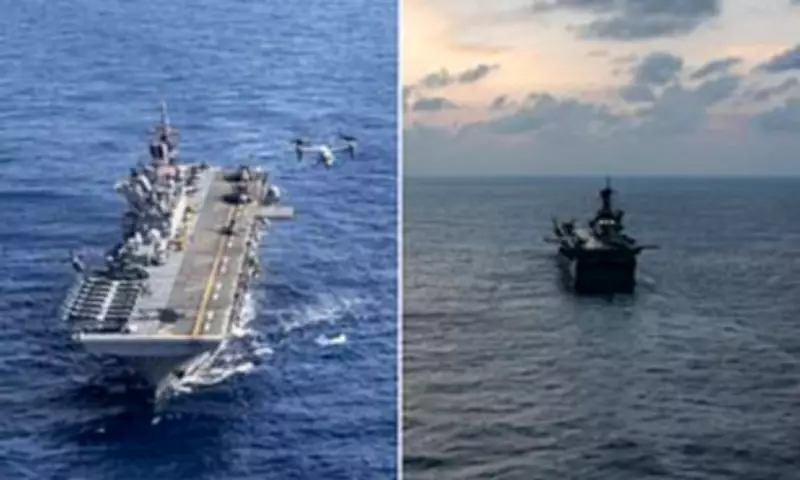
The Islamic Revolutionary Guard Corps (IRGC) has asserted that it targeted the United States amphibious assault ship LHA-7, known as the USS Tripoli, compelling the vessel to retreat into the southern Indian Ocean. According to Iranian military statements, the operation also involved striking a container ship identified as 'SDN7', which they allege belongs to Israel. The precise location of this maritime attack remains undisclosed by Iranian authorities.
USS Tripoli: A Formidable Naval Presence
The USS Tripoli, a significant asset of the US Navy, measures an impressive 844 feet in length and 106 feet in width. This warship is heavily armed, featuring four missile launchers, two automated gun mounts, and seven machine guns. It entered the Middle Eastern region in late March, as confirmed by US Central Command (CENTCOM), carrying a substantial force of 3,500 sailors and Marines, along with a complement of transport and fighter aircraft. Serving as the flagship for the 31st Marine Expeditionary Unit, its presence underscores US military commitments in the area. The United States has yet to comment on whether the warship was indeed attacked, leaving the Iranian claims unverified by Western sources.
Escalating Regional Hostilities and Retaliatory Strikes
This maritime incident occurs against a backdrop of intensifying conflict between Iran and Israel. On Monday, Israeli forces struck Iran's largest petrochemical complex in Assaluyeh, a facility responsible for approximately 50 percent of the country's petrochemical production, valued at tens of billions of dollars, according to Israeli Defence Minister Israel Katz. In a separate operation, a senior Revolutionary Guards commander was killed by an Israeli strike. Iran has retaliated with drone and missile attacks targeting Israel, Kuwait, and the United Arab Emirates, warning of "much more devastating" assaults if threats against civilian infrastructure are executed.

The Strait of Hormuz, a critical global energy chokepoint, has become a focal point of tension. Iran has largely blocked the strait, causing oil and gas prices to surge and prompting international measures to mitigate economic fallout. Former US President Donald Trump issued a stark, expletive-laden demand on social media, threatening to destroy Iranian bridges and power plants if the strait is not reopened by a specified deadline. Iran's Revolutionary Guards have defiantly stated that Hormuz "will never return to its former status, especially for the US and Israel."
Diplomatic Efforts and Global Repercussions
Amid the spiraling violence, reports indicate potential diplomatic initiatives to halt the fighting. Mediated by Pakistan, Egypt, and Turkey, discussions are underway for a 45-day ceasefire to facilitate negotiations for a more permanent peace, as cited by sources from the US, Israel, and regional actors. Egypt's foreign minister confirmed engagement in talks with various governments, including US and Iranian officials, aiming to de-escalate the military situation. However, Iran has repeatedly denied participation in any negotiations with the US or Israel.
The conflict, which erupted on February 28 with US-Israeli strikes that killed Iran's supreme leader Ayatollah Ali Khamenei, has engulfed the Middle East and disrupted the global economy. A worldwide oil squeeze has impacted aviation, leading to measures such as increased jet fuel surcharges and ticket price hikes. Countries like South Korea and Taiwan are rerouting oil shipments via the Red Sea to avoid the Strait of Hormuz altogether.
Widening Conflict and Civilian Impact
Gulf nations allied with the US have been drawn into the war, reporting fresh strikes that have resulted in injuries and property damage. In Kuwait, six individuals were hurt in an attack on a residential area, while the UAE faced missile and drone assaults causing injuries in Abu Dhabi. Jordan has begun compensating citizens for property damage from falling debris. In Israel, four bodies were recovered in Haifa after a missile strike, prompting retaliatory Israeli strikes on targets in Tehran, where Iranian media reported attacks on residential areas and gas outages.

Lebanon has increasingly been involved since Hezbollah targeted Israel on March 2, leading to Israeli invasions of southern Lebanon and pledges to intensify military actions. As the situation remains volatile, European Council chief Antonio Costa has called for a diplomatic solution, condemning attacks on civilian infrastructure as illegal and unacceptable. The ongoing hostilities continue to pose significant risks to regional stability and international security.