US Forces Execute Daring Rescue of Downed Airman 'Dude 44' in Iranian Mountains
American military forces have successfully completed an extraordinary rescue operation to save a weapons system officer who spent nearly two days evading Iranian forces after his F-15E Strike Eagle aircraft was shot down over remote Iranian territory. The dramatic mission involved approximately 100 special operations personnel, dozens of warplanes, and sophisticated deception tactics to extract the airman from a mountain crevice where he had been hiding.
The Initial Incident and Separation
The crisis began when an F-15E Strike Eagle with the call sign 'Dude 44' came under Iranian fire while flying over a remote region of Iran. The aircraft carried two crew members: a pilot and a weapons system officer occupying the rear seat. Demonstrating remarkable presence of mind, both airmen activated their ejection systems as the damaged plane descended, propelling themselves from the cockpit and deploying parachutes before the aircraft crashed within Iranian borders.
The pilot was rescued relatively quickly by two military helicopters on the same day, but the weapons system officer faced a far more perilous situation. Seriously injured during the ejection process and separated from his colleague, the officer found himself alone in hostile territory with only a handgun for protection.

Evasion and Survival Against All Odds
For nearly 48 hours, the injured airman employed advanced survival training to avoid capture by Iranian forces actively hunting him. He embarked on an arduous journey, hiking approximately 20 kilometers and climbing 7,000 feet up a mountain to reach a remote crevice where he could conceal himself. Throughout this ordeal, he managed to evade multiple search parties despite his injuries and limited resources.
Meanwhile, Iranian state media announced they had shot down the American aircraft and offered a substantial bounty of $60,000 for the capture of any surviving crew members. This incentive prompted local militants and tribespeople to join the search, intensifying the danger for the hidden airman.
Complex Rescue Operation Unfolds
As American forces mobilized to locate their missing colleague, they faced significant challenges. Initial rescue attempts were aborted when two helicopters took ground fire, injuring crew members and forcing emergency landings in Kuwait. Additional complications arose when two MC-130J special operations aircraft became stuck in soft terrain, stranding more personnel behind enemy lines.
The United States military implemented a multi-faceted strategy to facilitate the rescue. This included deploying MQ-9 Reaper drones to monitor the area and strike Iranian forces approaching the airman's location. Remarkably, the Central Intelligence Agency conducted a sophisticated deception operation, spreading false intelligence suggesting American forces had already located the airman and were preparing to extract him via maritime routes. This strategic misinformation successfully diverted Iranian attention from the actual rescue zone.
High-Level Coordination and Presidential Involvement
In Washington, Defense Secretary Pete Hegseth and General Dan Caine, Chairman of the Joint Chiefs of Staff, briefed President Donald Trump on the developing situation. Concerned about potential propaganda value if an American airman were captured, Trump immediately authorized rescue plans. The president later described the operation as "one of the most daring Search and Rescue Operations in U.S. History" in a social media post celebrating the successful outcome.
International cooperation played a crucial role, with American forces coordinating intelligence sharing and tactical pauses with Israeli counterparts. Israel conducted complementary strikes against assets that could threaten the evacuation efforts.
Successful Extraction and Aftermath
The breakthrough came when CIA capabilities pinpointed the airman's location to the specific mountain crevice where he had taken refuge. With this precise intelligence, a team from the elite SEAL Team 6 (DEVGRU) flew four MH-6 Little Bird helicopters to extract the officer from his mountainous hiding place.

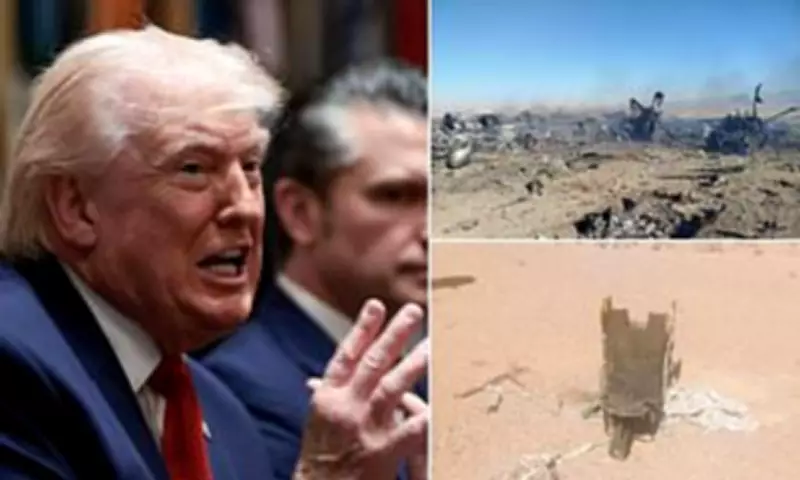
Following the successful rescue, American forces made the difficult decision to destroy the two stranded MC-130J aircraft and at least one helicopter rather than allow the advanced military equipment to fall into Iranian hands. This destruction represented a loss of equipment valued at over $200 million but was deemed necessary to prevent technological compromise.
The rescued weapons system officer was subsequently flown to Kuwait for medical treatment, marking a successful conclusion to the operation with no American casualties reported. This incident represents the first loss of a piloted United States aircraft over enemy territory in more than two decades, underscoring the significance and rarity of such events in contemporary military operations.