Iran Claims Missile Strike on US Carrier Amid Regional Barrage and Global Tensions
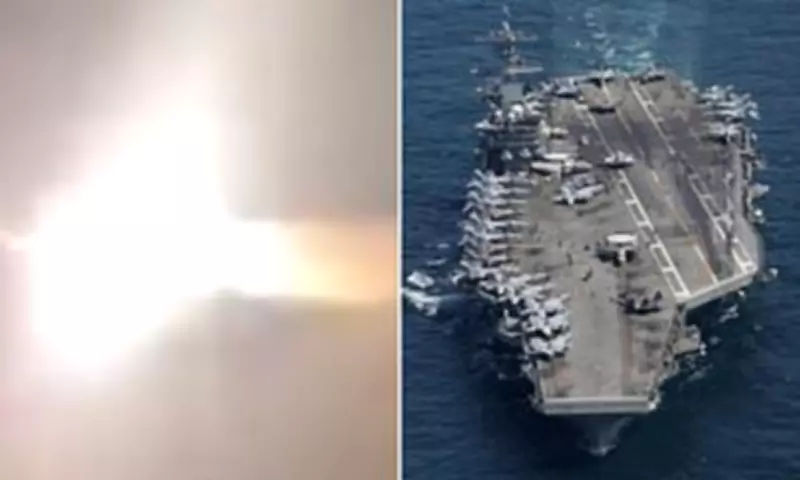
Iran has asserted that it targeted the United States aircraft carrier USS Abraham Lincoln with cruise missiles during a fresh round of devastating strikes across the Middle East on Wednesday. The Islamic Republic released unverifiable footage purportedly showing a missile being fired at the nuclear-powered warship, valued at approximately £1.8 billion, and claimed the vessel was compelled to change position following the barrage in the Arabian Sea.
Iranian Military Statements and Regional Escalation
Admiral Shahram Irani, the chief of Iran's navy, disclosed that a Qadar anti-ship cruise missile was deployed in the alleged attack. He issued a stark warning, stating that the USS Abraham Lincoln and its carrier group are constantly being monitored by Iranian forces. In a statement broadcast on state television, Admiral Irani added, As soon as this hostile fleet comes within range of our missile systems, it will be subjected to powerful strikes by the Iranian Navy. This declaration follows former US President Donald Trump's announcement on Tuesday that all 101 missiles fired at the Abraham Lincoln were successfully intercepted.
Simultaneously, Iran launched a new barrage of missiles at various targets across the region on Wednesday. The regime was accused of aiming at Israel's largest power plant, the Orot facility in Hadera, in defiance of reported agreements for a five-day pause on attacks against energy infrastructure. A ballistic missile landed near the power station, generating massive plumes of smoke, though the plant itself sustained no damage.

Regional Responses and Broader Conflict Dynamics
The attacks triggered significant regional responses:
- Saudi Arabia's defence ministry reported destroying at least eight drones in its oil-rich Eastern Province.
- Missile alert sirens were activated in Bahrain as a precautionary measure.
- Kuwait confirmed shooting down multiple drones, but one struck a fuel tank at Kuwait International Airport, igniting a substantial fire.
These developments occur amid reports that Saudi Arabia and the United Arab Emirates are contemplating joining the conflict, driven by concerns over potential US negotiations with a weakened yet dangerous Iran. Pro-Iran social media accounts circulated an image of a Sejil ballistic missile launch with the caption, One of our senior diplomats, His Excellency Mr Sejil, is heading for negotiations with the Great Satan.
Strategic Threats and Global Economic Implications
Iran signalled on Wednesday that it might mobilise the Houthis, its terror proxy in Yemen, to target vessels in the Bab el-Mandeb Strait. This action would effectively close another critical shipping lane to the Red Sea. A military official emphasised that Iran possesses both the will and the capability to execute such measures in retaliation to any enemy actions. This is perceived as a direct threat should the United States attempt to seize Kharg Island, through which Iran exports 90 percent of its oil.
The potential involvement of the Houthis, who have thus far remained inactive in the conflict, could exacerbate global oil and gas price surges, potentially pushing the world economy toward a severe recession. Concurrently, Israel has intensified its military operations, pounding southern Lebanon and considering a ground invasion against Iranian proxy Hezbollah. Israeli Prime Minister Benjamin Netanyahu stated on Wednesday, We are expanding this security zone to keep the threat of anti-tank missiles away from our communities and our territory. We are simply creating a larger buffer zone. Now the issue of dismantling Hezbollah is at the forefront of our minds. This is also linked to the broader campaign against Iran, which is still in full swing, contrary to what is being reported in the media.

Global Energy Crisis and Diplomatic Pressures
In response to US-Israeli operations, Iran has fired missiles and drones at Gulf neighbours and closed the Strait of Hormuz, permitting only a limited number of ships from friendly nations to pass. This blockade has ignited a global energy crisis, destabilising the world economy. Consequently, the United States faces mounting pressure from allied nations to reopen the strait to alleviate soaring oil prices and mitigate economic turmoil.