Royal Navy Nuclear Submarine HMS Anson Deploys to Arabian Sea with Attack Capability
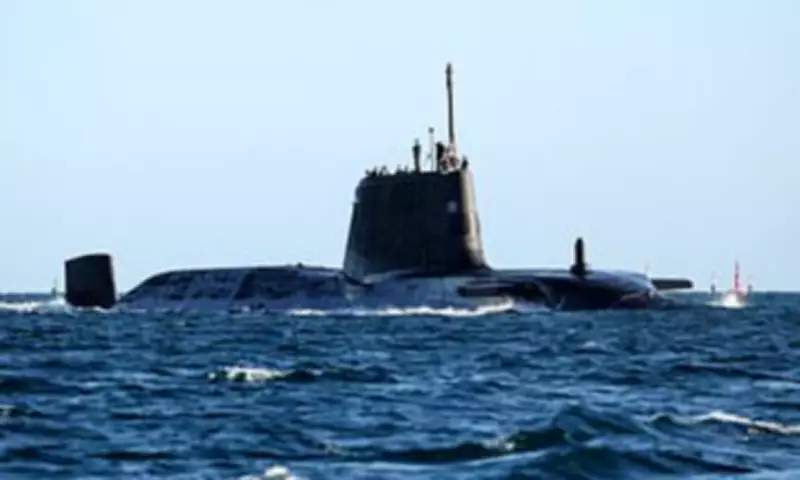
A nuclear-powered Royal Navy submarine has arrived in the Arabian Sea, bringing with it the capacity to launch cruise missile attacks, according to military sources. HMS Anson, which is fitted with Tomahawk Block IV land-attack missiles with a range of 1,000 miles and Spearfish heavyweight torpedoes, departed from Perth on March 6 and is believed to be taking up position in the deep waters of the northern Arabian Sea.
Strategic Implications for Iran Conflict
This deployment means British forces now have the capability to launch attacks on Iran if the ongoing conflict escalates further. The news follows a recent announcement from Downing Street that Sir Keir Starmer has agreed to allow the United States to use British bases for launching strikes on Iranian sites targeting the Strait of Hormuz.
Previously, Sir Keir had only permitted US forces to use these bases for defensive operations aimed at preventing Iranian missile attacks that threatened British interests or lives. However, he has now approved an expansion of targets under the principle of 'collective self-defence' to help protect ships navigating the crucial shipping channel.

Submarine Operations and Communication Protocols
HMS Anson has travelled approximately 5,500 miles from the west coast of Australia to await potential orders in the Arabian Sea. The submarine rises to just below the surface every 24 hours to establish communication with the UK's military command centre at the Permanent Joint Headquarters (PJHQ) in Northwood, London.
Defence sources indicate that at PJHQ, Lieutenant General Nick Perry, the chief of joint operations, would be responsible for issuing the order to fire if authorised by the Prime Minister. Should such authorisation be granted, HMS Anson would then rise close to the surface and dispatch a salvo of four missiles.
Advanced Technology and Operational Capabilities
The state-of-the-art submarine, which is based at Faslane in Scotland, features innovative technology including the replacement of a standard periscope with a massive television screen that displays views of the surface. Its nuclear reactor provides the significant advantage of not requiring refuelling throughout its 25-year service life.
Additionally, the vessel's ability to purify water and air enables it to circumnavigate the entire planet without needing to resurface. This capability is somewhat limited by the fact that the submarine can only carry three months' supply of food for its crew of 98 officers and ratings.
Stealth Operations and Living Conditions
A military source described the operational approach: 'Anson will be quietly lurking. The Prime Minister and Commander Maritime Operations will be told where she is and, of course, the Submarine Service – but her location won't be widely known.'
The source further explained the Navy's strategy: 'The Navy dashes submarines into place and can then leave them sitting there for weeks. If necessary, she will be running silently, so no showers, no flushing loos and many men washing in one sink of water. It gets very smelly.'
Official Response and Operational Secrecy
The Ministry of Defence has declined to comment specifically on the location of HMS Anson. A spokesman stated: 'We won't provide running detail on specific operations or deployments. We keep our capability in the region under constant review.'
This deployment represents a significant escalation of British military presence in a region experiencing heightened tensions, particularly concerning Iranian activities around the strategically vital Strait of Hormuz shipping lane.