Iran Issues Stark Warning Over Potential US Ground Invasion
Iran has issued a severe threat to seize control of another crucial Middle Eastern waterway if former US President Donald Trump authorises a ground invasion, escalating fears of widespread economic disruption. An unnamed military source informed Iran's semi-official Tasnim news agency on Wednesday that attacks could target vessels navigating the Bab al-Mandab Strait in retaliation for any US military operations on Iranian territory or islands.
Strategic Waterway Under Threat
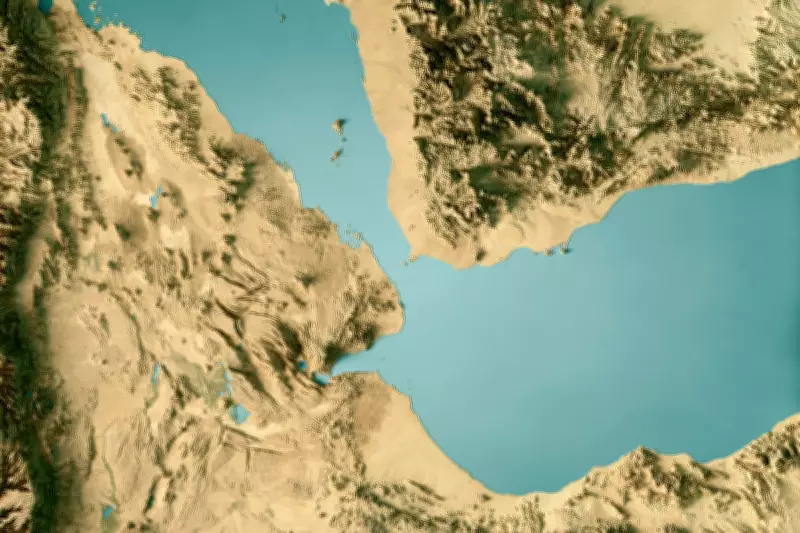
The Bab al-Mandab Strait, situated between Djibouti and Yemen, serves as a vital maritime chokepoint where Iran-aligned Houthi rebels have previously launched assaults on commercial shipping. The military source asserted that Iran possesses the capability to present a "credible threat" in this region, emphasising continuous surveillance of enemy preparations.
"We are constantly monitoring and keeping an eye on the enemy front's preparations and developments," the source stated. "If the enemy wants to take action on land in the Iranian islands or anywhere else in our lands or to inflict costs on Iran with naval movements in the Persian Gulf and the Sea of Oman, we will open other fronts for them as a surprise so that their action will not only be of no benefit to them but will also double their costs."

Houthi Rebels' Calculated Restraint
Despite their close ties to Iran's Revolutionary Guard, the Houthi rebels in Yemen have notably refrained from direct involvement in the ongoing conflict. Analysts speculate this inactivity may represent a strategic manoeuvre to exert greater pressure on Washington and Israel at a more opportune moment, leveraging their position as a proxy force.
Precedent Set by Strait of Hormuz Seizure
This warning follows Iran's seizure of the Strait of Hormuz last month, a critical passage for approximately one-fifth of global oil and gas shipments. The takeover triggered significant turmoil in energy markets, creating an estimated daily shortfall of 4.3 million barrels of oil, according to data from Kpler. Asian nations reliant on imports have implemented extreme measures, including declaring four-day working weeks, to mitigate the resulting oil shortages.
Tehran Mayor Dr Alireza Zakani framed Iran's control of the Strait of Hormuz as a form of sanctions against the US and its allies. "Rather than bargaining to lift sanctions, we're focused on shaping a new sanction framework against the US and its allies in the Strait of Hormuz," he declared in a social media post. "Lifting US unilateral sanctions doesn't need a negotiation table, our missiles have already delivered results."
Regional Tensions and Diplomatic Warnings
Iran's parliament speaker, Mohammad Baqer Qalibaf, further intensified regional anxieties by threatening to attack an unnamed neighbouring country if it cooperated with efforts by "the enemies" to occupy an Iranian island. Since the commencement of what the US terms "Operation Epic Fury," Iran has conducted strikes against Gulf nations hosting American military installations.
UN Secretary-General Antonio Guterres issued a grave caution on Wednesday, stating the "world is staring down the barrel of a wider war" in the region. "It is time to stop climbing the escalation ladder and start climbing the diplomatic ladder," he urged during an address at UN headquarters in New York, highlighting the urgent need for de-escalation and peaceful resolution.