Iran Warns US of Retaliation as Troop Deployment Escalates Tensions
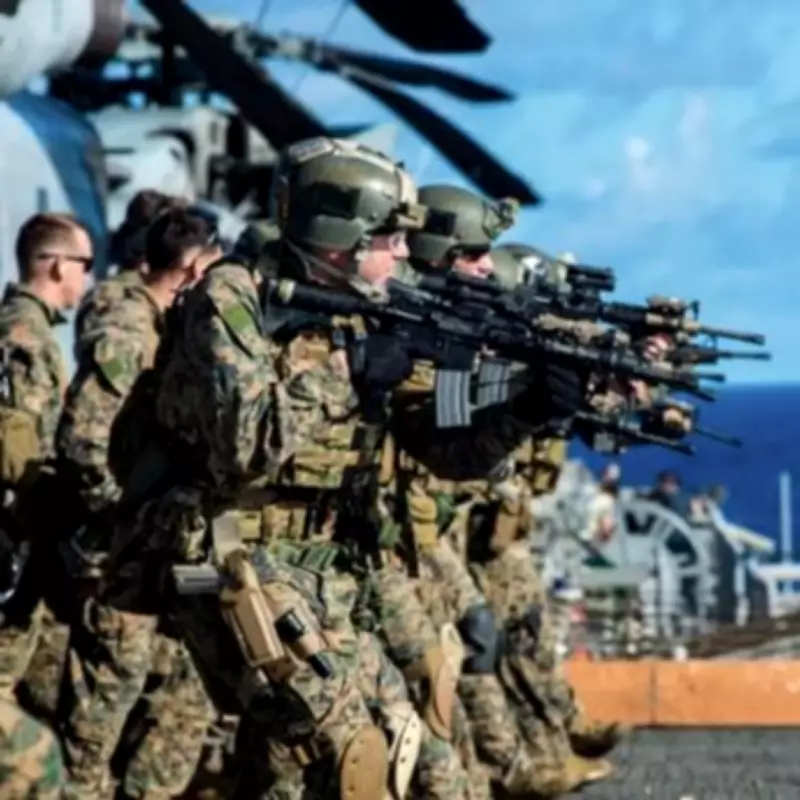
The Pentagon is reportedly preparing for a potential ground invasion of Iran, with 3,500 military personnel, including Marines, arriving in the Gulf region aboard the warship USS Tripoli. This deployment has sparked a fierce response from Iranian officials, who have threatened to "set fire" to American forces if they proceed with an invasion.
US Military Buildup and Iranian Warnings
According to sources, the United States is "readying for weeks of troops on the ground," with plans that could involve raids by Special Operations forces and conventional infantry. However, the Washington Post suggests President Donald Trump may not approve a full-scale invasion, despite the dramatic escalation marked by the troop arrival.
In a stark warning, Mohammad Bagher Ghalibaf, Speaker of the Iranian Parliament, stated that Iranian forces are "waiting for American soldiers to enter on the ground so they can rain fire upon them." He accused the US of publicly negotiating while secretly plotting an attack, emphasizing that Iran will not accept "humiliation" or surrender.

Regional Attacks and Global Economic Concerns
The conflict has intensified with Iran launching missile strikes on Israel and targeting key infrastructure in Abu Dhabi, significantly damaging the Emirates Global Aluminium plant. Attacks were also reported in Oman, with Yemen's Houthis claiming responsibility for striking southern Israel using cruise missiles and drones.
Experts fear that the Houthis could join Tehran in shipping attacks, potentially closing the Suez Canal and targeting vessels in the Bab al-Mandab Strait. This would disrupt a second major shipping route alongside the Strait of Hormuz, already blocked by Iran, leading to severe global economic impacts, including fuel and food shortages.
International Responses and Military Preparations
The United Kingdom is contributing to efforts by preparing the Lyme Bay ship to act as a "mothership" for autonomous mine-hunting drones, aimed at clearing the Strait of Hormuz if necessary. Captain Mark Colley expressed pride in his crew's readiness to support this mission, highlighting the importance of autonomous technology in naval operations.
Meanwhile, the European Union's Naval Force Aspides mission has warned ships to avoid Yemeni territorial waters due to a "high" threat level for vessels linked to Israel or the US, citing potential attacks by Iran-backed Houthis in the Red Sea and Gulf of Aden.
Domestic and Diplomatic Fallout
Iran's internet blackout has entered its 30th day, with connectivity at just one percent of normal levels, leaving millions of citizens unaware of the war's progress. The country's Revolutionary Guard has escalated hostilities by declaring Israeli and US universities "legitimate targets" following airstrikes on Iranian universities.
In Oman, authorities are investigating "treacherous and cowardly attacks" that injured a foreign worker at the Port of Salalah, with no group claiming responsibility. This follows earlier Iranian attacks on fuel storage tanks in the same city, underscoring the widening scope of the conflict.
As RAF Typhoons and F-35 jets defend allies like Jordan and the UAE, and anti-war protests emerge in the US, the situation remains volatile, with global powers navigating a complex web of military, economic, and diplomatic challenges.