Iran Threatens to Destroy Middle East Infrastructure in Response to US Ultimatum
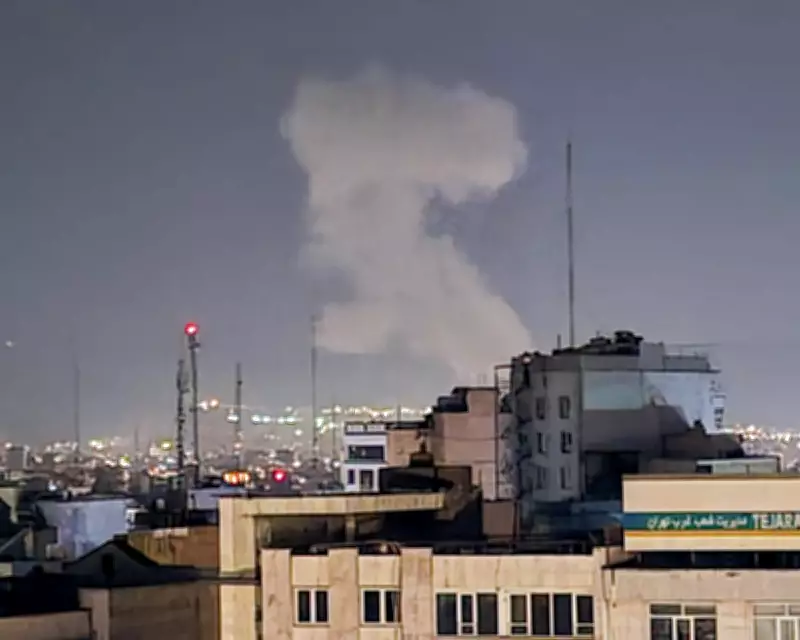
Smoke billowed over Tehran following an Israeli airstrike on Sunday evening, as Iran issued a stark warning to the United States. Tehran has declared it will "irreversibly destroy" essential infrastructure across the Middle East, including critical water and energy systems, if the US acts on Donald Trump's threat to "obliterate" Iranian power plants. This response signals a dangerous escalation in the ongoing conflict, now in its fourth week, with both sides menacing sites relied upon by millions of people.
Iranian Parliament Speaker Issues Dire Warning
Mohammad Bagher Ghalibaf, the speaker of the Iranian parliament, stated on Sunday that vital regional infrastructure—such as energy and desalination facilities—would become legitimate targets. He emphasized that these would be "irreversibly destroyed" if Iran's own infrastructure faced attack. This threat comes amid Iranian missile strikes on two southern Israeli cities overnight, injuring dozens and marking the first deployment of long-range missiles by Tehran.
The Iranian military's operational command headquarters, Khatam al-Anbiya, reinforced this stance, vowing to strike "all energy, information technology, and desalination infrastructure" belonging to the US and Israel in the region. Additionally, they warned that if Trump's threat is carried out, the Strait of Hormuz would be "completely closed" and remain shut until Iran's destroyed power plants are rebuilt.

US Ultimatum and Global Energy Concerns
President Trump issued a 48-hour ultimatum on Saturday, demanding Iran fully open the Strait of Hormuz—a vital pathway for global oil flows—or face US attacks on Iranian power plants, starting with the largest. Mike Waltz, the US ambassador to the UN, defended this threat, noting that Iran's Islamic Revolutionary Guard Corps controls much of the country's infrastructure for its war effort.
Iranian attacks have effectively closed the strait, which carries about one-fifth of global oil and liquefied natural gas supplies, triggering the worst oil crisis since the 1970s. European gas prices surged by up to 35% last week, with only a small fraction of vessels from friendly nations like China, India, and Pakistan allowed passage.
Escalating Military Actions and Civilian Impact
Air raid sirens sounded across Israel early Sunday as Iranian missiles targeted southern towns, including Arad and Dimona, near Israel's nuclear center in the Negev desert. These strikes wounded about 200 people, with reports of possible fatalities. Israel's Prime Minister Benjamin Netanyahu vowed retaliation, stating, "We're going after the regime. We're going after the IRGC, this criminal gang."
In Lebanon, Israel expanded its ground campaign against Hezbollah, killing 10 fighters, while Hezbollah attacked northern Israeli border areas. The conflict has drawn in multiple nations, with over 2,000 deaths in Iran since late February and attacks spreading to Gulf states.
International Reactions and Legal Warnings
Amnesty International warned this month that attacks on essential services like electricity and water could violate international law and amount to war crimes due to potential civilian harm. The World Health Organization expressed concern, noting that targeting nuclear sites poses escalating threats to public health and environmental safety.
British officials, including Steve Reed, downplayed claims of Iran targeting Europe, while NATO chief Mark Rutte acknowledged Iran's nearing capability for long-range strikes. Analysts highlighted the "48-hour ticking timebomb" of uncertainty over energy and financial markets, fearing a "black Monday" of plunging stocks and surging prices if tensions are not defused.
Regional Fallout and Additional Incidents
Overnight attacks targeted a US diplomatic center at Baghdad airport, while Saudi Arabia detected missiles over Riyadh, and the UAE responded to Iranian assaults. In the occupied West Bank, Israeli settlers rampaged through villages, injuring at least 10 Palestinians after a settler's funeral.

A helicopter crash in Qatar's territorial waters killed three Turkish nationals and three Qatari service personnel. Meanwhile, an academic analysis suggested a US-operated Patriot battery may have caused a civilian injury incident in Bahrain earlier in the war, though blame was initially placed on an Iranian drone attack.
As both sides escalate threats, the Middle East faces heightened risks of infrastructure destruction and broader humanitarian crises, with global energy markets on edge.