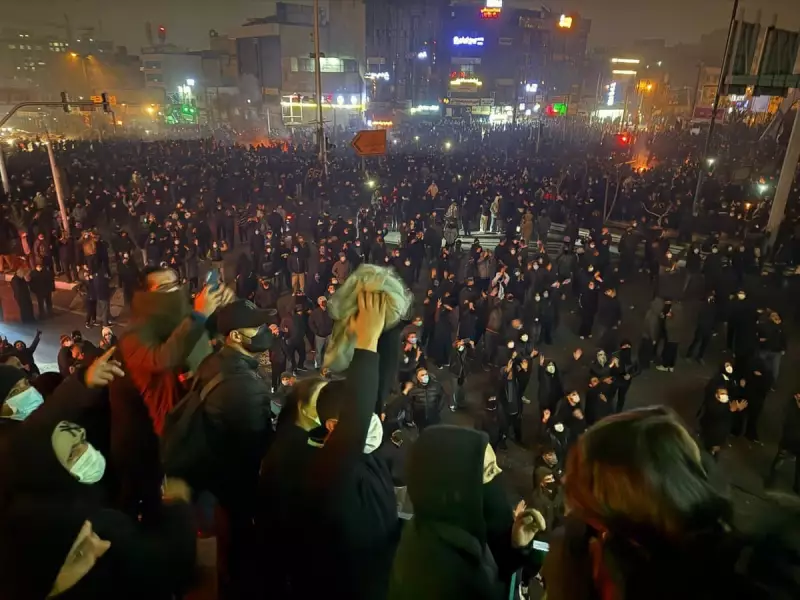
What began as a small demonstration by shopkeepers in Tehran over a collapsing currency has erupted into the most significant nationwide uprising against Iran's theocratic leadership in years. Fearing for its decades-long grip on power, the regime has responded with a brutal crackdown, deploying deadly force and severing communications in an attempt to quell the unrest.
From Economic Grievance to Political Revolt
The protests initially focused on dire economic conditions. The Iranian rial went into freefall last year, losing half its value against the dollar. This currency crash exacerbated an already severe crisis, with soaring prices for basic foods and an inflation rate that had stubbornly remained well over 30% for years.
However, as demonstrations spread from the capital across the country each night since late December, their nature transformed. Chants of "death to the dictator" – a direct reference to Supreme Leader Ayatollah Ali Khamenei – filled the air. Imagery from the protests showed burning vehicles, smashed shop fronts, and streets littered with debris, signalling a sharp turn towards overt political dissent.
A Regime's Deadly Response and Media Blackout
The government's reaction has been severe. According to exiled human rights groups in contact with activists inside Iran, security forces and the state-backed Basij militia have killed hundreds of protesters and arrested thousands more. These figures are notoriously difficult to verify independently in one of the world's most repressive media environments.
In a move to isolate the movement, authorities have repeatedly shut down internet and telephone networks. Despite this, protesters have managed to share videos of rallies and casualties online using satellite internet services, providing glimpses of the crackdown. Simultaneously, state media has promoted pro-government rallies in central Tehran, encouraged by the authorities.
Comparing Waves of Dissent and International Reactions
Iran has witnessed waves of protest over the past two decades, including the outcry over the disputed 2009 election and the "Woman, Life, Freedom" movement sparked by the 2022 death in custody of Mahsa Amini. Observers note the current protests appear to be growing in both size and concentration, with a noteworthy aspect being scattered references to Reza Pahlavi, the exiled son of Iran's deposed shah.
Internationally, President Masoud Pezeshkian, who came to power 18 months ago promising economic reform, has blamed "rioters" and arch-enemies the US and Israel for the uprising. Former US President Donald Trump has spoken of considering "very strong" military action, while the current administration is reportedly weighing options including cyber operations and expanded sanctions. The US and Israel openly advocate for regime change, with Israel having conducted a significant bombing campaign against Iranian targets last summer, joined by US strikes on nuclear facilities.
The situation remains volatile, with the protest movement presenting a sustained, if fragmented, challenge to the Islamic Republic's authority, met with unwavering and violent repression from the state.