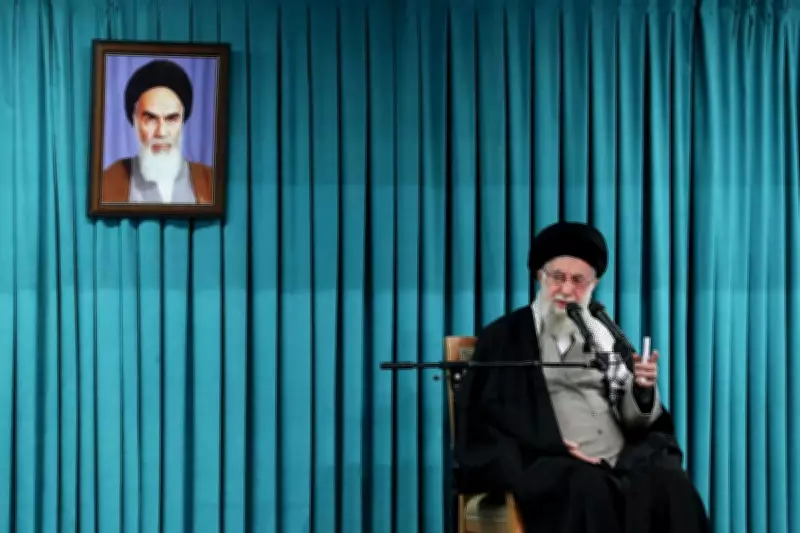
Iranian state television has officially announced the death of the country's Supreme Leader, Ayatollah Ali Khamenei. The report, which emerged on Sunday, provided no specific cause for the passing of the 86-year-old cleric. This development follows closely after joint military strikes conducted by the United States and Israel targeted Iranian positions on Saturday morning.
Immediate Aftermath and Political Reactions
The announcement has triggered a complex geopolitical crisis. Prior to the official confirmation, US President Donald Trump had publicly claimed that Khamenei had perished in the attacks. In a provocative statement, Trump urged the Iranian population to view this moment as "the single greatest chance" to reclaim their nation from the current regime.
In the United Kingdom, the government has maintained official silence regarding the Ayatollah's death. However, shadow foreign secretary Dame Priti Patel offered a stark assessment, stating unequivocally that "no-one should shed any tears for the death of Khamenei." This sentiment reflects the deep divisions and tensions surrounding Iran's leadership on the international stage.

Regional Retaliation and Security Concerns
In response to the initial strikes, Iran launched retaliatory attacks across several Gulf nations. Military actions were reported in the United Arab Emirates, Qatar, Bahrain, and Saudi Arabia, significantly escalating regional instability. The situation has raised urgent security concerns for hundreds of thousands of British nationals believed to be present throughout the Gulf region.
The UK Foreign Office has issued specific guidance, urging British citizens in Bahrain, Israel, Palestine, Qatar, and the UAE to immediately register their presence with authorities. This precautionary measure aims to facilitate communication and potential evacuation procedures should the security situation deteriorate further.
Diplomatic Context and Nuclear Negotiations
The military actions occur against a backdrop of stalled diplomatic efforts. Talks between the United States and Iran, focused on resolving longstanding concerns about Tehran's nuclear ambitions, concluded without agreement on Thursday. Although both parties expressed intention to resume negotiations at a later date, the recent strikes have dramatically altered the diplomatic landscape.
The US and Israel have defended their actions as "pre-emptive" strikes against a Iranian government they accuse of actively pursuing nuclear weapons development. This justification has been met with skepticism and condemnation from various international quarters, particularly following Iran's retaliatory measures.
UK Government's Emergency Response
Prime Minister Sir Keir Starmer convened an emergency meeting of the Government's Cobra committee on Saturday morning in direct response to the escalating crisis. Following this urgent briefing, Sir Keir engaged in extensive consultations with European and Gulf allies to coordinate a unified response.
Later that same day, the Prime Minister spoke directly with President Trump to discuss the volatile situation. During their conversation, Sir Keir outlined the United Kingdom's intended role in defensive operations throughout the region, emphasizing a measured approach focused on protection rather than escalation.
In a significant diplomatic move, Sir Keir joined forces with the leaders of France and Germany to issue a joint statement condemning Iran's retaliatory strikes. The statement urged Tehran to "refrain from indiscriminate military strikes" and instead "seek a negotiated solution" to the current crisis.
UK Military Deployment and Protective Measures
Speaking from Downing Street, Sir Keir clarified that the United Kingdom was not involved in the initial US-Israeli strikes against Iran. However, he confirmed that British aircraft have since been deployed "as part of co-ordinated regional defensive operations to protect our people, our interests and our allies."
The Prime Minister detailed additional security measures implemented by the UK government. Protections have been significantly enhanced for British military bases throughout the Middle East, while consular teams are actively "reaching out to UK nationals in the region and doing everything we can to support them" during this period of heightened tension and uncertainty.