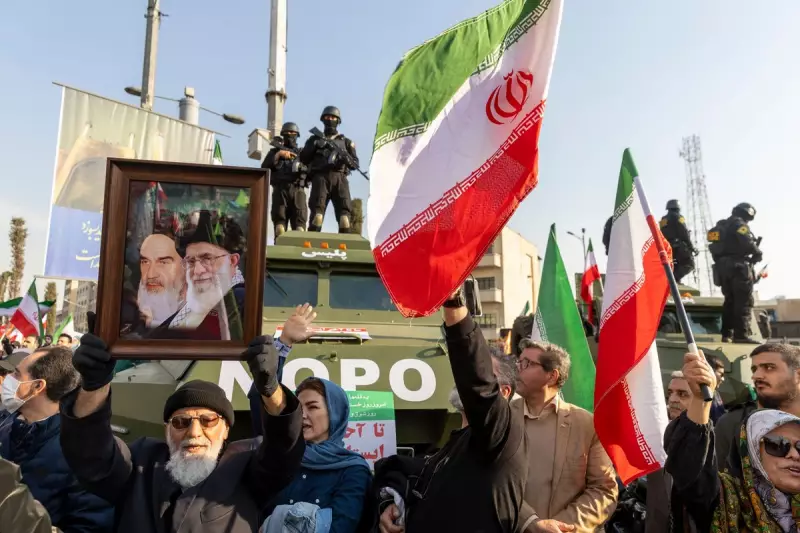
Iran has unveiled stark new murals in central Tehran warning of retaliation against the United States, as a US aircraft carrier group moves towards the region amidst heightened tensions following a brutal crackdown on nationwide protests.
Direct Warning in Enghelab Square
A prominent mural unveiled in Tehran's Enghelab Square features a painted image of several damaged planes on the flight deck of an aircraft carrier, accompanied by the ominous slogan: "If you sow the wind, you will reap the whirlwind." This artwork serves as a direct warning from Iranian authorities against any potential US military strike on the country.
The unveiling coincides with the movement of the USS Abraham Lincoln aircraft carrier and accompanying warships towards the Middle East. US President Donald Trump stated the ships are being deployed "just in case" he decides to take action, adding: "We have a massive fleet heading in that direction and maybe we won't have to use it."

Military Posturing and Readiness Claims
On Saturday, the commander of Iran's paramilitary Revolutionary Guard declared his force is "more ready than ever, finger on the trigger." Enghelab Square, traditionally used for state-organised gatherings, regularly features murals changed based on national occasions, making this latest installation particularly significant.
Another anti-US mural on a Tehran building bears the slogan 'Down with the USA', reinforcing the hostile messaging from Iranian authorities during this period of escalated tensions.
Background: Deadly Protest Crackdown
Tensions between Washington and Tehran have spiked dramatically following Iran's brutal suppression of nationwide protests that began on December 28th. The demonstrations were initially sparked by the collapse of the Iranian rial currency but quickly spread across the country, meeting violent resistance from Iran's theocratic government which has little tolerance for dissent.
According to the US-based Human Rights Activists News Agency, the death toll has reached 5,459 people, with more than 40,800 arrests made. The agency's figures, which rely on activist networks within Iran to verify deaths, have proven accurate during previous periods of unrest. These numbers represent the highest casualty figures from any protest movement in Iran for decades, recalling the chaos of the 1979 Islamic Revolution.
Iran's government has provided a significantly lower official death toll of 3,117, claiming 2,427 were civilians and security forces while labelling the remainder "terrorists." Historically, Iranian authorities have undercounted or failed to report fatalities from periods of civil unrest.
Information Blackout and Verification Challenges
The death toll has continued to rise even after protests subsided, with information slowly emerging despite a comprehensive internet blackout lasting more than two weeks - the most extensive in Iran's history. The Associated Press has been unable to independently verify the casualty figures due to these communication restrictions and government opacity.
Diplomatic and Military Developments
President Trump had previously threatened military action if Iran continued killing peaceful protesters or carried out mass executions of detained individuals. While there have been no further protests for several days, Trump recently claimed Tehran had halted executions of approximately 800 arrested protesters - an assertion Iran's top prosecutor dismissed as "completely false."
Trump has indicated he is keeping military options available, stating on Thursday that any potential US action would make last June's strikes on Iranian nuclear sites "look like peanuts."
Meanwhile, US Central Command announced on social media that its Air Force F-15E Strike Eagle fighter jets now have a presence in the Middle East, noting they "enhance combat readiness and promote regional security and stability." Similarly, the UK Ministry of Defence confirmed on Thursday it had deployed Typhoon fighter jets to Qatar "in a defensive capacity," adding to the military buildup in the region.

The combination of symbolic murals in Tehran, military movements by Western powers, and the unresolved aftermath of deadly protests has created one of the most tense periods in US-Iran relations in recent years, with both sides demonstrating their readiness for potential confrontation.