Irish Government Outlines Major Concerns Over Trump's Board of Peace Proposal
The Irish Government has reached a consensus position regarding participation in former US President Donald Trump's proposed Board of Peace, with senior ministers expressing profound reservations about the initiative's structure and membership. Deputy Premier Simon Harris, serving as Tanaiste, stated that while Ireland remains committed to conflict resolution in Gaza, significant red flags prevent involvement in the board as currently constituted.
Governance Structure and Membership Raise Immediate Alarms
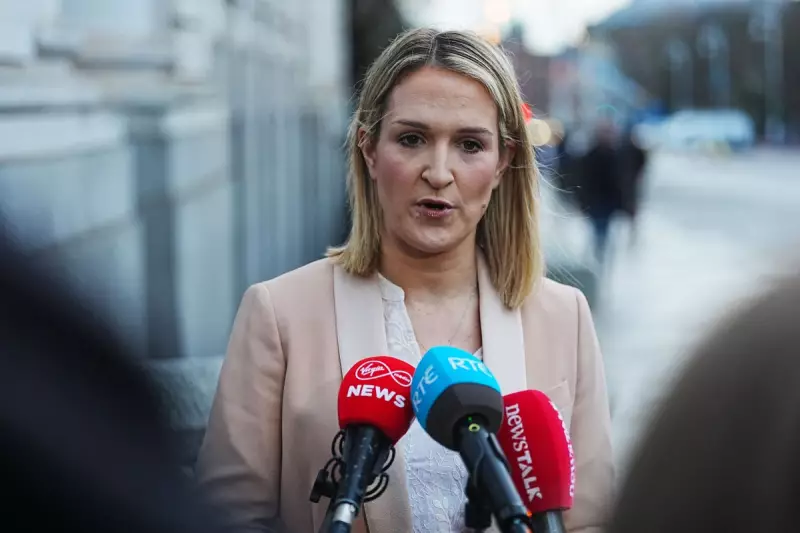
Speaking from Government Buildings in Dublin, Mr Harris articulated three primary objections that make Irish participation highly unlikely. Firstly, he highlighted the oxymoronic nature of inviting Russian President Vladimir Putin to a peace-focused body, given Russia's ongoing military actions in Ukraine. Secondly, he rejected the reported one billion dollar membership fee as unacceptable. Thirdly, he expressed concern that the board might establish a parallel structure that could compete with or undermine the authority of the United Nations Security Council.
"I can't see any scenario in which Ireland can take a place on the Board of Peace," Mr Harris declared emphatically. He further criticised the governance model outlined in the board's charter, which would grant the US president authority to appoint successors and determine board membership. "Could you have a situation where somebody would raise a viewpoint and speak up for the values of their country, and you'd be kicked off the board?" he questioned.
Divergence from Original UN Mandate
Foreign Affairs Minister Helen McEntee emphasised that the board approved by the UN Security Council in November was intended to be a small oversight group focused exclusively on implementing a ceasefire and peace plan for Gaza. However, the initiative unveiled at Davos appears to have evolved into a much broader organisation with a wider remit and controversial membership, including Israeli Prime Minister Benjamin Netanyahu and Belarusian leader Aleksandr Lukashenko alongside Mr Putin.
"We cannot join a structure that essentially will try to mimic or undermine the UN Security Council," Ms McEntee stated unequivocally. She confirmed that the Irish Government is seeking urgent clarification on whether the board's focus will remain solely on Gaza and on the details of the financial contributions required after three years of membership.
Unified Stance Within Irish Leadership
Despite apparent differences in tone between Taoiseach Micheal Martin's expressed desire for Ireland to contribute to Gaza conflict resolution and Mr Harris's outright rejection of the current board framework, both ministers insist their positions are entirely consistent. Mr Harris explained that Ireland would consider joining and financially supporting a board genuinely focused on Gaza peace, but what has emerged "has nothing to do with the UN decision on 17 November in relation to a comprehensive peace plan for Gaza."
Ms McEntee reinforced this unity, stating that she and Mr Harris are "at one on this issue." She acknowledged that Ireland is not issuing an immediate, final refusal but requires substantial clarification before any decision could be reconsidered. "The reason that we're not saying no to this immediately is we need to get more answers," she explained, highlighting ongoing diplomatic inquiries about the board's true objectives and financial mechanisms.
The Irish stance represents a significant diplomatic position regarding an initiative that President Trump described at its Davos launch as potentially "one of the most consequential bodies ever created." Ireland's concerns centre on principles of multilateral governance, appropriate membership for peace organisations, and financial transparency, setting clear conditions that the Board of Peace would need to meet to gain Irish support.