Israel Conducts Strikes on Tehran as Trump Postpones Hormuz Deadline Amid Escalating Conflict
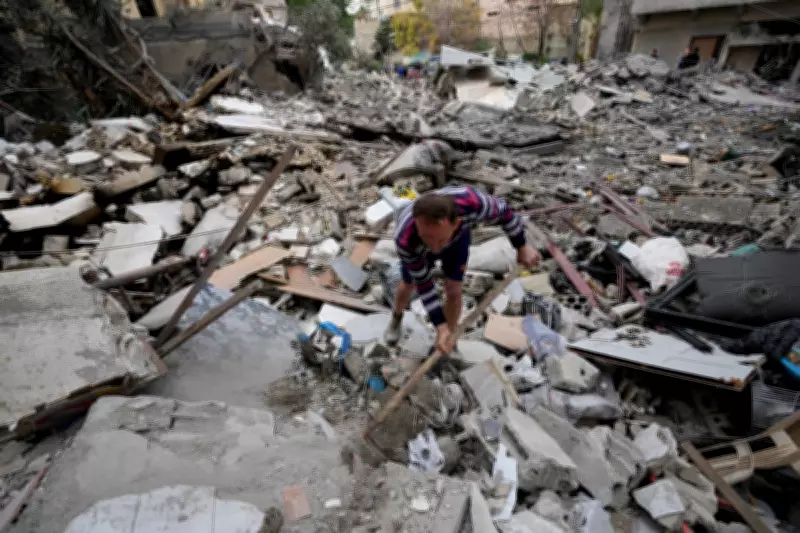
In a significant escalation of regional hostilities, Israel's military confirmed early Friday that it had executed a series of strikes targeting "the heart of Tehran." Concurrently, smoke was observed billowing over the Beirut skyline, underscoring the intensifying violence across the Middle East. This development coincides with U.S. President Donald Trump's decision to delay a previously issued ultimatum concerning Iran's effective closure of the critical Strait of Hormuz.
Military Movements and Strategic Objectives
Israeli forces have deployed thousands of troops across the border into Lebanon, with official statements indicating a strategic aim to secure control over the entire area south of the Litani River. This region extends approximately 20 miles (30 kilometers) north of the border, highlighting Israel's expanded military footprint in response to the ongoing conflict. The strikes in Tehran represent a direct and unprecedented move, signaling a potential shift in the conflict's dynamics.
Trump's Deadline Extension and Diplomatic Tensions
Faced with a volatile stock market, President Trump announced on Thursday an extension of the deadline for reopening the Strait of Hormuz until April 6. He asserted that Iran had requested this grace period and described ongoing talks as progressing "very well." However, this claim contrasts sharply with Iran's public insistence that it is not engaging in negotiations with the White House regarding a 15-point proposal designed to resolve the conflict. The Strait of Hormuz remains a focal point due to its crucial role in global energy supplies, with Trump's earlier threat to obliterate Iran's energy plants hanging in the balance.

Mounting Casualties and Humanitarian Crisis
The conflict has resulted in devastating human tolls, with more than 1,900 fatalities reported in Iran and nearly 1,100 in Lebanon. In Israel, eighteen people have lost their lives, alongside three Israeli soldiers killed in Lebanon. The United States has suffered thirteen military deaths, with additional civilian casualties reported on land and sea across the Gulf region. Millions of individuals in Lebanon and Iran have been displaced, exacerbating a severe humanitarian crisis that continues to unfold.
Global Ripple Effects: New Zealand's Fuel Scarcity Response
In response to the war's impact on global fuel supplies, New Zealand's government unveiled a comprehensive plan on Friday to address potential fuel scarcity. Finance Minister Nicola Willis outlined a four-tier strategy that includes, at its most severe levels, limitations on gasoline purchases and prioritization for essential, life-preserving services. Willis disclosed specific criteria, such as export restrictions and domestic fuel stock levels, that will determine transitions between the four phases.
She emphasized that the current designation is phase one, the lowest level, but stressed the importance of public awareness regarding possible future restrictions. At present, no restrictions on gasoline use or purchasing are in effect in New Zealand, but the plan underscores the war's far-reaching economic and logistical consequences beyond the immediate conflict zone.