Israeli Airstrikes Target Beirut Suburb Amid Escalating Iran Conflict
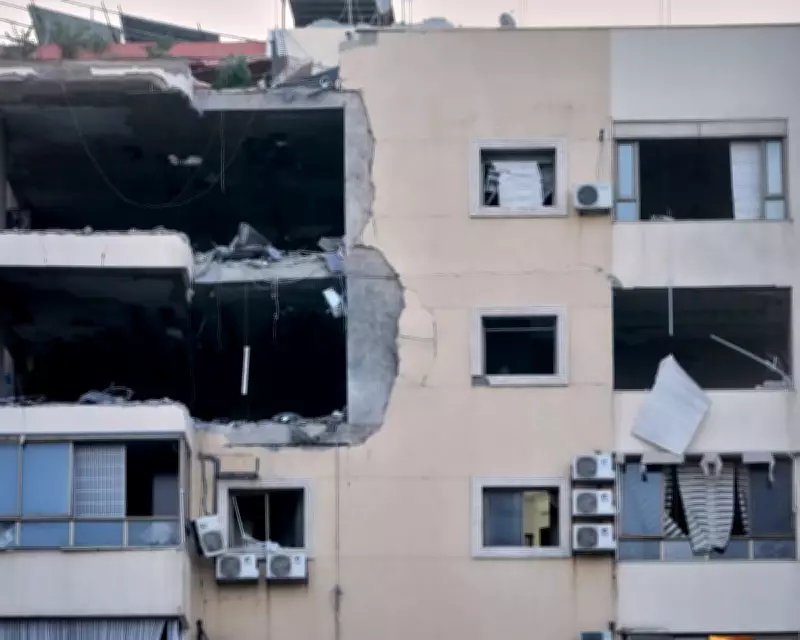
An apartment building in Dahieh, Beirut's southern suburb, lies damaged following an Israeli airstrike, as the conflict linked to the widening Iran war intensifies across the Middle East. Photographic evidence from the scene shows significant structural damage in this Hezbollah stronghold, underscoring the direct military engagement now spreading beyond Iran's borders.
Military Escalation and Civilian Evacuations
The Israeli military confirmed early Monday that it was conducting strikes against Hezbollah targets throughout Lebanon. This offensive action came in direct response to Hezbollah launching missiles and drones toward Israel. The militant group, a principal ally of Tehran, initiated these attacks in retaliation for the killing of Iran's supreme leader, Ayatollah Ali Khamenei.
Witnesses in the Lebanese capital reported hearing explosions, with Lebanese security sources confirming Israeli strikes on the southern suburbs of Beirut. In anticipation of further retaliatory strikes, the Israeli military issued urgent evacuation orders for residents of nearly 50 villages in eastern and southern Lebanon. This warning triggered a mass exodus, with roads leading out of Beirut's southern suburbs and throughout southern Lebanon becoming severely gridlocked as civilians fled the conflict zone.

International Ramifications and Economic Impact
The conflict's ripple effects are being felt globally. Oil markets experienced immediate volatility, with Brent crude prices surging by as much as 13% during early trading to reach $82 per barrel—a 14-month high. This sharp increase is driven by fears of significant disruption to global energy supplies, particularly concerns over the effective closure of the Strait of Hormuz, a critical artery for international oil trade.
Financial markets faced additional pressure, while the airline industry encountered major operational disruptions. Countries across the Middle East closed their airspace, and three key regional airports connecting Europe, Africa, and the West to Asia halted operations, affecting the travel plans of hundreds of thousands of passengers.
Casualties and Broader Military Actions
The human cost of the conflict continues to rise. Iranian state media reported that the death toll from a missile strike on a girls' school in southern Iran has increased to almost 165, marking it as the worst mass casualty event in the US-Israeli-led bombing campaign so far. Separately, the US Central Command confirmed that three US service members have been killed in action during military operations against Iran, representing the first confirmed American fatalities since strikes began on Saturday.
In a related incident, a suspected drone strike hit RAF Akrotiri, a UK military base in Cyprus. The British Ministry of Defence confirmed the attack but reported no casualties. This event occurred hours after UK Prime Minister Keir Starmer stated that Britain had permitted the US to strike Iranian missile sites from British bases, as officials plan a large-scale rescue operation for UK citizens in the Gulf region.
Political Statements and Public Opinion
US President Donald Trump addressed the ongoing combat operations, stating they would continue "until all of our objectives are achieved." He justified the military action by emphasizing the threat posed by an Iranian regime with long-range missiles and nuclear capabilities. Trump also claimed that 48 Iranian leaders had been killed in US and Israeli strikes, though he offered to provide "full immunity" to members of Iran's Revolutionary Guard who lay down their arms.
Despite Trump's assertion that Iran's new leadership seeks negotiations with him, Iran's security chief, Ali Larijani, publicly stated that Tehran "will not negotiate with the United States." Public sentiment in America appears divided; a recent Reuters/Ipsos poll concluded that only 27% of Americans approve of the US strikes that killed Iran's leader, with approximately half of respondents—including one in four Republicans—believing President Trump is too willing to use military force.
The situation remains fluid, with the conflict between the US-Israel alliance and Iran creating unprecedented geopolitical and humanitarian challenges across the Middle East and beyond.