Historic Agreement Sees Over 300 Syrian Prisoners to be Repatriated from Lebanon
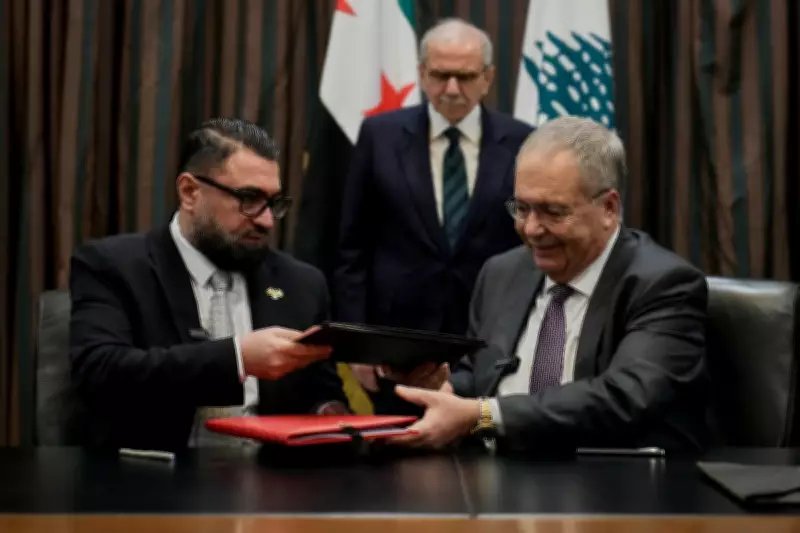
In a significant diplomatic development, Lebanon and Syria have formally signed a landmark agreement to transfer more than 300 Syrian detainees from Lebanese prisons to serve their sentences in their home country. The signing ceremony took place on Friday at the government headquarters in the Lebanese capital, Beirut, marking a pivotal step aimed at improving the historically strained relations between the two neighbouring nations.
Key Signatories and Immediate Implementation
The deal was signed by Lebanon's Deputy Prime Minister, Tarek Mitri, and Syria's Justice Minister, Mazhar al-Wais. This agreement follows the approval by Lebanon's Cabinet just one week prior, underscoring a concerted political will to address longstanding issues. Mitri described the accord as "a very important first step on the road of a comprehensive treatment regarding Syrian prisoners in Lebanese prisons," confirming that implementation would commence the very next day, on Saturday.
Al-Wais echoed this sentiment, stating, "Both countries want to move forward but there are some pending matters. This step will boost existing confidence and we hope that relations will progress more." The officials also announced that subsequent discussions would focus on the transfer of Syrian detainees who are still awaiting trial in Lebanon, indicating a broader framework for future cooperation.

Complex Historical Context and Bilateral Tensions
The prisoner transfer deal occurs against a backdrop of deeply complicated historical relations between Lebanon and Syria. For nearly three decades, Syrian forces maintained a dominant military presence in Lebanon, which ended in 2005, leaving many Lebanese with lingering resentment. Conversely, many Syrians harbour grievances over the role of the Lebanese militant group Hezbollah, which entered Syria's civil war in 2011 to defend then-President Bashar Assad and his government.
Assad was overthrown in December 2024 and fled into exile in Russia. Since his fall, relations with Syria's new Islamist-led authorities have remained tense, with occasional skirmishes reported along the unmarked border. Mitri emphasised that the signing represents "an expression of a joint political will that states that the Lebanese-Syrian relations are based on confidence and mutual respect."
Scope and Details of the Prisoner Transfer
Clarifying the deal's scope, Mitri confirmed that it exclusively covers Syrian prisoners and does not include Lebanese citizens, such as the Sunni Muslim cleric Ahmed al-Assir. Currently, there are approximately 2,500 Syrian prisoners held in Lebanese prisons and jails. Some of these individuals face charges related to their involvement with armed opposition groups that sought to overthrow Assad—groups that are now part of Syria's ruling structure.
Earlier in the week, Mitri informed The Associated Press that the majority of detainees slated for transfer were not convicted of violent crimes. However, those convicted of violent offences may still be eligible for transfer if they have already served at least seven and a half years of their sentence in Lebanon. This nuanced approach aims to balance humanitarian considerations with security concerns.
Implications for Future Diplomatic Relations
This prisoner transfer agreement is widely viewed as a confidence-building measure that could pave the way for enhanced cooperation between Lebanon and Syria. By addressing a sensitive issue that has long been a point of contention, both nations demonstrate a willingness to move beyond historical grievances and work towards more stable and respectful bilateral relations. The deal not only alleviates prison overcrowding in Lebanon but also symbolises a potential thaw in diplomatic ties, offering hope for further collaborative efforts in the region.