Macron Delivers Blunt Critique of Trump's Foreign Policy Statements
French President Emmanuel Macron has issued a pointed rebuke of Donald Trump's contradictory pronouncements regarding the Iran war and the NATO alliance, emphasising the need for consistency and seriousness in international diplomacy.
'There Is Too Much Talk ... And It's All Over the Place'
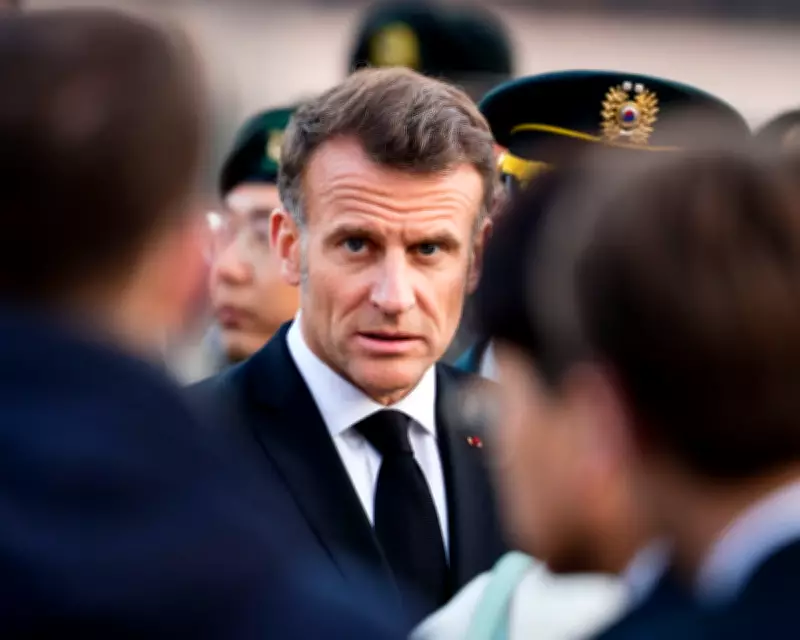
Speaking during a state visit to South Korea on Thursday, Macron expressed frustration with what he characterised as Trump's erratic communication style. 'There is too much talk ... and it's all over the place,' the French leader stated bluntly. 'We all need stability, calm, a return to peace – this isn't a show!'
Macron elaborated further on his criticism, stating: 'You have to be serious. When you want to be serious, you don't go around saying the opposite every day of what you just said the day before. And perhaps you shouldn't talk every day.'

Defending NATO Against Trump's Undermining Comments
The French president mounted a robust defence of the transatlantic defence alliance, accusing Trump of eroding NATO's foundations through repeated remarks questioning American commitment. 'I believe organisations and alliances like NATO are defined by what is left unsaid – that is, the trust that underpins them,' Macron explained. 'If you cast doubt on your commitment every day, you erode its very substance.'
These comments follow a week of mixed messages from Washington regarding both the progress of the Iran war and America's future in NATO. Trump has made contradictory statements including:
- Suggesting the war was effectively won and allies weren't needed
- Expecting allies to join US military operations
- Advising allies to act alone and 'go get their oil' in the Strait of Hormuz
Washington's NATO Ambiguity Creates Transatlantic Tension
Trump's private remarks at a White House lunch this week revealed further scepticism about the alliance, claiming NATO had 'treated us very badly' and would do so again if needed. In comments to Reuters, he confirmed he was 'absolutely without question' considering withdrawal, though he later told the Daily Telegraph an exit was 'beyond consideration' while labelling NATO a 'paper tiger.'
US Secretary of State Marco Rubio added to the uncertainty by suggesting Washington would 're-examine' whether NATO still served American interests, while Defence Secretary Pete Hegseth declined to confirm the US would defend NATO allies if attacked.
European Leaders Rally to NATO's Defence
In response to Washington's ambiguous stance, European leaders have moved to reinforce the alliance's importance. NATO Secretary General Mark Rutte will visit Washington next week to repair relations, while UK Prime Minister Keir Starmer called NATO 'the single most effective military alliance the world has ever seen.'
Polish Prime Minister Donald Tusk offered a stark assessment on Thursday, suggesting Trump's withdrawal threats, combined with Europe's energy crisis and other factors, resembled a 'dream plan' for Russian President Vladimir Putin.
Iran War Complicates Transatlantic Relations
The month-old conflict with Iran has created additional strain, with European leaders facing domestic pressure over a deeply unpopular war that has triggered energy price surges and rising inflation since Iran effectively closed the Strait of Hormuz, which carries approximately one-fifth of global oil.
Trump stated on Wednesday he might end the war without a formal agreement and suggested countries dependent on Hormuz shipments should 'just grab it.' European nations have maintained they will only help secure the strait following a ceasefire.
Diplomatic Efforts Continue Amid Military Realities
Approximately forty countries participated in online talks on Thursday exploring ways to restore freedom of navigation through the Strait of Hormuz. The UK, which convened the discussions, emphasised diplomatic and economic approaches rather than military solutions.
France's Macron stated the process must be multi-phased and could only begin after hostilities diminished. 'It can only be done in consultation with Iran,' he noted, adding that Paris considered military action to free the strait 'unrealistic.'

Regarding Iran's nuclear programme, Macron argued that US and Israeli strikes would not provide long-term solutions. 'A targeted military action, even for a few weeks, will not allow us to resolve the nuclear issue in the long term,' he warned. 'If there is no framework for diplomatic and technical negotiations, the situation can deteriorate again in a few months.'
Iran Responds With Defiant Warnings
Iran's armed forces issued a stern response to Trump on Thursday, warning of 'more crushing, broader and more destructive' attacks against the US and Israel. Military spokesperson Ebrahim Zolfaqari declared the war would continue until the 'permanent regret and surrender' of Iran's enemies.
Despite Trump's claim that the US was 'very close' to achieving its objectives and would intensify attacks unless Tehran agreed to negotiations, Iranian Foreign Ministry spokesperson Esmaeil Baqaei confirmed no direct negotiations were occurring with Washington, though messages had been exchanged through intermediaries including Pakistan.
The diplomatic landscape remains fraught as Macron's criticism highlights growing European concern about inconsistent American leadership during simultaneous crises involving NATO's future and Middle Eastern conflict.