Mojtaba Khamenei's Legacy of Suppression Precedes Supreme Leadership
Years before ascending to the role of Supreme Leader of Iran, Mojtaba Khamenei was deeply entrenched in the ruthless suppression of the Iranian populace during multiple significant protest movements. Assuming power at 56 years old following the assassination of his father, Ali Khamenei, in early February, Mojtaba had already cultivated a pivotal position within the regime throughout his lifetime. He leveraged this influence to execute his father's directives by oppressing the population, forging strong connections with Iran's military and paramilitary units, and even assuming decision-making responsibilities in intelligence matters.
The 2009 Election Protests and Basij Paramilitary Control
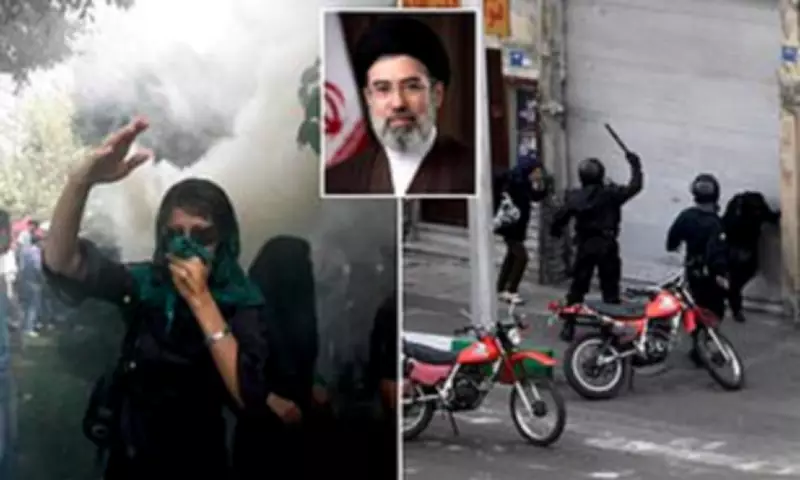
In 2009, Mojtaba was reported to have assumed command of the Basij, a paramilitary organization boasting approximately 600,000 members, amid widespread demonstrations that year. He stands accused of supervising the massacre of dozens of individuals protesting the outcomes of that year's presidential election. Critics alleged that then-president Mahmoud Ahmadinejad, who was seeking reelection, engaged in extensive electoral fraud, enabling him to secure 62% of the votes. On his inauguration day, opposition demonstrators clashed with hundreds of riot police outside Iran's parliament building, while Basij members deployed to quell dissent under Mojtaba's orchestration.
An Iranian politician informed The Guardian at the time: 'Mojtaba is the commander of this coup d'etat. The basiji are operating on Mojtaba's orders, but his name is always hidden in all of this. The government never mentions him.' The politician added, 'Everyone is angry about this. The maraji [Iran's most senior ayatollahs] and the clerics are angry, the conservatives are very angry and strongly critical of Mojtaba. This situation cannot continue with so many people on the top against it.'
2022 Mahsa Amini Protests and Systematic Violence
Basij forces were also utilized to crush dissent during the 2022 Mahsa Amini protests, which erupted after a young woman was abducted and fatally beaten by Iran's morality police for refusing to wear a hijab on public transport. These demonstrations, commencing in September 2022 and persisting until the following spring, resulted in security forces killing over 500 people, including 68 minors. The Basij and other security units faced accusations of intimidating protesters' relatives, torturing demonstrators, and perpetrating sexual violence against them.
A CNN investigation that year claimed security forces attempted to blind protesters systematically by firing pellets, teargas canisters, and paintball bullets at their eyes. Mojtaba is also thought to have played a substantial role within the Islamic Revolutionary Guard Corps (IRGC) itself. Reports from Iran International indicated that prior to his ascension, he was instrumental in determining which senior officials should occupy positions in the military's intelligence division.
International Sanctions and Regional Influence
In 2019, the United States sanctioned Mojtaba for acting as the Supreme Leader of Iran without ever being elected. He also faced sanctions for collaborating closely with the commander of the Quds Force, an Iranian military branch specializing in military intelligence and unconventional warfare. The Quds Force is accountable for covert operations involving lethal aid, intelligence, financing, and training, providing support to groups such as the Taliban, Hezbollah, Hamas, the Palestinian Islamic Jihad, and the Popular Front for the Liberation of Palestine.
Mojtaba has perpetuated his father's campaign of terror across the Middle East, with Iran recently declaring that not a single litre of oil would be exported from the Gulf while its conflict with the United States and Israel persists. This statement served as a stark rebuke to President Donald Trump's assertion that the war was nearly concluded. Trump's comments about the war ending soon helped mitigate a prior spike in oil prices, which had surged following Iranian attacks on shipping that closed the strategic Strait of Hormuz in retaliation for US-Israeli strikes that killed the supreme leader.
The IRGC ridiculed Trump's apparent effort to reduce the economic impact of the war, warning: 'The Iranian armed forces... will not allow the export of a single litre of oil from the region to the hostile side and its partners until further notice.' In a message conveyed by Iranian media, the IRGC, viewed as aligned with Iran's new supreme leader Ayatollah Mojtaba Khamenei, stated, 'It is we who will determine the end of the war. The equations and future status of the region are now in the hands of our armed forces. American forces will not end the war.'
Iran's Foreign Minister Abbas Araghchi directly addressed Washington in an interview with PBS News, stating, 'We are well prepared to continue attacking them with our missiles as long as needed and as long as it takes.' Tehran's top diplomat, who has retained his position since Ayatollah Mojtaba Khamenei succeeded his assassinated father, lamented that the US had attacked Iran while diplomatic negotiations were ongoing, adding, 'I don't think talking with Americans anymore would be on our agenda.'