Iran's Missile Threat to UK Assessed After NATO Intercepts Over Turkey
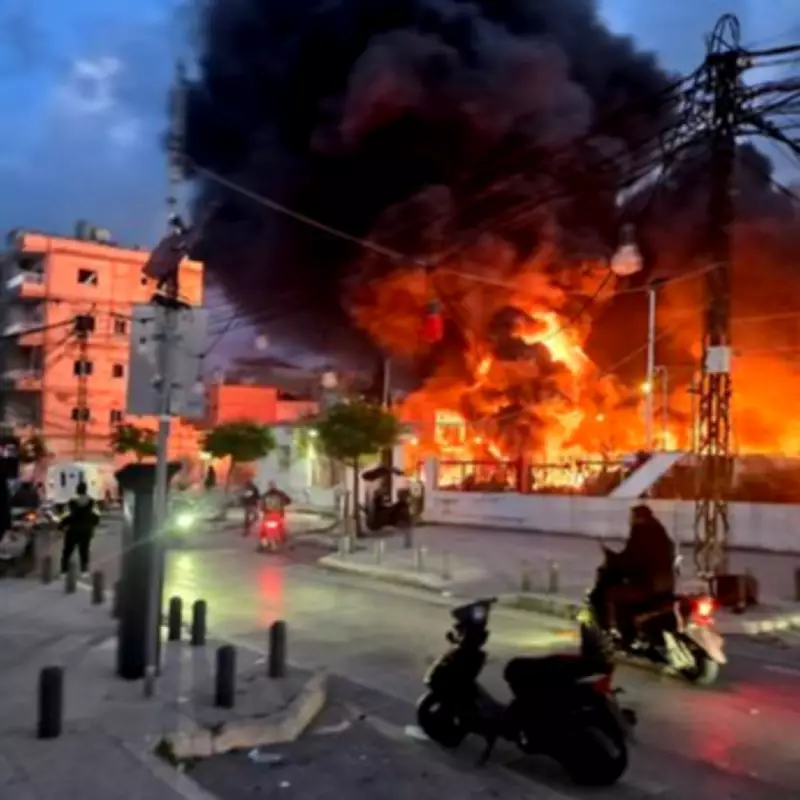
Military and security specialists have provided detailed analysis regarding concerns that Iran's ongoing bombardment across the Middle East could potentially extend into European territories, including the possibility of missile strikes reaching British soil. This assessment follows the activation of NATO air defence systems over southern Turkey, specifically near the city of Gaziantep, where Iranian projectiles were successfully intercepted yesterday.
NATO Response and Regional Escalation
The interception occurred as Iran's new supreme leader, Ayatollah Mojtaba Khamenei, intensified military strikes throughout the region, declaring his nation would "never surrender" and that "war will be met with war." This aggressive posture represents Iran's frantic reaction to recent US-Israeli military actions, which have triggered a week-long barrage affecting multiple Middle Eastern nations.
Countries including the United Arab Emirates, Saudi Arabia, Cyprus, Qatar, and Oman have all reported being targeted by Iranian missiles and drone attacks during this period of heightened tensions. The sustained conflict has redirected international attention toward the specific missile technologies possessed by the Iranian regime and the realistic possibility of the new leadership pursuing nuclear weapon capabilities.

Expert Analysis on Nuclear and Conventional Threats
On March 7, former US President Donald Trump asserted that Iran was merely "eight months" away from developing a nuclear weapon and would likely deploy it if obtained. However, Professor Anthony Glees, a respected security and intelligence expert at the University of Buckingham, has strongly contested these claims, stating there is no credible evidence to support such assertions.
"I think it is accepted by the technical boffins that there is no threat to the USA or Northern Europe from any Iranian missiles which we know about," Professor Glees explained. "Equally the suggestion made by the hopelessly imprecise twit in the White House, that Iran could produce a nuclear weapon in two to four weeks is eyewash."
He further elaborated that even if Iran had somehow accelerated nuclear development despite last year's "Operation Midnight Hammer" which reportedly damaged their capabilities, the regime currently lacks the delivery systems required to target distant nations. "They're not able to deliver them, no ICBMs, no satellites and, as of now after a week's war, no planes either," Glees noted, expressing confidence in Western intelligence agencies' ability to monitor any genuine emerging threats.
Economic Warfare and Technological Limitations
According to Professor Glees, Iran's current strategic focus appears to be economic rather than directly military, aiming to "sow and reap the seeds of economic chaos" in Western nations by weaponizing oil resources. Global oil prices have experienced significant volatility, briefly reaching $120 per barrel yesterday, with economists warning that sustained fuel market disruptions could potentially drive UK inflation back to 5% this year.
Regarding conventional missile capabilities, military historian Mark Felton recently explained on his YouTube channel that only Iran's space launch vehicles (SLVs), such as the Simorgh and Safir rockets, possess the theoretical range to reach London. However, these systems are not designed as precision weapons and would require extensive modification to function as intercontinental ballistic missiles.
"Iran's current ballistic missiles are designed to be accurate weapons. An SLV is not," Felton clarified. "An SLV in its current configuration couldn't make a precision strike, for example, on London. Therefore, the missile would have to be completely redesigned into a true ICBM. It is doubtful that Iran has done anything in this regard."
Felton concluded that while Iran may technically possess rockets with sufficient range to reach the United Kingdom, they currently lack the necessary systems to successfully deliver a warhead to British territory, providing some reassurance regarding immediate physical threats despite ongoing regional instability.