Panama Canal Ports Become Geopolitical Battleground Between Superpowers
Two critical ports situated at opposite ends of the Panama Canal have propelled the Central American nation into the centre of a mounting geopolitical struggle between the United States and China. Operated for decades by a Hong Kong-based corporation, these facilities are now at the heart of a contentious dispute involving court rulings, government seizures, and sharp diplomatic exchanges.
Strategic Ports Seized Amid Constitutional Challenge
In late January, Panama's Supreme Court delivered a landmark ruling declaring the concession granted to Panama Ports Company, a local subsidiary of Hong Kong's CK Hutchison, unconstitutional. This decision followed an audit by Panama's comptroller that alleged significant irregularities in the concession extension process, including substantial lost revenue for the Panamanian government.
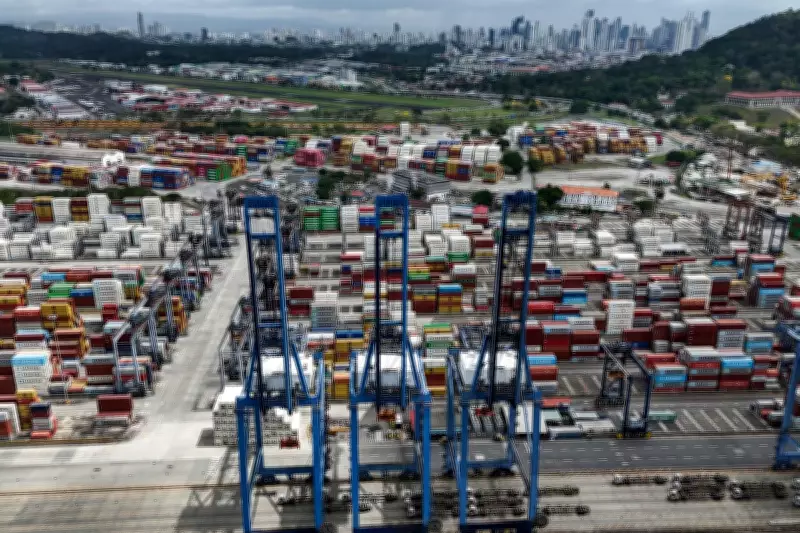
This week, Panamanian authorities moved decisively to occupy both the Balboa Port on the Pacific Ocean side and the Cristobal Port at the Atlantic entrance. The government has designated two alternative companies to maintain operations temporarily while preparations begin for rebidding the concession. Investigators have already removed boxes of documents from Panama Ports Company offices as part of their ongoing examination.

Historical Operation and Economic Significance
Since 1997, Panama Ports Company has managed these two vital facilities, which collectively handle approximately 39% of Panama's total container traffic. Despite Panama's relatively small population of 4 million residents and limited import-export activity, the country serves as a crucial international logistics hub thanks to its iconic canal.
Massive cargo vessels arrive daily from Asia, Europe, and both American coasts, unloading containers at these ports for onward shipping through smaller routes to final destinations. The operations support around 7,000 jobs directly, with President José Raúl Mulino assuring that employment continues unchanged despite the ownership transition.
United States' National Security Concerns
The strategic positioning of these ports at the canal entrances has long concerned American officials, despite the facilities operating independently from the autonomous Panama Canal Authority that manages the waterway itself. Even before beginning his second term, former U.S. President Donald Trump voiced complaints about Chinese involvement in Panama Canal operations, which Panamanian authorities strongly denied.
U.S. Secretary of State Marco Rubio underscored these concerns during his inaugural overseas diplomatic visit to Panama, delivering a clear message that Chinese control of such critical infrastructure was unacceptable. American officials worry that China could potentially obstruct canal traffic, creating national security implications since the waterway accommodates both commercial vessels and U.S. warships.
China's Strong Reaction and Legal Proceedings
Beijing has responded with forceful rhetoric and legal action following Panama's court decision and subsequent port seizure. China's office overseeing Hong Kong affairs criticized the ruling as evidence that Panamanian authorities were yielding to "hegemonic powers," warning that Panama would "pay a heavy price both politically and economically" if it persisted in its current course.
Panama Ports Company has initiated arbitration proceedings against the Panamanian government, arguing that its investor rights have been compromised through what it describes as a year-long "campaign" against its concession. The company is seeking unspecified compensation, with Panama's Economy Minister Felipe Chapman indicating the claim amounts to $1.5 billion. This dispute emerges despite the company's concession having been renewed just three years ago for a 25-year term.
Ongoing Legal Drama and Future Implications
President Mulino has emphasized that the Supreme Court's decision represents final legal authority that must be respected, even as port operations continue uninterrupted during the transition. Minister Chapman acknowledges that arbitration proceedings could extend for years, while the government simultaneously prepares to launch the process for selecting a new permanent operator.

This confrontation places Panama in a delicate diplomatic position between two global superpowers, with the country's critical infrastructure becoming an unexpected focal point in broader geopolitical tensions. The outcome will likely influence future foreign investment patterns in strategic sectors across Latin America and set precedents for how nations navigate competing superpower interests in their sovereign territories.