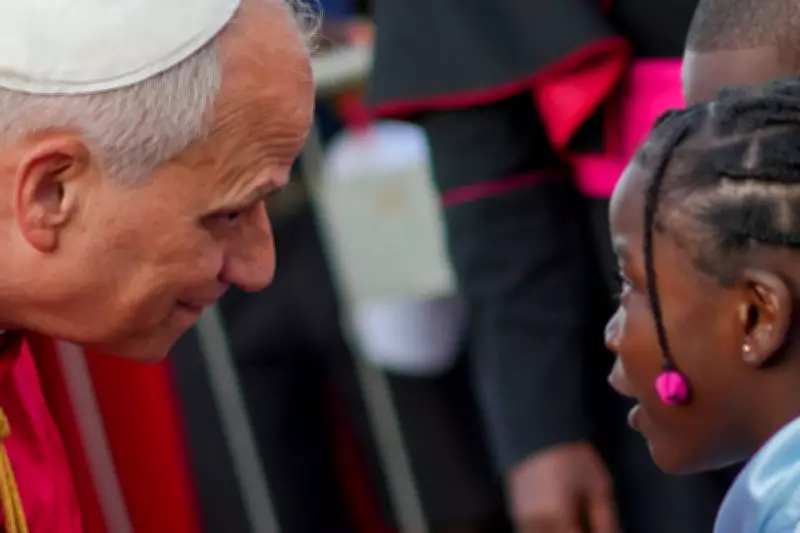
Pope Leo XIV is traveling to Equatorial Guinea on Tuesday, marking the final stop of his four-nation African journey. This visit presents one of the most diplomatically delicate challenges of his young papacy, as he enters a nation governed by Africa's longest-serving president, Teodoro Obiang Nguema Mbasogo, aged 83.
A Nation of Contrasts
Equatorial Guinea, a former Spanish colony on Africa's western coast, has been under Obiang's rule since 1979. His regime is widely accused of authoritarianism and extensive corruption. The discovery of offshore oil in the mid-1990s transformed the economy overnight, with oil now accounting for nearly half of the GDP and over 90% of exports, according to the African Development Bank.
Despite this wealth, more than half of the country's approximately 2 million inhabitants live in poverty. Rights organizations, including Human Rights Watch, alongside court cases in France and Spain, have documented how oil revenues have primarily enriched the ruling Obiang family rather than benefiting the broader population.

Pope's Unflinching Stance
Pope Leo XIV has demonstrated during this maiden African tour that he will not mince words. The Catholic Church's teachings on social inequity and corruption are clear, and if his stop in Cameroon is any indication, his messaging in Equatorial Guinea could be equally sharp.
In Yaounde last week, Leo met with President Paul Biya, the world's oldest leader at 93, who has been in power since 1982 and faces similar accusations of authoritarian rule. Standing beside Biya in the presidential palace, Leo delivered a powerful arrival speech.
"In order for peace and justice to prevail, the chains of corruption—which disfigure authority and strip it of credibility—must be broken," Leo declared. "Hearts must be set free from an idolatrous thirst for profit."
Church and State Dynamics
Equatorial Guinea is officially a secular state, but the Catholic Church plays a central role in its political and social systems. Church leaders are deeply interconnected with the government, according to Tutu Alicante, a U.S.-based activist who leads the EG Justice rights group.
"Part of it is the fear the government has instilled in everyone, including the church, and part of it is the monetary gains that the church derives from this government," Alicante explained.
Reverend Fortunatus Nwachukwu, the second-in-command at the Vatican's missionary evangelization office, noted that the Catholic Church operates in challenging civil spaces to fulfill its mission. "Should the church go to war against the government? Surely no," Nwachukwu said. "Should the church swallow everything as if it were normal? No. The church has to continue preaching justice, always in defense of life, human dignity, and the common good."
Corruption and Oppression
This mission is particularly difficult in Equatorial Guinea, where about 75% of the population is Catholic, making it one of Africa's most Catholic nations. However, it is also one of the most oppressed, with rampant accusations of harassment, arrests, and intimidation targeting political opponents, critics, and journalists.
Corruption remains a longstanding issue. The country consistently ranks among the bottom ten in Transparency International's annual corruption perception index. Samuel Kaninda, Transparency International's regional advisor for Africa, acknowledged that the government has taken some steps to improve, such as passing an anti-corruption law and funding a commission.
"The only way such measures will be effective is if the commission is truly independent to investigate and the judiciary is independent as well," Kaninda emphasized. He expressed hope that the pope's visit would highlight these shortcomings and offer hope to the people, even if the government attempts to exploit it for endorsement.
"The risk is there, but at the same time, we see more of the opportunity to shed more light on a lot more that is happening there," he added.

A Packed Schedule and Local Impact
This visit, the first by a pope since St. John Paul II in 1982, has already had a positive economic impact locally. Seamstress Tumi Carine reported increased business, creating dresses with fabric stamped with Leo's image. "The coming of the pope brought us many customers. We are really grateful for the coming of the pope, so we are really happy," Carine said.
Pope Leo XIV has a busy itinerary in Equatorial Guinea. After arriving and meeting with President Obiang, he will deliver speeches to government authorities, diplomats, and at the national university. His schedule includes celebrating Masses, visiting a psychiatric hospital and a prison, and meeting with young people and their families.
Before departing on Thursday, he will pray at a memorial for victims of a 2021 explosion at a military barracks in Bata, which killed over 100 people due to negligent dynamite handling near residential areas.
This final leg of his African tour underscores the delicate balance between diplomatic engagement and moral advocacy in a nation grappling with deep-seated issues of governance and equity.