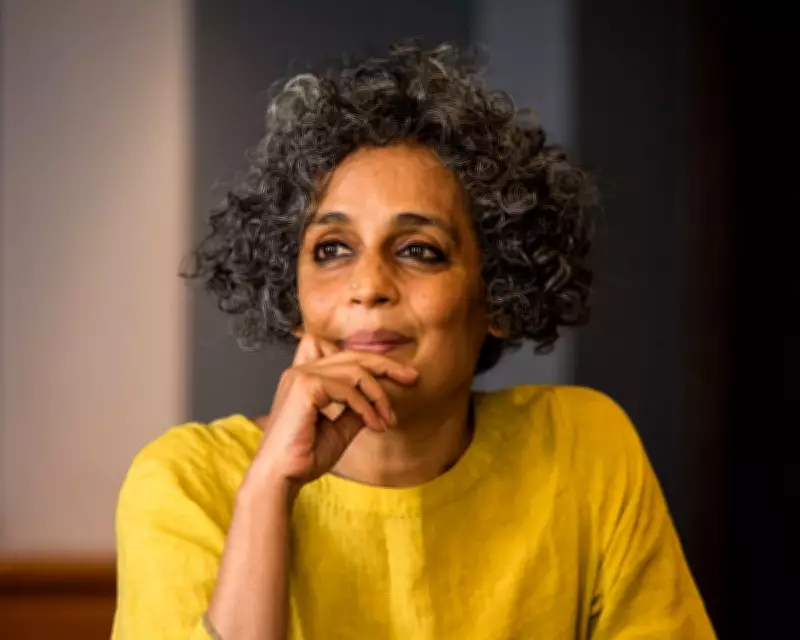
The renowned author Arundhati Roy has dramatically withdrawn from the Berlin International Film Festival, known as the Berlinale, following controversial remarks made by the festival's jury president, the acclaimed German filmmaker Wim Wenders. Roy described Wenders' comments as "unconscionable" and expressed deep concern that they had reached a global audience of millions.
Controversial Remarks Spark Immediate Backlash
The festival commenced on a contentious note this Thursday when the competition jury, led by Wim Wenders, faced pointed questions regarding the ongoing conflict in Gaza. When asked about the potential for films to influence political change, Wenders asserted that "movies can change the world" but clarified that this should occur "not in a political way." He elaborated further, stating that filmmakers "have to stay out of politics because if we make movies that are dedicatedly political, we enter the field of politics. But we are the counterweight of politics, we are the opposite of politics. We have to do the work of people, not the work of politicians."
Roy's Forceful Rejection and Withdrawal
In a powerful statement released on Friday, Arundhati Roy announced her decision to withdraw from the festival. She had been scheduled to attend a special screening of her recently restored 1989 film, In Which Annie Gives it Those Ones. Roy condemned Wenders' stance as "jaw-dropping," arguing that it effectively silences crucial discourse about human rights atrocities as they unfold in real time. "It is a way of shutting down a conversation about a crime against humanity even as it unfolds before us in real time – when artists, writers and film-makers should be doing everything in their power to stop it," she declared.

Roy, who was recently shortlisted for the Women's Prize for Fiction for her memoir Mother Mary Comes to Me, emphasized her firm belief that the events in Gaza constitute a genocide against the Palestinian people by the state of Israel. She stated that this action is supported and funded by the governments of the United States and Germany, among other European nations, rendering them complicit. "If the greatest film-makers and artists of our time cannot stand up and say so, they should know that history will judge them. I am shocked and disgusted," Roy added.
Broader Festival Context and Jury Dynamics
The Berlinale jury, which includes notable figures such as American director-producer Reinaldo Marcus Green, Japanese filmmaker Hikari, and Polish producer Ewa Puszczyńska, was also questioned about the German government's support for Israel. The German state provides significant funding for the festival. Puszczyńska described the line of questioning as "complicated" and "a bit unfair," noting that while art aims to make people think, artists cannot be held responsible for viewers' subsequent political decisions regarding support for Israel or Palestine. She also pointed out the existence of other conflicts where genocide occurs but receives less attention.
Reflecting on the inclusion of her film in the festival's Classics section, Roy expressed mixed emotions. She described In Which Annie Gives It Those Ones as "a whimsical film that I wrote 38 years ago" and noted there had been "something sweet and wonderful" about its planned presentation. However, the political context and Wenders' comments ultimately made her participation untenable.
This incident highlights the intense and ongoing debate about the role of art and artists in political discourse, particularly concerning highly charged international conflicts. Roy's withdrawal underscores a significant rift within the cultural community regarding artistic responsibility and political engagement.