Russia Unleashes Largest Aerial Assault on Ukraine in Single Day Since Conflict Began
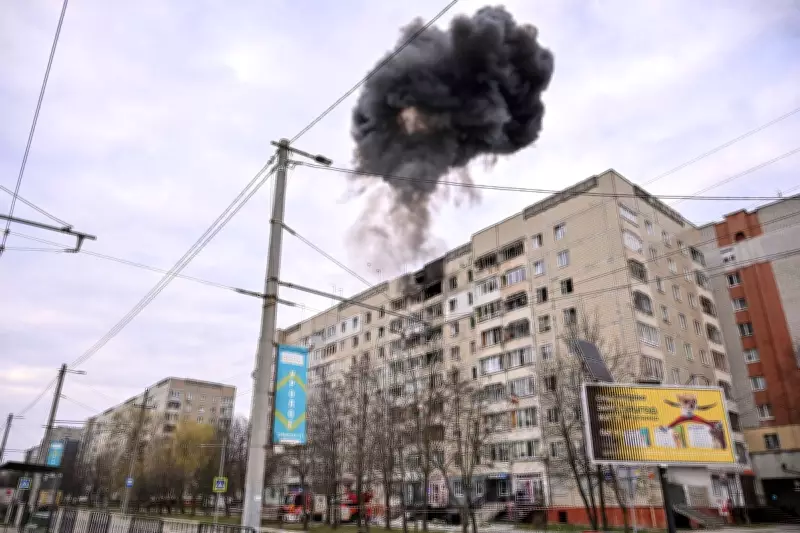
In a dramatic escalation of hostilities, Russia launched the largest aerial attack on Ukraine over a 24-hour period since the war began, unleashing a barrage of 948 drones that struck multiple cities and killed at least seven people. The assault, which occurred on Tuesday, represents one of the most intense air offensives in the four-year conflict, underscoring Moscow's relentless military pressure.
Massive Drone Onslaught Targets Civilian and Cultural Sites
Ukrainian officials reported that the attack involved 556 drones fired since 7am GMT on Tuesday alone, following an earlier overnight barrage of 392 drones and missiles. This coordinated strike pattern, rarely seen in the war, resulted in significant damage, including to the historic St Andrew's Church in Lviv, a 17th-century structure part of a UNESCO World Heritage site. The church, over 400 years old, caught fire during the bombardment, prompting outrage from Ukrainian authorities.
At least seven people were confirmed dead in the attacks, with dozens more injured, as explosions rocked cities such as Poltava and Zaporizhzhia. Ukrainian Foreign Minister Andrii Sybiha stated that swarms of Iranian-designed Shahed drones hit at least seven cities, highlighting the widespread nature of the assault.

Zelensky Condemns Attack as Sign of Russia's Unwavering Aggression
In his nightly video address, Ukrainian President Volodymyr Zelensky condemned the attacks, asserting that they "clearly show that Russia has no intention of really ending this war." He called on international allies to increase pressure on Moscow, emphasizing that only significant losses and additional sanctions could persuade Russia to seek peace. "Without additional and strong pressure on Russia, without tangible losses for them in Moscow, no desire will develop to move away from the war or return to peace," Zelensky declared.
Spring Offensive Intensifies Along Frontlines
Concurrently, Ukraine's armed forces reported that Russia's long-awaited spring-summer offensive is now underway along the roughly 1,250-kilometre frontline in eastern and southern Ukraine. General Oleksandr Syrskyi, commander-in-chief of Ukraine's armed forces, noted that Russian troops have made simultaneous attempts to break through defensive lines in several strategic areas, launching 619 attacks in just four days.
The Institute for the Study of War, a Washington-based think tank, supported this assessment, indicating that Russia escalated strikes from 17 March and has deployed heavy equipment and additional troops to the front. Despite these efforts, Russia has struggled to capture major cities, making only incremental gains in rural regions while occupying about 20% of Ukrainian territory, including Crimea.
International Reactions and Regional Implications
The attack prompted swift responses from neighbouring countries. Poland scrambled fighter planes and allied aircraft to monitor the situation, though no airspace violations were confirmed. Meanwhile, Moldova's parliament approved a 60-day energy state of emergency after Russian attacks in Ukraine disabled a power line supplying the bulk of its energy needs, highlighting the conflict's broader regional impact.
In related developments, Libya towed a damaged Russian "shadow fleet" tanker to prevent an environmental disaster in the Mediterranean, and Russia launched its first internet satellites in a bid to rival Elon Musk's Starlink network. Ukraine also discussed a potential $1.4 billion loan from the U.S. International Development Finance Corporation to restore gas production sites damaged by Russian strikes.
Cultural Heritage Under Threat
Ukraine's foreign minister urged UNESCO to condemn the attack on Lviv's historic centre, calling for accountability under international law. "Russia's brutal violations of international law must be met with accountability," Sybiha stated, comparing Moscow's actions to those of the Iranian regime in the Middle East. He emphasized that Kyiv would use all available mechanisms to protect its cultural heritage and ensure those responsible face consequences.

As the conflict enters a new phase of intensity, the latest aerial assault signals a grim continuation of hostilities, with both sides preparing for further confrontations in the coming months. The international community watches closely, as calls for increased support and pressure on Russia grow louder in response to these devastating attacks.