South Korea has announced a definitive plan to terminate the overseas adoption of its children, following intense scrutiny from United Nations human rights investigators over historical abuses and systemic failures.
Phasing Out a Troubled System
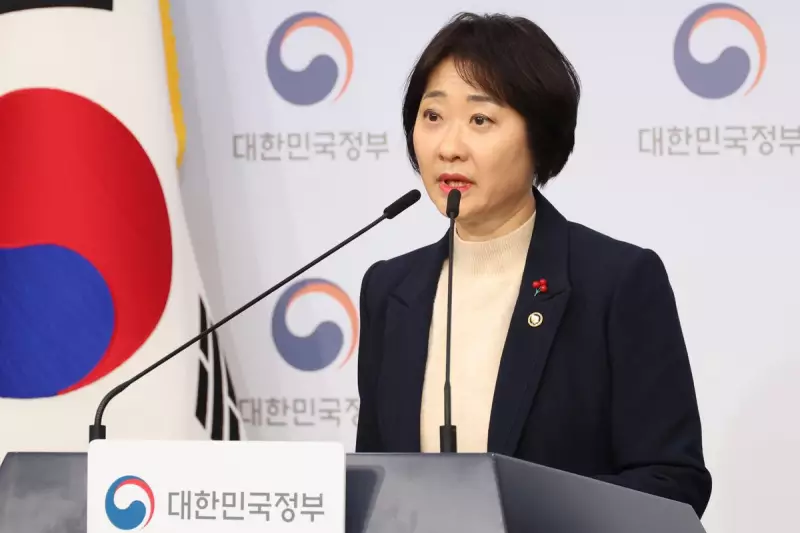
The government declared on Friday that it will phase out foreign adoptions over a five-year period, with the aim of reaching zero by 2029 at the latest. Vice Minister of Health and Welfare Lee Seuran outlined the plan, linking it to a tightening of welfare policies for children in need of care.
The scale of the decline is stark: South Korea approved foreign adoptions for just 24 children in 2025, a dramatic fall from around 2,000 in 2005 and an annual average exceeding 6,000 during the 1980s boom.
In briefings, officials shifted focus towards future improvements. "Now, with the adoption system being restructured into a public framework... we have an opportunity to reassess whether international adoption is truly a necessary option," Lee stated, highlighting parallel efforts to promote domestic adoption.
UN Condemns "Perfunctory" Response to Historic Abuses
The announcement came hours after the UN human rights office released Seoul's official response to investigators. UN special rapporteurs had raised "serious concern" over South Korea's failure to ensure truth-finding and reparations for widespread violations tied to decades of mass overseas adoptions.
The UN action was prompted partly by the case of Yooree Kim, a 52-year-old sent to a French family in 1984. Her documents falsely described her as an abandoned orphan, despite having biological parents. Kim reported severe physical and sexual abuse by her adopters.
Investigators criticised South Korea for failing to provide adoptees effective access to remedies and for the "possible denial of their rights to truth, reparations, and memorialisation." They also expressed concern over the suspension of a government fact-finding investigation into past adoption fraud and abuse.
In its defence, South Korea cited past reforms like a 2011 law that reinstated judicial oversight, which ended decades of control by private agencies. However, the government said further investigations and reparations would depend on future legislation, offering no new measures to address the backlog of falsified records blocking family reunions.
Human rights lawyer Choi Jung Kyu, representing Kim, labelled South Korea's response "perfunctory." He noted that promises of stronger reparations remain unclear in draft bills.
Legal Hurdles and a Stalled Truth Commission
Pressure has mounted on Seoul to address the legacy of an adoption programme that sent an estimated 200,000 Korean children overseas. A Truth and Reconciliation Commission, after a nearly three-year investigation, recognised Kim and 55 other adoptees as victims of human rights violations in March.
However, the commission halted its adoption investigation weeks later due to internal disputes. The fate of 311 remaining cases now hinges on lawmakers establishing a new commission through legislation.
The commission's findings acknowledged state responsibility for facilitating a programme "rife with fraud and abuse," driven by efforts to reduce welfare costs and enabled by private agencies that manipulated children's backgrounds. These findings aligned with previous investigations by The Associated Press.
Victims and their advocates continue to face significant legal obstacles. The government vetoed a bill in April that would have removed the statute of limitations for state-related human rights violations, though this occurred before President Lee Jae Myung took office in June. President Lee issued an apology over past adoption problems in October.
As South Korea moves to end foreign adoptions, the global community watches to see if it will also deliver meaningful justice for the thousands whose lives were irrevocably changed by a system now deemed fundamentally flawed.