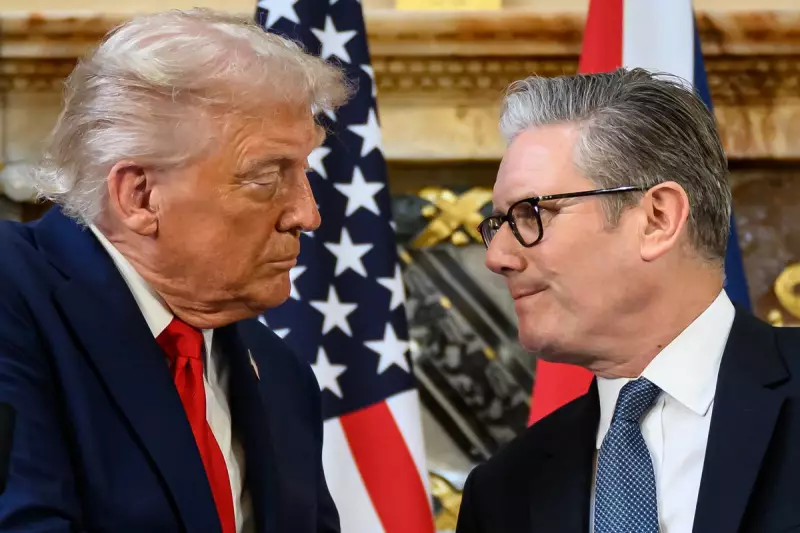
The much-vaunted diplomatic rapport between Prime Minister Keir Starmer and US President Donald Trump has hit a formidable wall, failing to prevent a seismic legal assault on one of Britain's most venerable institutions. President Trump has launched a $10bn defamation lawsuit against the BBC, a move that has laid bare the hard limits of Sir Keir's influence and plunged the broadcaster into an existential crisis.
The Spark: A Controversial Edit and a Colossal Lawsuit
The dispute centres on a Panorama programme broadcast in the final week of the 2024 US election campaign. The documentary is accused of misleadingly editing a speech Mr Trump gave on 6 January 2021. By splicing two separate clips, the broadcast created the impression the President told supporters: “We’re going to walk down to the Capitol … and I’ll be there with you. And we fight. We fight like hell.”
The fallout was immediate and severe. The scandal prompted the resignations of BBC director general Tim Davie and CEO of BBC News Deborah Turness. Now, the corporation faces a staggering financial threat in the form of Trump's lawsuit, filed in a Florida court, which alleges the broadcaster used artificial intelligence to misrepresent his words.
The Diplomatic Duck: Starmer's Calculated Silence
Despite Sir Keir Starmer earning a reputation among global peers as a so-called ‘Trump whisperer’, he has conspicuously avoided using this perceived capital to defend the BBC. Expectations were high that the Prime Minister would personally intervene with the White House to stop the lawsuit from being filed.
Reports suggested a call was scheduled, but when it finally occurred over a week later, Sir Keir focused solely on Ukraine, making no mention of the BBC's predicament. Downing Street later conceded the Prime Minister had effectively sidestepped the issue. This strategic silence has baffled diplomats in London, who privately express surprise he did not even attempt to leverage his relationship to avert the crisis.
National Asset or Political Pawn? The Stakes for the UK
The Prime Minister's inaction carries profound implications. The Labour government views the BBC as a critical national and international asset, a pillar of British soft power funded by the public via the licence fee. This funding supports the World Service and global news operations, projecting UK influence worldwide.
Consequently, an attack of this magnitude is not just a corporate legal battle; it is seen as an assault on the credibility of the UK itself. With the BBC facing ruinous legal costs—millions to defend, potentially billions in damages—the financial burden would ultimately fall on British taxpayers. This transforms the lawsuit into a matter of national interest, even touching on security concerns.
Sir Keir's decision to prioritise Ukraine talks, while understandable given the global gravity of that conflict, has come at a significant cost. It has undermined his hard-won reputation as an international statesman, the very arena where he had previously excelled. Moreover, his failure to act projects a image of weakness on the world stage and drags a cherished British institution into the turbulent arena of US political warfare, with the BBC's future now hanging in the balance.