Trump Declares US 'Obliterated' Iranian Military Targets on Strategic Kharg Island
Former President Donald Trump has jubilantly claimed that the United States military has "obliterated" every military target on Iran's crucial Kharg Island, while Tehran issued furious threats of revenge if American forces targeted the island's vital oil infrastructure. In a post on his Truth Social platform on Friday evening, Trump boasted about what he described as decisive strikes ordered at his direction.
Trump's Bombastic Declaration and Iranian Warnings
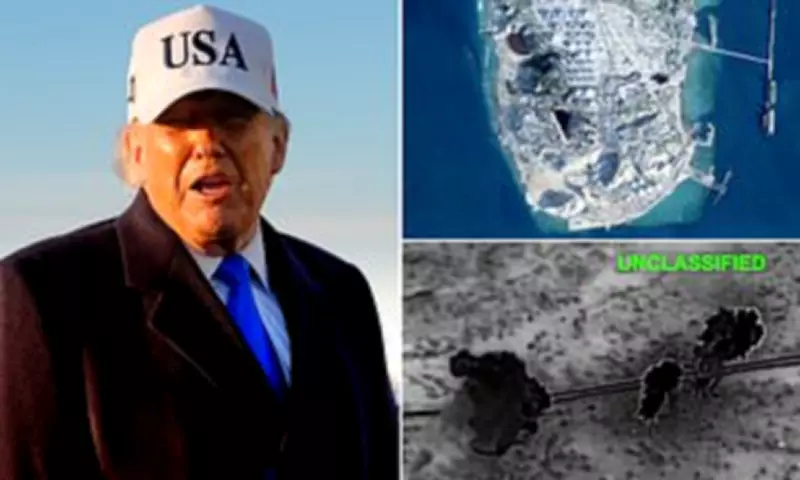
"Moments ago, at my direction, the United States Central Command executed one of the most powerful bombing raids in the History of the Middle East, and totally obliterated every MILITARY target in Iran's crown jewel, Kharg Island," Trump wrote in his characteristically bold style. He added a significant caveat, stating that he had "for reasons of decency" refrained from targeting the island's oil infrastructure, but warned this restraint could be reconsidered.
"However, should Iran, or anyone else, do anything to interfere with the Free and Safe Passage of Ships through the Strait of Hormuz, I will immediately reconsider this decision," Trump declared, highlighting the strategic importance of the vital shipping lane. The former president later released what appeared to be video footage of the strikes, though The Daily Mail reported having reached out to both the White House and Pentagon for official comment without immediate response.
Iran's Furious Response and Strategic Importance of Kharg
The Iranian military responded with stark warnings through state media, declaring that oil and energy infrastructure owned by US-linked firms would be "immediately destroyed and turned into a pile of ashes" if American forces struck Iran's oil facilities. Iranian Parliament Speaker Mohammad Bagher Qalibaf had warned just a day earlier that attacks on Iran's southern maritime frontier islands would cause the country to "abandon all restraint," underscoring their central importance to both Iran's economy and national security.
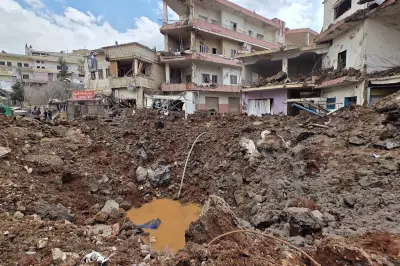
According to Iran's semi-official Fars news agency, at least fifteen explosions were reported with thick smoke rising over Kharg Island, which had been previously hit by US strikes. The agency specified that the strikes targeted an air defense facility, a naval base, the airport control tower, and an offshore oil company's helicopter hangar, while emphasizing that no oil infrastructure sustained damage during the attack.
The Critical Economic and Strategic Role of Kharg Island
Kharg Island, along with Qeshm Island and the smaller islands of Abu Musa and the Greater and Lesser Tunb, carries outsized importance due to their oil facilities and strategic positioning. The small coral island located approximately twenty-one miles off Iran's coast serves as the primary terminal through which nearly all of Iran's oil exports pass, making it the country's economic lifeline.
According to maritime intelligence company TankerTrackers.com, Iran has exported 13.7 million barrels of oil since the conflict began, with multiple tankers observed loading at Kharg in recent satellite imagery. Iran derives a significant portion of its $78 billion annual revenue from oil exports, with shipments primarily flowing to countries including China. A successful strike on Kharg would not only severely damage Iran's current government but could potentially undermine the viability of any future administration.
Expert Analysis and Broader Regional Implications
Petras Katinas, an energy researcher at the Royal United Services Institute, emphasized that Kharg Island remains critical to funding both Iran's government and military operations. "If Iran were to lose control of Kharg, it would be difficult for the country to function, even though the island isn't a military or nuclear target," Katinas explained, adding that control of the island would provide significant leverage in negotiations with Iran since it represents "the main node" of the country's economy.
JPMorgan's global commodity research team warned in an investment note that any strike on the island would have major economic implications, noting that while Kharg has often been viewed as a critical vulnerability, it has rarely been directly targeted. "A direct strike would immediately halt the bulk of Iran's crude exports, likely triggering severe retaliation in the Strait of Hormuz or against regional energy infrastructure," the analysis cautioned.
Escalating Military Deployment and Regional Fallout
Meanwhile, an American official speaking on condition of anonymity revealed that 2,500 additional Marines and an amphibious assault ship are being deployed to the Middle East nearly two weeks into the conflict with Iran. Elements from the 31st Marine Expeditionary Unit and the amphibious assault ship USS Tripoli have received orders for the region, though officials emphasized that such deployments do not necessarily indicate an imminent ground operation.
The humanitarian crisis in the broader region continues to deepen, with nearly 800 people reported killed and 850,000 displaced as Israel launched waves of strikes against Iran-backed Hezbollah militants. According to health ministry figures that could not be independently verified, US and Israeli attacks have killed more than 1,200 people in Iran, while at least thirteen US soldiers have lost their lives since military operations began two weeks ago.
Economic Consequences and Strategic Concerns
In Washington, Defense Secretary Pete Hegseth reported that over 15,000 enemy targets have been struck—more than 1,000 per day since hostilities began—while seeking to address concerns about potential disruption to shipping through the Strait of Hormuz. "We have been dealing with it and don't need to worry about it," Hegseth told reporters, though crude oil prices have surged more than 40 percent since the conflict began.
The UN refugee agency has estimated that up to 3.2 million people have been displaced inside Iran since the war started, while Tehran has retaliated with missile and drone attacks against at least ten countries despite facing superior US and Israeli firepower. Most concerning for global markets, Iran has threatened to strike oil tankers traversing the Strait of Hormuz, bringing traffic to a virtual halt on a route that normally carries one-fifth of global oil supplies, creating significant economic uncertainty worldwide.