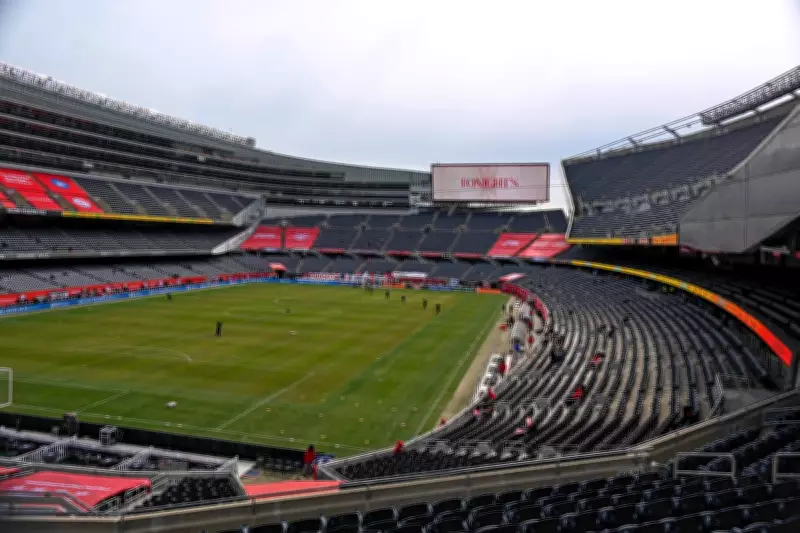
Midwestern States Clash in Historic NFL Franchise Turf War
A significant interstate confrontation is unfolding between two Midwestern states with a long-standing competitive history. The legendary Chicago Bears football franchise is contemplating departure from their historic Soldier Field home, where they have competed for fifty consecutive seasons. Indiana legislators are actively pursuing the team with an ambitious proposal to finance and construct a modern domed stadium in Hammond, Indiana, approximately twenty-five miles from their current Lake Michigan shoreline location.
Illinois Responds with Legislative Countermeasures
The Illinois General Assembly has swiftly reacted by advancing legislation that would provide substantial tax breaks for so-called megaprojects valued at a minimum of one hundred million dollars. This legislative initiative would directly encompass the Bears' existing proposal to develop a comprehensive complex in Arlington Heights, a northwestern Chicago suburb situated at a comparable distance from Soldier Field as the Indiana alternative. Critics argue this represents a poor arrangement for Illinois taxpayers, who already shoulder some of the nation's highest property tax burdens, particularly while still repaying hundreds of millions in debt from Soldier Field renovations completed two decades ago.
The Stakes of the Franchise Relocation Battle
The Chicago Bears represent one of only two remaining original NFL founding members, carrying immense historical weight with nine championship victories including a Super Bowl triumph. According to Forbes valuation data, the franchise commands an impressive $8.9 billion price tag, ranking among the NFL's most valuable thirty-two teams. Originally established in Decatur, Illinois in 1920, the Bears have maintained their Chicago headquarters for 105 consecutive years. Losing this iconic franchise to neighboring Indiana would deliver a substantial symbolic blow to Illinois pride and prestige.

Soldier Field Limitations and Ownership Ambitions
Soldier Field currently stands as the NFL's smallest stadium with just 61,500 spectator seats. Throughout their history, the Bears have consistently rented their playing facilities, initially utilizing the Cubs' Wrigley Field from 1921 through 1970 before transitioning to the Chicago Park District-maintained Soldier Field. Similar to most contemporary NFL franchises, the Bears organization seeks stadium ownership to gain complete operational control, scheduling autonomy, and comprehensive revenue streams from ticket sales, concessions, parking facilities, naming rights, and additional income sources. Furthermore, Soldier Field's open-air design prevents hosting premium indoor sporting events like Super Bowls, NCAA Final Fours, or WrestleMania spectacles that a modern enclosed facility could accommodate.
Deepening Political and Cultural Divisions
The interstate conflict extends beyond simple stadium economics into established cultural differences and political polarization. The divide between Democrat-dominated Chicago and conservative Indiana has significantly widened, particularly following Indiana's recent establishment of a commission to study potential boundary adjustments that would incorporate certain central Illinois counties where voters have approved secession measures from the Chicago metropolitan region. This political friction compounds existing competitive tensions, including intense college basketball rivalries between the states' flagship universities.
Arlington Heights Development and Indiana Alternative
The Bears organization previously signaled relocation intentions by purchasing a 326-acre former horse-racing property in Arlington Heights for approximately $200 million in 2023. Their vision involves a massive $5 billion taxpayer-assisted development featuring a domed stadium alongside residential housing, hotel accommodations, entertainment venues, and retail establishments. After Illinois lawmakers showed limited enthusiasm for a 2024 proposal involving a partially taxpayer-funded enclosed stadium adjacent to Soldier Field, the franchise turned attention toward Indiana alternatives late last autumn.

Current Legislative Proposals and Financial Implications
Indiana's legislative approach establishes the Northwest Indiana Stadium Authority to finance, construct, and lease a domed stadium facility near Wolf Lake in Hammond. Governor Mike Braun formally signed this legislation into law on February 26th, offering the Bears a potential thirty-five-year lease arrangement. Construction financing would utilize borrowed state funds repaid through increased local hospitality tax revenues, though exact construction costs remain unspecified.
Meanwhile, Illinois Democrats have advanced House legislation providing incentives for megaprojects valued between $100 million and $500 million based on job creation metrics. This proposal would freeze property taxes at pre-construction values for up to forty-five years while allowing developers to make negotiated annual payments in lieu of taxes to local governments. Additional provisions include sales tax exemptions on building materials for fifteen years. Opponents contend this framework would inevitably shift tax burdens onto homeowners and existing businesses while providing developers with substantial financial advantages.
Financial Legacy and Contractual Considerations
Illinois taxpayers continue carrying significant debt from previous stadium investments, with $467 million remaining on the $587 million Soldier Field renovation completed in 2001 after accounting for interest payments. The Bears currently maintain a $7 million annual lease agreement extending through 2033, with early termination penalties costing $10.5 million for each remaining contract year. Democratic Governor JB Pritzker has defended the Illinois incentive plan, arguing it would stimulate development on currently non-productive land while ensuring increased revenue streams for municipal governments through negotiated payment structures.