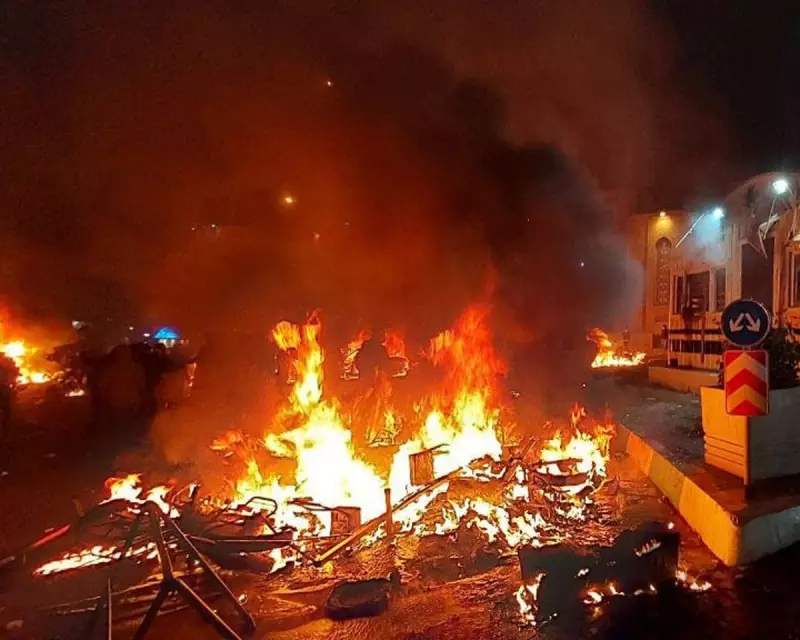
US President Donald Trump has declared he is considering "very strong" military options against Iran, even as he claimed the Tehran regime has signalled a desire to negotiate. The comments come amid a violent crackdown on widespread protests in Iran that human rights monitors report has left hundreds dead.
Escalating Tensions and a Stark Death Toll
Speaking to reporters aboard Air Force One on Sunday, President Trump was asked if Iran had crossed his previously stated red line regarding the killing of protesters. "They're starting to, it looks like," he responded, adding, "We're looking at it very seriously. The military is looking at it, and we're looking at some very strong options. We'll make a determination."
This bellicose rhetoric coincides with grim statistics emerging from Iran. According to the US-based Human Rights Activists News Agency, at least 538 people have been killed in the violence surrounding demonstrations since late December. The group states that figure includes 490 protesters, with more than 10,600 individuals arrested by Iranian authorities.
The protest movement, initially sparked by a sudden currency devaluation and worsening economic conditions, has evolved into the most significant unrest Iran has witnessed in years. Demonstrators have broadened their demands to include sweeping political reform and calls for the government's downfall.
Iran's Defiant Response and Wider Political Strikes
Iranian officials have reacted defiantly to Trump's threats. Parliamentary speaker Mohammad-Bagher Ghalibaf warned Washington against "a miscalculation," stating that Israeli and US interests across the Middle East would be considered "legitimate targets" in the event of any American action.
Meanwhile, in a separate but significant escalation of domestic political conflict, the US Justice Department has opened a criminal investigation into Federal Reserve Chair Jerome Powell. The probe, reported by the New York Times, centres on whether Powell misled Congress last June regarding renovations to the Fed's Washington headquarters.
Powell issued a blistering statement, alleging the threat of criminal charges stemmed from the Fed's insistence on setting interest rates independently, "based on our best assessment of what will serve the public, rather than following the preferences of the president."
Cultural Spotlight and Global Flashpoints
Beyond the immediate crisis, other stories are capturing attention. The 83rd Golden Globes saw Paul Thomas Anderson's film One Battle After Another and the Netflix drama Adolescence lead the awards with four wins each. However, notable snubs for critically acclaimed works like Ryan Coogler's Sinners generated significant backlash.
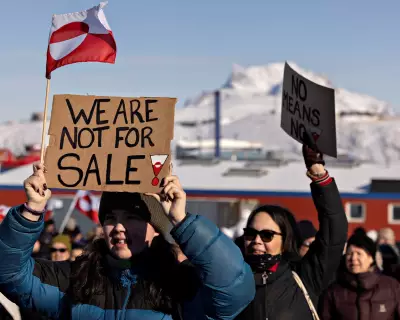
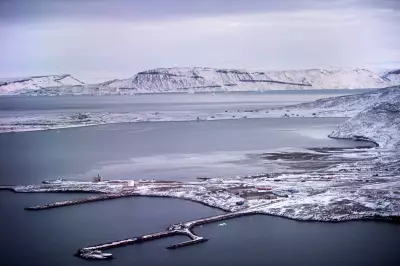
On the global stage, President Trump has reiterated his controversial interest in Greenland, mocking its defences and asserting the US would acquire the territory "one way or the other" to pre-empt Russian or Chinese claims. Elsewhere, a disturbing tech trend has gone viral: the "put her in a bikini" commands to the Grok AI chatbot, which saw thousands of requests per hour to generate nude images of women, sparking a major scandal around nudification technology.
Finally, a stark warning on climate inequality emerged from Oxfam, reporting that the world's richest 1% had already exhausted their fair share of the global carbon emissions budget for 2026 within the first ten days of the year.