Trump Seeks Postponement of China Summit as Iran Conflict Intensifies
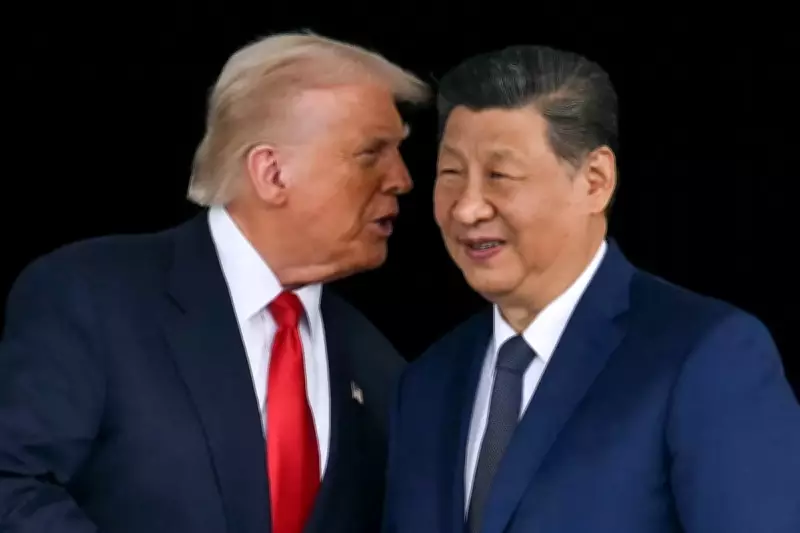
US President Donald Trump has formally requested to delay his highly anticipated state visit to China by around one month, attributing the decision to the escalating US-Israeli military engagement with Iran. The proposed trip, originally scheduled for 31 March to 2 April to meet Chinese leader Xi Jinping, is now under review as the Middle Eastern conflict enters its third consecutive week.
War Management Takes Priority Over Diplomatic Agenda
President Trump confirmed on Monday that the White House had "requested that we delay it a month or so" to ensure his presence in Washington for overseeing wartime operations. "I'm looking forward to being with him," Trump remarked regarding Xi Jinping, emphasising their "very good relationship." He added, "There's no tricks to it either. It's very simple. We have got a war going on. I think it is important that I be here."
This development follows contradictory statements from the administration. On Sunday, Trump suggested to the Financial Times that postponement might occur if China declined to assist in securing the Strait of Hormuz. However, Treasury Secretary Scott Bessent clarified the next day that the potential delay stemmed solely from coordination needs for the Iran war effort, not from Chinese refusal or trade disputes.

Beijing Responds with Cautious Diplomacy
Chinese Foreign Ministry spokesperson Lin Jian announced on Tuesday that both nations are actively negotiating "the timing and related matters of president Mr Trump's visit to China." This diplomatic manoeuvring occurs against a backdrop described by Beijing's top diplomat Wang Yi as a "big year for China-US relations," with the postponement effectively pausing bilateral renewal initiatives.
Simultaneously, high-stakes trade discussions concluded in Paris on Monday, intended to lay groundwork for Trump's visit. These negotiations followed Washington's launch of new investigations into alleged unfair trade practices, reinstating pressure after the US Supreme Court invalidated Trump's global tariffs last month.
Expert Analysis Highlights Growing Complexities
Zhao Minghao, an international relations specialist at Shanghai's prestigious Fudan University, observed, "The situation is not in jeopardy, and Beijing still wants to organise the summit, but the US-Iran conflict and the Supreme Court ruling on tariff policies have complicated the efforts." He further noted that Trump's "war of choice" in Iran makes US-China interactions this year "more difficult," while the delay could allow for additional trade actions creating "new uncertainties" affecting Beijing's strategic calculations.
Sources familiar with the Paris talks revealed China demonstrated openness to potentially increasing purchases of US agricultural products, including poultry, beef, and non-soybean crops. Discussions also covered rare earth minerals—an industry China dominates—and novel approaches to managing trade and investment flows.
Editorial Warnings and Academic Perspectives
China Daily characterised the negotiations as "constructive" in a Tuesday editorial but cautioned Trump that Beijing's "openness should not be mistaken for acquiescence." The publication urged the US to "refrain from taking any further actions that could disrupt or undermine a stable China-US economic relationship," specifically citing tariffs, restrictive measures, and unilateral investigations as sources of detrimental uncertainty.
Alfred Wu of the Lee Kuan Yew School of Public Policy echoed this sentiment regarding summit planning, stating, "The fluctuations in plans are not ideal from China's perspective. China actually wants something more predictable." This underscores Beijing's preference for stable, foreseeable diplomatic engagements amid turbulent global circumstances.
The postponement of Trump's visit not only highlights how the Iran war has disrupted his foreign policy agenda but also casts a shadow over US-China relations that had remained relatively stable since the leaders' October 2025 meeting. As both nations navigate military conflicts and trade tensions, the rescheduled summit will be a critical test of their ability to maintain constructive dialogue during a period of significant geopolitical volatility.