Trump Exposes Hegseth's Disappointment Over Iran Negotiations
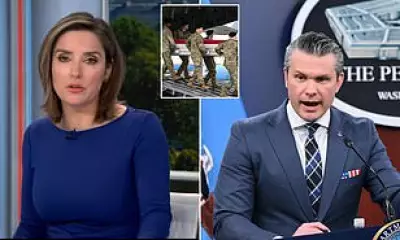
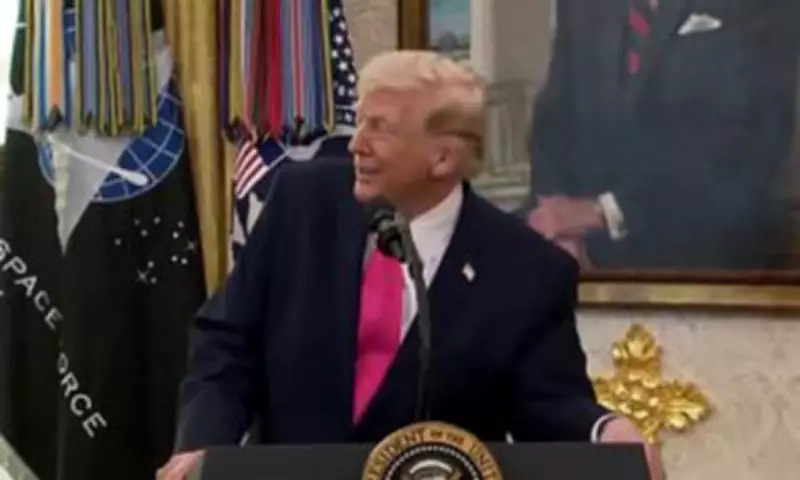
In a revealing press conference at the Oval Office on Tuesday, former US President Donald Trump stated that Secretary of War Pete Hegseth and General "Raizin" Caine, chairman of the Joint Chiefs of Staff, were "quite disappointed" about ongoing negotiations with Iran. Trump emphasised, "Pete didn't want [the war] to be settled," highlighting internal tensions within his administration regarding diplomatic efforts.
Hegseth Doubles Down on Military Strikes
Speaking at the same conference, Hegseth reinforced his hawkish stance, asserting that the United States "negotiates with bombs." He claimed the air campaign against Iran was "one for the history books," arguing that never before has a modern military been "so rapidly and historically obliterated, defeated, from day one with overwhelming firepower." Hegseth added that the war department's priority is to prevent Iran from obtaining a nuclear weapon, vowing to keep "our hand on that throttle as long and as hard as is necessary" to protect US interests.
Trump's Blame-Shifting and Ceasefire Announcement
This disclosure follows Trump's remarks on Monday at a conference in Tennessee, where he appeared to shift blame onto Hegseth for initiating strikes on Iran. Trump recounted, "And Pete, I think you were the first one to speak up. And you said, 'Let's do it, because you can't let them have a nuclear weapon.'" Hegseth responded with an awkward smile as Trump discussed back-channel talks with Iran, which he claimed had "started last night." Trump announced a five-day halt to US strikes on Iranian energy infrastructure while pursuing negotiations through intermediaries, signalling a potential de-escalation.

Ongoing Military Buildup and Diplomatic Moves
Despite the ceasefire announcement, the US is considering deploying around 3,000 additional troops to support a possible ground invasion, joining thousands of Marines already in the Middle East. When asked about the shift towards negotiations, Trump explained, "They're talking to us, and they're talking sense," reiterating that Iran has agreed not to build a nuclear weapon. He confirmed that envoys Steve Witkoff and Jared Kushner are involved in direct negotiations, stating, "We're in negotiations right now... the other side, I can tell you, they'd like to make a deal."
Iran's Response and Escalating Tensions
Trump remained cryptic about Iranian interlocutors, noting that many Islamic Regime leaders have been killed in joint Israeli and US strikes. He revealed that Iran gave the US a "present" related to oil, gas, and the Strait of Hormuz, worth "a tremendous amount of money," which he interpreted as a positive signal. However, Iran targeted American military bases in Kuwait, Jordan, and Bahrain with missile salvos on Wednesday, causing limited damage. Iranian military spokesman Lieutenant Colonel Ebrahim Zolfaghari mocked Trump, suggesting the US is "negotiating with yourselves."
Proposed Peace Plan and Future Outlook
Meanwhile, reports indicate Trump has sent Iran a 15-point peace plan through Pakistan, proposing a one-month ceasefire to discuss terms including handing over enriched uranium, banning further enrichment, and ensuring safe passage through the Strait of Hormuz. In return, Iran would see an end to sanctions and receive assistance in developing civil nuclear energy at Bushehr. As tensions persist, the situation remains volatile, with diplomatic efforts clashing against continued military posturing.