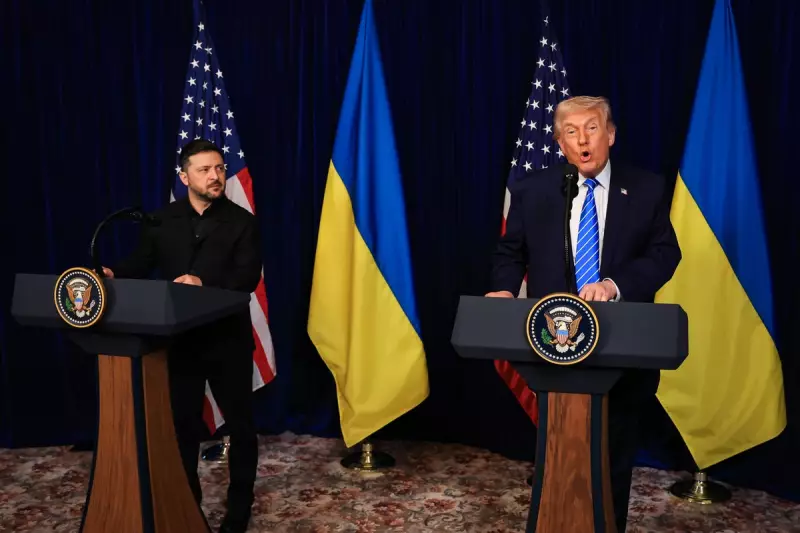
President Donald Trump has declared that Ukraine and Russia are now "closer than ever" to reaching a peace agreement, following high-stakes talks with Ukrainian leader Volodymyr Zelenskyy at his Florida resort.
Mar-a-Lago Talks After Putin Phone Call
The face-to-face meeting between the two presidents on Sunday 28 December 2025 came shortly after a lengthy two-and-a-half-hour telephone discussion between Trump and Russian President Vladimir Putin. Trump emerged from that call expressing his belief that Putin remains serious in his desire for peace, a sentiment he carried into the subsequent talks with Zelenskyy.
Despite this optimistic framing, the discussions unfolded against a backdrop of continued Russian military assaults on Ukrainian positions, highlighting the stark contrast between diplomatic rhetoric and battlefield reality.
The Sticking Points: Territory and NATO
Both leaders openly acknowledged that significant obstacles stand in the way of any final settlement. The most contentious issue remains the status of vast swathes of Ukrainian land currently under Russian military control. Moscow's demands are reported to be clear and far-reaching:
- Formal Ukrainian recognition of the annexed territories.
- A withdrawal of Ukrainian forces from certain eastern regions.
- The complete abandonment of Kyiv's long-standing ambition to join the NATO alliance.
President Zelenskyy, while affirming Ukraine's readiness for a just peace, did not concede these points publicly. However, reports suggest President Trump has shown a degree of receptiveness to the Russian terms, potentially marking a significant shift in the US negotiating stance.
A Draft Deal and Security Guarantees
A potential pathway forward is taking shape in the form of a 20-point draft peace proposal, which sources indicate is roughly "about 90% ready". Intriguingly, this draft is said to include provisions for Ukraine to receive NATO-like security guarantees from Western partners, but crucially, only if it agrees to formally drop its bid for full NATO membership.
This compromise aims to address Ukraine's paramount need for security assurances against future aggression, while ostensibly meeting Russia's core demand of preventing further NATO expansion eastward. The viability of such guarantees, and which nations would underwrite them, remains a major unanswered question.
The Mar-a-Lago summit underscores the intensely personal and unconventional diplomacy characterising this phase of the conflict. While Trump's announcement suggests a breakthrough may be imminent, the fundamental issues of sovereignty, territory, and future alignment are unresolved. The coming weeks will test whether this declared proximity to peace can survive contact with the hard realities of the war and the firm red lines held in both Kyiv and Moscow.