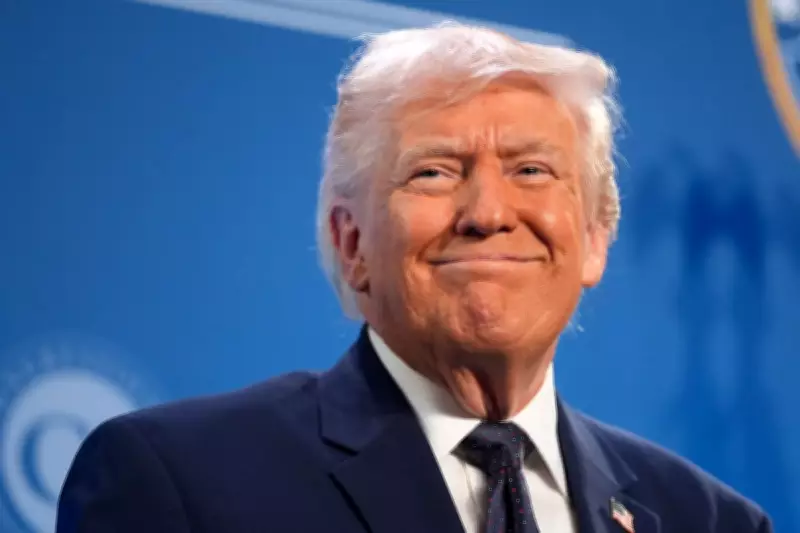
Former President Donald Trump has made the striking declaration that the United States has "already won" the ongoing conflict with Iran, though he added that the victory is not yet sufficient. In a recent statement, he sharply criticised past US presidents for lacking the necessary courage to act decisively against Iran at an earlier stage.
Trump's Assessment of the Iran Threat
Trump asserted that Iran had harboured intentions to launch attacks across the entire Middle East, with a particular focus on Israel. He claimed that without US intervention, Israel would have faced the dire prospect of being "wiped out" by Iranian aggression. This warning underscores the perceived severity of the threat as framed by the former president.
Military Operations and Achievements
According to Trump, over the past nine days, the US military, in coordination with the Israeli Defense Forces, executed what he described as 'epic fury' operations. He reported that these actions were conducted "very successfully," leading to significant progress toward completing the US's military objectives in the region.
One of the key achievements highlighted by Trump was the elimination of Iran's nuclear threat through an operation codenamed "Midnight Hammer." He stated that this move has substantially neutralised a critical security concern for the US and its allies.
Details of the Conflict's Outcome
Trump provided specific details on the extent of the damage inflicted on Iranian forces. He claimed that "every single force in Iran had been 'wiped out'" as a result of the recent military engagements. Additionally, he reported that nearly 50 Iranian naval ships were sunk during the operations, noting that these vessels were not designed or equipped to withstand confrontation with the US military.
Despite declaring victory, Trump emphasised that the US has not "won enough," suggesting a desire for further action or consolidation of gains. This nuanced stance reflects his ongoing critique of what he views as insufficiently aggressive foreign policy under previous administrations.
The former president's comments come amid heightened tensions in the Middle East, with his statements likely to influence political discourse and strategic assessments regarding US involvement in the region. His portrayal of a decisive military success contrasts with broader geopolitical complexities, raising questions about the long-term implications of such operations.