Trump Declares US Independence from NATO Support in Iran Conflict
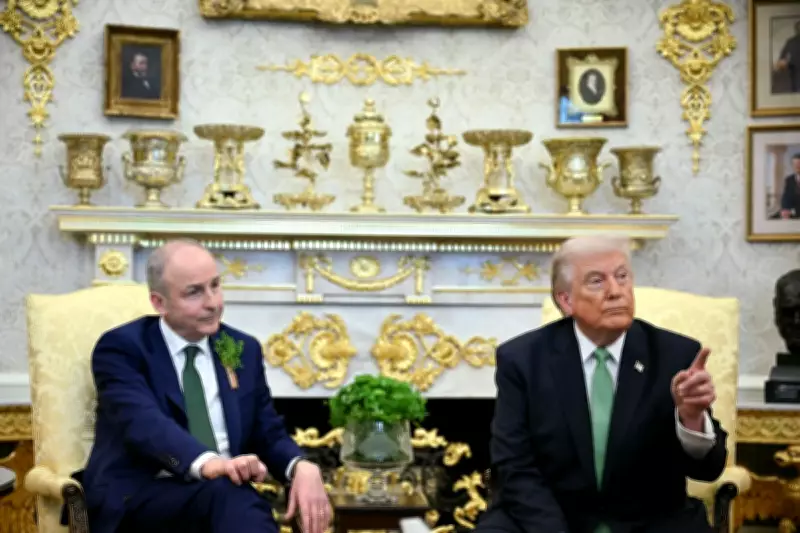
In a striking reversal, former President Donald Trump has declared that the United States "doesn't need any help" from NATO nations in the ongoing military engagement with Iran, after his urgent appeals for allied assistance were uniformly rejected by traditional partners. This statement came during a bilateral meeting with Irish Taoiseach Micheál Martin at the White House on Saint Patrick's Day, marking a significant escalation in rhetoric surrounding the three-week-old conflict.
Oval Office Remarks Follow Widespread Allied Refusal
Speaking to reporters in the Oval Office on Tuesday, Trump addressed the lack of support for his request to protect commercial shipping through the strategically vital Strait of Hormuz. "Well, we don't need too much help, and we don't need any help," he asserted, despite having previously urged multiple nations including China, France, Japan, South Korea, and the United Kingdom to deploy naval escorts for oil tankers threatened by Iranian actions.
The president expressed bewilderment at NATO allies' reluctance to contribute, repeating his characterization of the alliance as unbalanced. "Despite the fact that we help them so much ... they don't want to help us, which is amazing," Trump stated, overlooking that Article 5 of the North Atlantic Treaty was previously invoked to defend the US following the September 11 attacks.

Military Success Claims and Diplomatic Isolation
Trump claimed that NATO member states had been "very much in favor" of his unilateral decision to initiate hostilities and boasted about having "decimated" Iran's military capabilities through sustained aerial bombardment. He detailed that the joint US-Israeli campaign had effectively neutralized Iran's navy, air force, air defense networks, and much of its leadership structure.
"Because of the fact that we have had such Military Success, we no longer 'need' or desire, the NATO Countries' assistance — WE NEVER DID," he emphasized in a Truth Social post issued shortly before meeting with the Irish leader. Trump further warned that NATO was "making a very foolish mistake" by not offering support, framing his request as a "test" of alliance solidarity.
Global Economic Impact and Strategic Concerns
The conflict has triggered substantial economic disruption, with global oil prices soaring dramatically as Iran has effectively blockaded the Strait of Hormuz—a critical maritime passage responsible for approximately one-fifth of worldwide oil shipments. Multiple vessels have been struck by projectiles since hostilities commenced on February 28, though tankers carrying Iranian oil to China and India have been permitted safe passage.
This selective blockade has exacerbated market volatility, causing gasoline prices to rise rapidly in succession with the crude oil increases. The situation presents a severe challenge to global energy security and international trade flows through one of the world's most important shipping lanes.
Allied Responses Highlight Diplomatic Rifts
Despite Trump's warnings that refusal to assist would be "very bad for the future of NATO," not a single alliance member has committed ships or other military resources to the US-led effort. British Prime Minister Sir Keir Starmer acknowledged ongoing discussions about developing a "viable plan" but cautioned that securing the strait would be "not easy" and "not straightforward" without resolving the underlying conflict.
German officials have been particularly pointed in their rejection. A government spokesperson stated unequivocally that the war had "nothing to do with NATO," while Defense Minister Boris Pistorius questioned the practical value of European involvement. "What does Trump expect from a handful of European frigates that the powerful U.S. navy cannot do?" he asked, adding firmly, "This is not our war. We have not started it."
French President Emmanuel Macron has indicated efforts to form a coalition focused on protecting freedom of navigation in the region but stressed that such operations could only proceed after the "hottest phase" of hostilities concludes. This conditional approach reflects broader European reluctance to become entangled in a conflict they perceive as unilateral and avoidable.

Broader Implications for Transatlantic Relations
The episode underscores deepening fissures in transatlantic security cooperation, with Trump's transactional view of NATO alliances clashing with European partners' emphasis on collective decision-making and conflict prevention. His assertion that the US "never did" require assistance despite earlier urgent requests reveals contradictory messaging that complicates diplomatic coordination.
As the conflict enters its third week with no allied military support materializing, the administration faces mounting challenges in managing both the strategic situation in the Persian Gulf and deteriorating relationships with traditional security partners. The president's comments suggest a deliberate pivot toward unilateral action, potentially reshaping NATO dynamics and global security architectures beyond the immediate Iran crisis.