Trump's Dangerous Assumptions About Iran's Power Vacuum Post-Khamenei
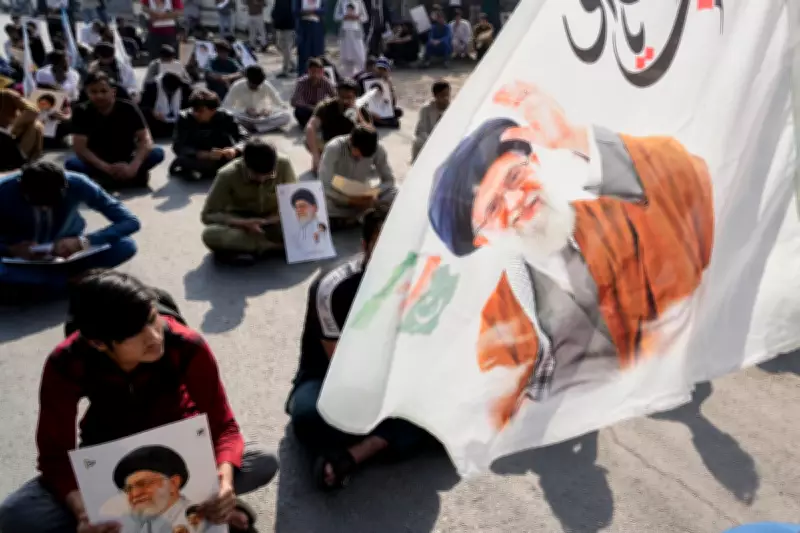
The killing of Iran's Supreme Leader, Ayatollah Ali Khamenei, in a joint US-Israeli strike has plunged the nation into a precarious power vacuum. While President Donald Trump heralds this as a historic opportunity for democracy, his administration's assumptions about Iran's future are dangerously simplistic, echoing the miscalculations that doomed Vladimir Putin's invasion of Ukraine.
A Blatantly Illegal Strike and Its Repercussions
The assassination of Khamenei, along with senior staff including the head of the Iranian Revolutionary Guard Corps (IRGC), is blatantly illegal under international law. Trump declared it the "single greatest chance for the Iranian people to take back their country," relying on intelligence from a circle of MAGA loyalists and evangelical Christian extremists who have uncritically backed Israel's far-right government. This mirrors Putin's reliance on sycophantic advisors who assured him Kyiv would fall swiftly, leading to a protracted war now in its fifth year.
Putin's condemnation of the strike as "cynical murder" rings hollow given his own failed attempts on Ukraine's leadership. His alliance with the late Ayatollah saw Iran supply Shahed drones that now torment both Ukraine and retaliatory strikes across the Arabian Gulf. The parallel is stark: both leaders, surrounded by yes-men, have launched aggressive actions based on distorted realities, with Trump potentially replicating Putin's disastrous outcomes.

The Fragmented Opposition and Regime Resilience
Trump's administration may assume the regime's decapitation will spark a democratic revolution, given widespread discontent. Opinion polls indicate only 40% of Iranians identify as Muslims, with 32% as Shi'a, reflecting deep-seated opposition to theocratic rule. Anti-government protests in January saw thousands killed, fueled by economic collapse and corruption in a country four times Germany's size. British-Iranian broadcaster Ramita Navai reported jubilation in Tehran streets after Khamenei's death was announced.
However, the regime has not fallen. Iran's economy remains 40% controlled by secret services under the IRGC, which continues to operate despite its leader's death. These structures are poised to fight fiercely to retain control, with no mass street movements currently challenging them. The assumption that Iranians uniformly desire the ayatollahs' end overlooks the complex, fragmented opposition poised to fill the void.
Centrifugal Forces and Competing Visions
Iran faces centrifugal forces from armed separatist groups, each with distinct agendas. In the southeast, the Baluch people seek freedom from Tehran, armed and known for ferocity. Iranian Kurds have formed a coalition including the Democratic Party of Iranian Kurdistan (PDKI) and the Kurdistan Free Life Party (PJAK), generations of whom have fought for independence, suffering repression under both the Shah and the Islamic Republic.
Reza Pahlavi, son of the deposed Shah, has emerged as a rallying point, with his flag borne in January's demonstrations. He condemns Kurdish moves as "separatist," undermining national unity, and proposes a three-year rule followed by a referendum on monarchy versus democracy, alongside ending support for terror groups and Iran's nuclear program. Kurds and Baluch constitute about 12% of the population, with military capacity to challenge the central government, alongside a small Arab minority in the south.
The MEK and Exiled Ambitions
Adding to the chaos is the Mujahedin al Khalq (MEK), also called the National Council of Resistance for Iran. Once a powerful part of the 1979 revolution, it fled to Iraq, fought for Saddam Hussein against Iran, and now exists as an armed cult based in Albania. Advocates like Rudy Giuliani, Trump's former personal attorney, support its announcement of a "government in exile" promising democracy.
None of these forces—separatists, monarchists, or exiled groups—can unilaterally lead Iran to freedom. They require elements of the regime to defect, a lesson learned from past revolutions where backing the wrong side proved terminal. Trump's magical thinking, akin to Putin's, risks underestimating this intricate landscape, potentially leading to prolonged conflict and instability.

As Ukraine gains the upper hand and NATO expands with Finland and Sweden, Russia faces sanctions and pariah status. Trump's assumptions about Iran could precipitate a similar quagmire, with the power vacuum inviting a bloody struggle among factions, rather than the democratic dawn he envisions.