Most people have an in-built preference for dialogue over conflict, and any sign of a US retreat from further attacks on Iran is generally seen as positive. However, even allowing for wishful thinking, the latest signals from Washington and Tehran suggest a significant retreat by the United States, potentially paving the way for what President Donald Trump might call a deal.
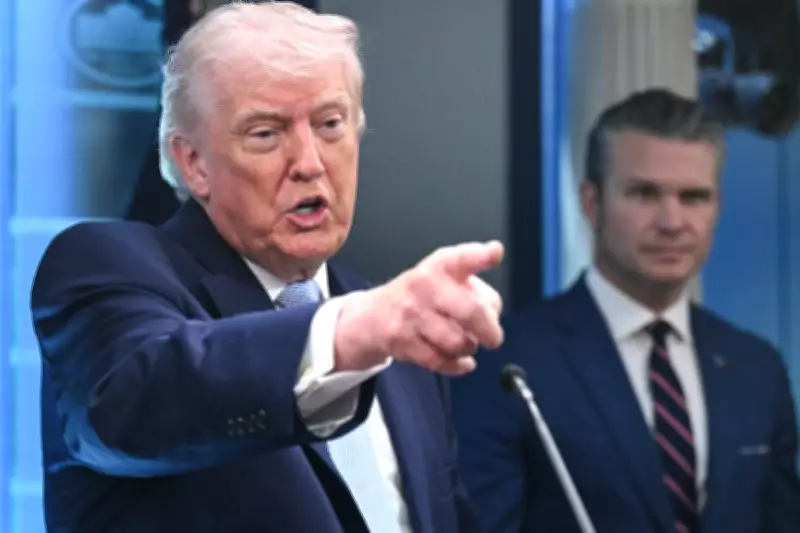
In recent days, two of Trump's closest aides, Defense Secretary Pete Hegseth and Secretary of State Marco Rubio, have indicated that the objectives of Operation Epic Fury have been achieved. After suspending what appeared to be a failed attempt to reopen the Strait of Hormuz, Trump himself hinted at a possible deal, citing "good progress" in talks with Iran.
Details of the Proposed Agreement
Evidence of this progress appears in a one-page, 14-point document reported by Axios. This memorandum of understanding is said to represent the latest US position and is under consideration by Iran. Iranian officials confirmed they are reviewing the proposals and will respond through a Pakistani mediator.

The contents of the document are surprising, as they omit several US demands previously considered non-negotiable when military operations began in February. The remaining requirements include Iran committing to limit uranium enrichment to 3.6 or 3.7 percent—far below military-grade levels—for a period of 10 to 30 years, and submitting to international inspections. In return, the US would lift sea blockades and progressively remove sanctions, including some dating back to Iran's Islamic revolution.
These terms closely resemble the 2015 Joint Comprehensive Plan of Action (JCPOA), the Iran nuclear agreement finalized under President Obama and backed by the United Nations. That agreement was abandoned by Trump in 2018, and without US support, it eventually collapsed.
What Is Not Included
Notably absent from the memorandum are demands to end all uranium enrichment, regime change in Iran, release of prisoners, restrictions on ballistic missiles, or cessation of support for proxies like Hezbollah and Hamas. Some argue that the assassination of many Iranian leaders could be seen as regime change, and US and Israeli strikes have degraded Iran's missile capabilities and proxy networks. However, even with the best interpretation from a US perspective, the terms represent a significant climbdown.
The proposed terms differ little from those reportedly on offer before the US broke off talks and initiated war. Despite Hegseth and Rubio declaring objectives achieved, it is difficult to view this as a US victory.
Challenges Ahead
An agreement is far from certain. Nothing is agreed until everything is agreed—a condition that has hindered many Middle East deals. Differences remain over the duration of nuclear commitments and the fate of Iran's enriched uranium stockpiles, though a third party (possibly Russia) has offered assistance. Iran may also be reluctant to forgo tolls from the Strait of Hormuz, needing funds for war reparations. However, these issues are typical of negotiations and could be resolved through compromise.
The bigger question is why the US has retreated so far. Did it misjudge Iran's capabilities, regime resilience, or determination? Or did it underestimate the impact on global economy and US consumers, especially with mid-term elections approaching? Another factor may be China: Trump postponed a landmark visit in March due to Iran, but it is rescheduled for May 14-17 and cannot be delayed again without loss of face. China has been advocating for an end to hostilities and engaging with Iran and Russia.
The 14-point memorandum has a 30-day deadline, allowing time for Trump's summit with Xi Jinping, which could herald a new era in US-China relations. If talks with Iran falter, this deadline may serve as an escape clause for Trump. Yet all signs indicate that senior US officials recognize that reshaping Iran through military means was an overambitious goal.