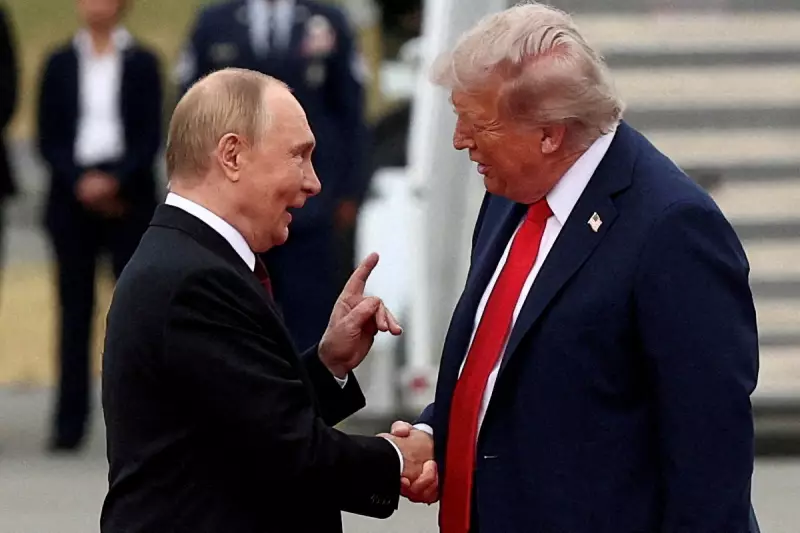
European leaders face a critical juncture as they gather at the G20 summit in Johannesburg, confronted by Donald Trump's demanding peace ultimatum for Ukraine that heavily favours Russian interests and American corporate profits.
The Controversial Peace Proposal
The 28-point plan, developed between Trump's Middle East envoy Steve Witkoff and Russian businessman Kirill Dmitriev, presents what critics describe as a surrender document for Ukraine. The proposal would grant Moscow control over pre-prepared defensive lines in Donetsk, Zaporizhzhia and Kherson provinces without military conflict.
In exchange, Ukraine would be required to halve its armed forces, abandon long-range weapons, permanently renounce NATO membership, and accept what amounts to Belarus-style vassal status under Kremlin domination. The agreement includes a particularly contentious provision allowing American companies to claim 50% of profits from a $100 billion reconstruction fund using frozen Russian assets.
This comes alongside a previously signed minerals deal giving American interests control over half the profits from Ukraine's untapped mineral resources. President Volodymyr Zelensky has been given until Thursday to accept these terms, though the consequences of refusal remain unspecified.
Questionable Diplomacy and Security Concerns
The negotiations have raised serious security alarms, with Witkoff reportedly using his personal mobile phone during discussions in Moscow and Tel Aviv, potentially exposing sensitive communications to intelligence agencies. More troublingly, Dmitriev remains under US Treasury sanctions, making business dealings with him illegal for American citizens.
The involvement of Jared Kushner, Trump's son-in-law, in these discussions has further complicated the diplomatic landscape. The same American team previously orchestrated the failed Gaza ceasefire agreement, which excluded Palestinian representation and proposed outsourcing Israeli occupation to foreign forces.
Witkoff's approach to diplomacy became apparent during a US cabinet session in August, where he lavished praise on Trump, suggesting the president deserved the Nobel Peace Prize more than previous recipients including Nelson Mandela and Mother Teresa.
Europe's Strategic Dilemma
A senior Western security official intimately involved in European and UK protection described the appropriate response to Trump's demands in blunt terms: "just tell him to f*** off". This sentiment reflects growing frustration with American leadership under Trump's administration.
The source emphasised that Europe, Canada, the UK and other allies are long overdue in establishing military and intelligence independence from the United States. This urgency stems from concerns that America's democratic institutions are collapsing, potentially transforming the nation into something resembling Putin's Russia within a year.
Estonia's former prime minister Kaja Kallas outlined an alternative approach, stating that any viable peace plan must have Ukrainian and European support. She noted that Russia had already rejected an unconditional ceasefire offer in March and accused Moscow of increasingly brazen state-sponsored terrorism in Europe.
As European leaders consider their response, some experts suggest that ignoring Trump's demands rather than directly confronting them might prove the most effective strategy, comparing the situation to managing a toddler's tantrum by withholding attention rather than engaging directly.