British Activists Detained in France Over Alleged Hate Speech and Planned Violence
Two British nationals who travelled to France to allegedly participate in a banned protest against migrants have been arrested and taken into custody on charges of 'inciting hatred.' The men, suspected of being hard-right activists, were broadcasting live videos when they were apprehended near the northern town of Calais on Sunday evening, according to the Pas-de-Calais prefecture.
Charges and Legal Action
The pair were placed in custody for inciting hatred and participating in a group with the aim of preparing violence, based on comments made on social media, as stated by the public prosecutor's office. This development occurs as French authorities have intensified actions against British activists who produce anti-migrant videos, following complaints from local groups about intimidation and harassment.
Heightened Security Measures
France's domestic security service, the General Directorate for Internal Security (DGSI), alongside numerous police officers, was mobilised to counter a planned 'D-Day style invasion' by British protesters demonstrating against small boat migrants on Saturday. Police imposed a comprehensive ban on gatherings between Calais and Dunkirk, threatening to arrest and deport anyone arriving from the UK. Initially set to lift at 8am on Monday, the ban has now been extended until Wednesday.

'While no large gatherings have been observed so far, several accounts have made posts this weekend indicating that the operation is continuing,' the prefectures noted in an overnight statement.
Protest Leader's Claims and Reality
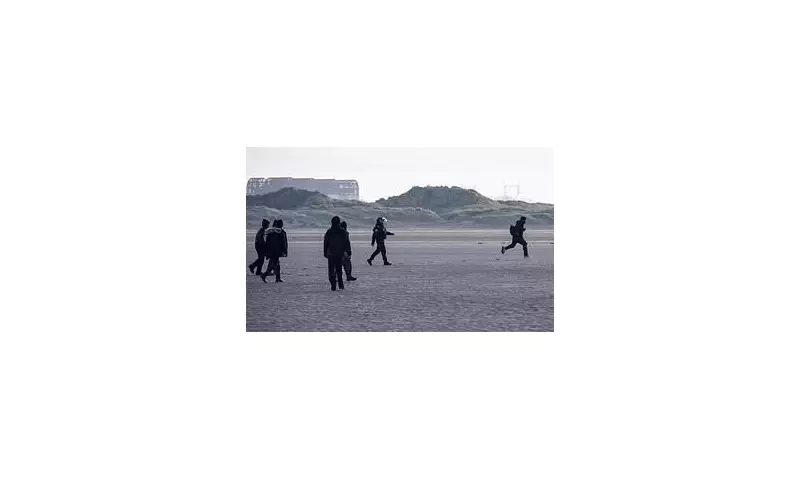
British protest leader Daniel Thomas, an ex-convict banned from France after harassing charity workers last month, appeared to have entered the country via Belgium. He claimed his self-styled 'Operation Overlord' would attract over 15,000 'proud Englishmen' to France to 'stop the boats.' However, only a fraction of his predicted volunteer army arrived, with around a dozen followers gathering on a beach to wave flags rather than engaging in more disruptive activities.
A simultaneous protest promoted by Thomas in Dover, which he claimed would 'bring it to a standstill,' turned out to be a small gathering in a pub followed by a march down a road. French authorities, alarmed by attention-seeking visits to beaches and migrant camps by Thomas and fellow 'right-wing patriots' late last year, which were then posted online, were not taking any risks.
Security Operations and Official Statements
In addition to large squads of Police Nationale officers and gendarmes, efforts to quell British protests around Calais included 'multiple members of the DGSI,' France's principal domestic security service, which operates similarly to MI5 in Britain. 'Plain-clothes DGSI officers were out in force along the northern coast, looking for British troublemakers,' a senior law and order source revealed.
Prefectures in the Nord and Pas-de-Calais areas issued orders prohibiting members of groups such as Raise the Colours (RTC) – from which Thomas split last week – from operating over the weekend, citing 'serious risks to public order.' A French official statement declared: 'British nationals belonging to these movements, who are checked by law enforcement, will be returned to the border as quickly as possible.'
The statement further described the group as adhering to 'a xenophobic and anti-immigration ideology that creates a clear risk of public disorder.' It emphasised that state services, particularly internal security forces, would be fully mobilised to protect migrants, often victims of exploitation by smuggling networks, and ensure the safety of everyone on the coast.
Local Reactions and Broader Implications
Thomas had grandiosely claimed he would rally 'thousands of British patriots' for a mission named after the 1944 D-Day operation, suggesting they would arrive by 'land, sea, and air.' By lunchtime on Saturday, he had only managed to post social media pictures of around a dozen men brandishing Union Jacks on a French beach, while claiming others had been stopped at the border.

Alain Boonefaes, deputy mayor of Gravelines, a hotspot for dinghy departures near Calais, commented: 'These men have no right to come and try to enforce order in France. They're British, and they should maintain public order in their own country, not in France. They have no right to come and intimidate and threaten anyone. They have no right to do this.'
This incident underscores the ongoing tensions surrounding migration issues across the Channel and highlights the proactive measures taken by French authorities to prevent disorder and protect vulnerable communities.