UK Government Urges Humanitarian Release of Jailed Hong Kong Campaigner Jimmy Lai
The United Kingdom is intensifying diplomatic efforts to secure the release of imprisoned Hong Kong democracy campaigner Jimmy Lai on humanitarian grounds. This comes as Downing Street staunchly defends Prime Minister Sir Keir Starmer's recent engagement with Chinese leader Xi Jinping, despite the harsh sentencing of the British national.
Severe Sentence Under Controversial Security Law
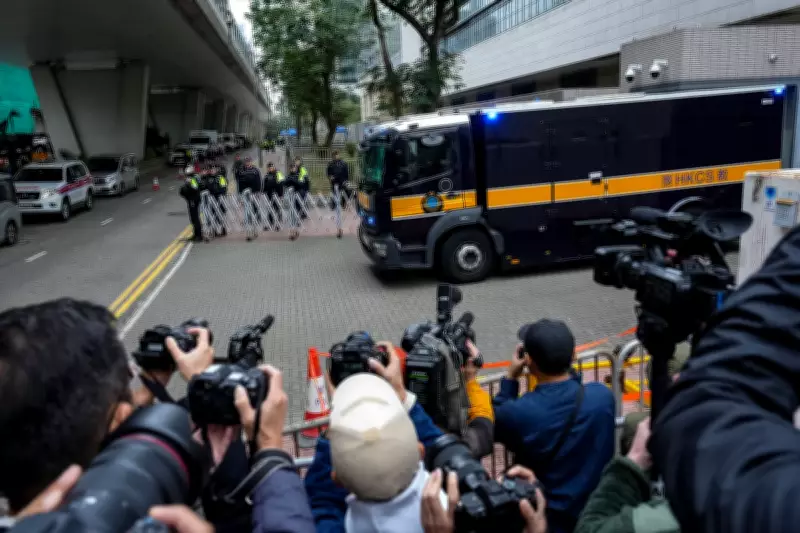
Jimmy Lai, a 78-year-old British citizen, was sentenced to 20 years in prison on Monday under China's National Security Law imposed on Hong Kong. Mr. Lai, founder of the now-defunct Apple Daily newspaper which frequently criticised both Hong Kong and Beijing governments, was originally arrested in August 2020. His sentencing has sparked international condemnation and renewed scrutiny of China's influence over Hong Kong's legal system.
Prime Minister Starmer raised Mr. Lai's case directly with President Xi Jinping during his diplomatic visit to China earlier last month. Downing Street has firmly rejected suggestions that this engagement has proven ineffective, arguing instead that maintaining open channels with Chinese leadership provides the strongest possible chance for a positive resolution.

Downing Street Defends Diplomatic Engagement Strategy
The Prime Minister's official spokesman forcefully countered criticism of the UK's approach, stating: "We condemn this politically motivated prosecution and will continue to raise this case at the highest levels of the Chinese government, as indeed the Prime Minister did directly." When questioned whether Mr. Lai's sentencing demonstrated the failure of engagement with China, the spokesman responded unequivocally: "I don't accept that."
The spokesman elaborated on the government's position, emphasising that "having a policy of not engaging at all with China is not a policy that benefits Britain or British citizens." He argued that direct diplomatic relationships enable the UK to advocate more effectively for its citizens rather than "just talking into a void," as had occurred in previous years before the recent diplomatic reset.
Political Figures Voice Strong Condemnation
Foreign Secretary Yvette Cooper issued a powerful statement calling on Hong Kong authorities to end what she described as Mr. Lai's "appalling ordeal." She emphasised that Mr. Lai had been "exercising his right to freedom of expression" and that Beijing's National Security Law was "imposed on Hong Kong to silence China's critics." Ms. Cooper expressed deep concern for the 78-year-old's health, noting that the lengthy sentence "is tantamount to a life sentence" for someone of his age.
The Inter-Parliamentary Alliance on China declared the sentencing "serves as irrefutable proof that Hong Kong's legal system answers to Beijing." Former Conservative leader Sir Iain Duncan-Smith characterised the verdict as "yet another sham sentence under Hong Kong's National Security Law: a political punishment for the simple act of standing up for freedom of the press and the rule of law."
Shadow foreign secretary Dame Priti Patel launched a scathing attack on the government's handling of the situation, accusing Prime Minister Starmer of being "spineless" and suggesting he had "kowtowed" to President Xi while failing to secure Mr. Lai's release.
Expanded Visa Route for Hong Kong Residents
In a related development, the Home Office announced a significant expansion of visa routes for Hong Kong residents. Adult children of British National (Overseas) status holders who were under 18 at the time of Hong Kong's 1997 handover to China will now be eligible to apply for UK visas independently of their parents. Their partners and children will also qualify under this expanded immigration pathway.
Government ministers estimate this policy change will enable approximately 26,000 additional people from Hong Kong to relocate to the United Kingdom over the next five years, reflecting ongoing concerns about political freedoms and human rights in the territory.