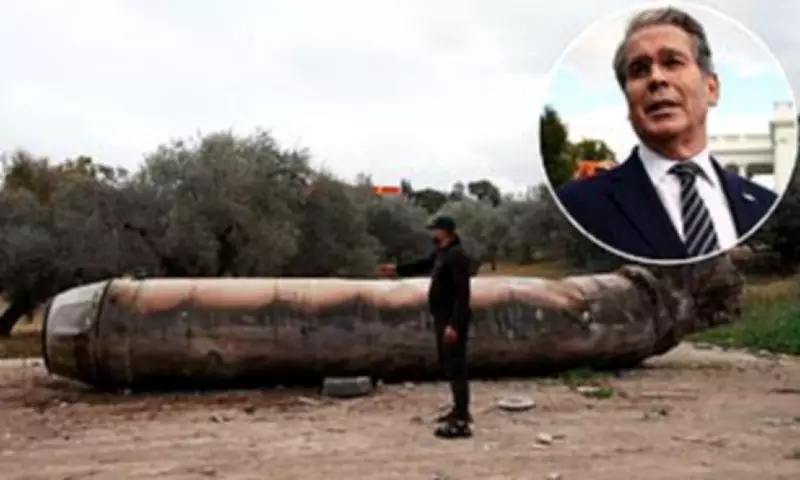
US Treasury Secretary Warns of Major Bombing Campaign Against Iran
Treasury Secretary Scott Bessent has issued a stark warning that the United States is preparing to unleash its "biggest bombing campaign yet" against Iran, with strikes expected to target the regime's missile factories and launchers. This announcement comes amid rapidly escalating tensions in the Middle East, which have intensified dramatically over the past week following a deadly joint US-Israel military operation.
Escalation Following Khamenei's Death
The current crisis began with a military operation that resulted in the death of Iran's Supreme Leader Ayatollah Ali Khamenei. In response, Tehran launched relentless retaliatory missile and drone attacks against US military bases across the Gulf region. Speaking to Fox Business on Friday, Bessent revealed that America is now gearing up for its most intense wave of strikes so far in the conflict against the Iranian regime.
"Tonight will be our biggest bombing campaign, and we'll do the most damage to the Iranian missile launchers, the factories that build the missiles, and we are substantially degrading them," the Treasury Secretary declared. He emphasized that Iran has failed to make significant headway on the military front against what he described as the US's "overwhelming" strikes, forcing the regime to pivot toward economic warfare instead.
Economic Warfare and Strait of Hormuz Threat
Bessent suggested that Iran could escalate the conflict further by targeting the world's critical energy lifeline, the Strait of Hormuz, in an attempt to disrupt global oil and gas flows. He cautioned that closing this vital waterway, which carries approximately 20 percent of the world's oil and gas, could wreak economic havoc and send energy prices soaring dramatically.
"When the conflict began, insurers dropped all the insurance for any vessels going in and out of the Strait of Hormuz or generally around the Gulf," Bessent explained. The rising tensions have made navigation through the strait increasingly dangerous, with private insurers initially refusing coverage or dramatically hiking premiums due to war-related risks.
US Response and Naval Protection
In response to these threats, President Donald Trump has ordered war-risk insurance for American ships in the Strait of Hormuz, ensuring US vessels and their cargoes remain protected against potential destruction. On Tuesday, Trump assured the US Navy that it could begin escorting oil tankers through the strait if necessary, according to Reuters reports.
The ongoing conflict has already driven oil prices higher, with Brent crude reaching $93.32 a barrel as of March 7, 2026. In a move to reassure shipping companies, the International Development Finance Corporation announced on Wednesday that it will offer up to $20 billion in insurance for vessels navigating the region.
Iranian Response and Military Capabilities
Iranian Revolutionary Guard Corps spokesperson Ali Mohammad Naini challenged Trump's plan to deploy naval vessels in the strait, warning that Iranian forces are "awaiting their presence." Naini referenced historical incidents, including the 1987 attack on the American supertanker Bridgeton, as cautionary examples.
Meanwhile, a classified report by the National Intelligence Council has concluded that even a large-scale US assault on Iran would be unlikely to topple the Islamic Republic's entrenched military and clerical leadership. According to The Washington Post, three sources familiar with the findings indicated that Iran would likely respond to Khamenei's death by following established protocols aimed at preserving the regime rather than allowing it to collapse.
Strategic Implications and Regional Power Dynamics
Iran possesses the largest and most varied missile arsenal in the Middle East, with thousands of ballistic and cruise missiles, some capable of striking targets as far as Israel and into eastern Europe. While the country has not tested missiles with sufficient range to strike the United States directly, it has spent years advancing missile accuracy and lethality, turning its growing arsenal into a potent means of projecting regional power.
Experts have expressed skepticism about Iran's willingness to submit to US demands. Holly Dagres, a senior fellow at the Washington Institute for Near East Policy, noted that bending the knee to Trump would go against "everything they stand for," while Suzanne Maloney, an Iran scholar at the Brookings Institution, agreed that no other force within Iran could confront the regime's remaining power structure.
The White House has maintained a firm position, claiming in a statement to The Washington Post that the Iranian regime is "being absolutely crushed" by the ongoing conflict. As tensions continue to mount, the international community watches closely, aware that any significant escalation could have profound implications for global energy markets and regional stability.