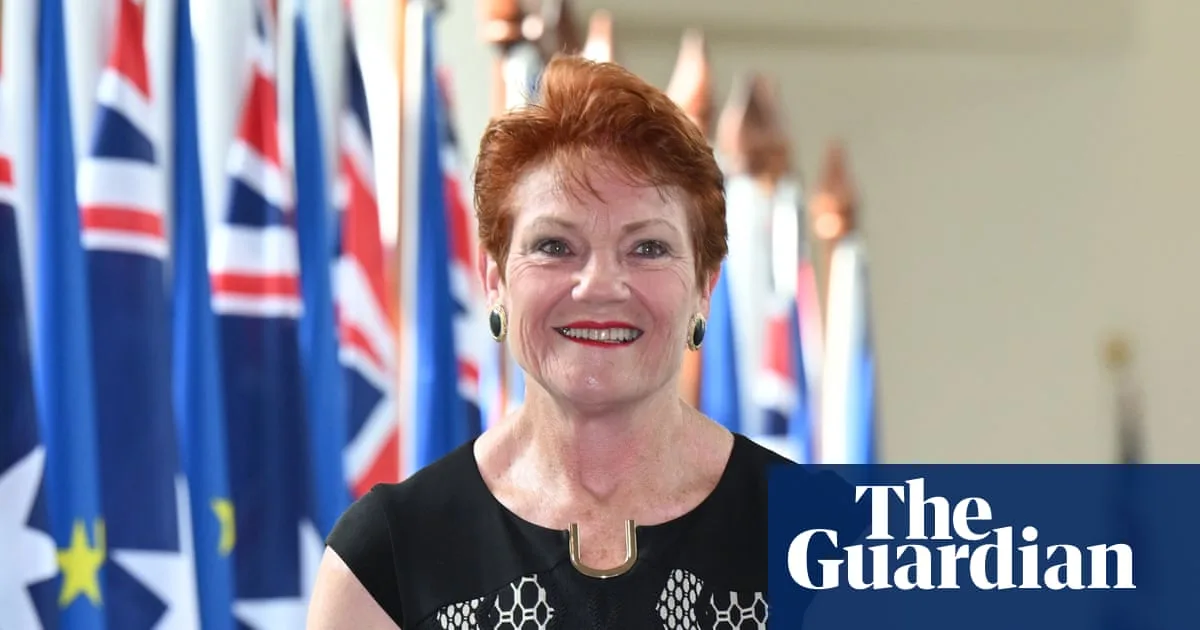
In a dramatic shift within the Australian political landscape, new polling data has identified Pauline Hanson as the nation's favourite leading politician. This development comes as traditional major party figures, including Prime Minister Anthony Albanese and Coalition leaders Sussan Ley and David Littleproud, experience significant declines in public favour.
One Nation's Remarkable Surge
A comprehensive new poll conducted by Redbridge for the Australian Financial Review has revealed startling changes in voter sentiment. Support for Hanson's One Nation party has climbed to 26 per cent, representing a substantial increase that positions the party as a major political force. Meanwhile, the combined support for the Liberal and National parties has collapsed from 26 per cent in December to just 19 per cent, highlighting a profound crisis within the traditional conservative alliance.
Coalition Crisis Deepens
The dramatic drop in Coalition popularity appears directly linked to ongoing internal conflicts and leadership instability. Liberal Party leader Sussan Ley recently issued a stark ultimatum to Nationals leader David Littleproud, warning that if the Nationals failed to rejoin their alliance by February 9th, the separation would become permanent. This public airing of grievances has further damaged the Coalition's standing with Australian voters.
Redbridge poll director Tony Barry offered a sobering assessment of the situation, stating: 'The problem for the Liberal and National parties is we still don't know where the bottom is for their vote and where One Nation's ceiling is. What we don't know yet is how much of One Nation's vote is protest or power. But if the Liberal and National parties keep accumulating scar tissue and don't change the story arc, it might be unsalvageable.'
Defections and Celebrations
The polling results have been celebrated by former Nationals member Barnaby Joyce, who left his party to join One Nation in December. Joyce expressed his enthusiasm for Hanson's success, telling the Sunday Telegraph: 'It's an incredible honour.' He further criticised his former colleagues, stating: 'One of the big problems that I have with the conceit of the Liberals and the Nationals is they say 'you're just a protest party, you're not a party of government'. You go, 'hang on, neither will you be if they don't vote for you'. Right now, the National Party is not a party of government.'
Personal Ratings Reveal Stark Contrasts
The polling data reveals dramatic shifts in personal popularity among Australia's political leaders:
- Pauline Hanson's personal rating improved dramatically from -19 in December to -3
- Prime Minister Anthony Albanese suffered an 11-point favourability loss, resulting in a net rating of -10
- Sussan Ley's personal net rating plummeted 12 points to -32
- David Littleproud maintained a net favourability rating of -14 as he faces a leadership challenge
Broader Political Landscape
While One Nation enjoys its surge, the broader political picture shows mixed fortunes for other parties. Labor's popularity rating remained relatively stable at 34 per cent of participants supporting the party. The Greens experienced a modest decline, falling 2 points to 11 per cent support.
In leadership preference terms, only nine per cent of voters backed Sussan Ley as preferred prime minister, representing a three-point drop. Anthony Albanese, while still leading this measure at 37 per cent, experienced a four-point decline in support.
Economic Factors and Future Prospects
The Liberal leader may find some opportunity to regain ground this week as the Reserve Bank of Australia is expected to raise interest rates. Strong commentary on Australia's ongoing inflation struggles and broader economic challenges could potentially deflect attention from leadership questions within her party.
David Littleproud faces immediate political challenges, with Queensland MP Colin Boyce preparing to mount a leadership challenge against him on Monday. This internal pressure compounds the Nationals' broader electoral difficulties.
The Redbridge survey, which provides this comprehensive snapshot of Australian political sentiment, interviewed 1,003 voters between January 22 and January 29. The results suggest a potentially transformative moment in Australian politics as traditional party alignments face unprecedented challenges from emerging political forces.