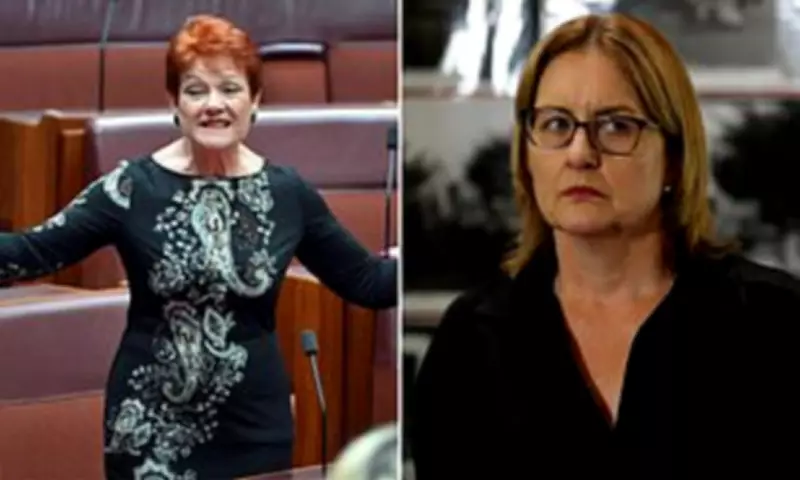
A dramatic new opinion poll has uncovered a seismic shift in Victoria's political landscape, with support for Pauline Hanson's One Nation party surging to unprecedented heights, potentially positioning it to hold the balance of power. The DemosAU/PremierNational survey indicates One Nation has soared to a 21 per cent primary vote, its highest ever recorded in the state, trailing Labor by a mere two points as the incumbent party slumps to 23 per cent.
Major Parties in Freefall as Voter Sentiment Shifts
This marks a monumental transformation in Victoria, a traditional Labor stronghold that has been under the party's control for over a decade since Dan Andrews was first elected premier in 2014. Victorians are flocking to One Nation in substantial numbers, driven by mounting frustration over spiralling crime rates, persistent cost-of-living pressures, a worsening housing affordability crisis, and deepening anxiety about the state's economic future.
The poll reveals support for both major parties is collapsing dramatically. The Coalition has plunged eight points since October to 29 per cent, while Labor has dropped another three points, placing both well below their 2022 election results. Labor is facing particular struggles, with its primary vote at 23 per cent, representing a staggering 13-point decline from its previous performance of 36 per cent.

Upper House Shake-Up and Electoral Implications
One Nation is preparing a major electoral push, planning to field candidates in every lower house seat at November's election, only the second time it has attempted such comprehensive coverage in the state. In the upper house, the survey, which polled 1,274 Victorians between February 1 and 10, shows one in five voters intends to give One Nation their first preference.
The Liberals lead with 28 per cent, followed closely by One Nation at 20 per cent, and Labor at 19 per cent. This result would fundamentally shake up the state's upper house, potentially forcing whichever party forms government to negotiate with One Nation to pass crucial legislation.
Despite the overall slump for major parties, the Coalition has widened its two-party-preferred lead to 53–47, putting it in its strongest position to form government since Ted Baillieu's victory in 2010. However, the Liberal Party faces a formidable political challenge, needing to win 16 seats to achieve a working majority.
Crime and Leadership Concerns Dominate Voter Priorities
Crime remains the top public concern, with 30 per cent of respondents naming it as their primary issue. Another 29 per cent nominate cost of living, while 12 per cent cite housing affordability. Opposition Leader Jess Wilson has strengthened her lead as preferred premier, commanding 40 per cent support compared with Premier Jacinta Allan's 31 per cent.
Wilson enjoys a net favourability rating of plus 3, while Allan has fallen to a concerning minus 37. These results spell significant trouble for Labor, which has maintained power in Victoria for more than ten consecutive years.
Labor's Decline Since Andrews' Departure
Dan Andrews cemented his authority in 2018 with the so-called 'Danslide', a landslide victory that turned the electoral map into a sea of red. Labor surged to as many as 60 seats in the 88-seat parliament, gaining up to 15, while the Liberal–National Coalition suffered a significant collapse. By 2022, Andrews delivered a third decisive win, despite sustained criticism from opponents, hostile media coverage, and ongoing anger over pandemic lockdowns.
The election was framed as a direct referendum on his leadership, yet Labor again prevailed with a projected 52 seats, securing another comfortable majority. However, since Andrews' resignation in September 2023, the Labor Party under Jacinta Allan has struggled to match his popularity, experiencing a sharp decline in opinion polls.
An internal Labor poll from February reportedly showed the party's net satisfaction rating at minus 20 among all voters, and minus 40 among people over 50. Ongoing scandals over the government's handling of CFMEU corruption on the state's 'Big Build' infrastructure projects, surging knife crime, and questions around the response to recent bushfires have all been blamed for the party's dramatic decline.