Trump's Election Strategy Raises Alarms Over Federal Interference
Recent actions by federal authorities, including the FBI's raid on Fulton County's election office and an investigation into Puerto Rico's voting machines, have intensified concerns about potential disruptions to the upcoming 2026 midterm elections. State election leaders are increasingly worried about the intent behind former President Donald Trump's moves, as he continues to push false claims about the 2020 election and advocates for nationalizing voting processes.
Federal Actions and Trump's Rhetoric
Following the FBI's seizure of election materials from Fulton County last month, Trump reiterated his baseless assertion that he won Georgia in 2020. In a recent podcast interview with Dan Bongino, Trump urged Republicans to "take over the voting" in at least 15 locations, suggesting a move toward federal control. This rhetoric coincides with revelations that Tulsi Gabbard, the Director of National Intelligence, led an investigation into Puerto Rico's voting machines in May, examining potential vulnerabilities in electronic systems.
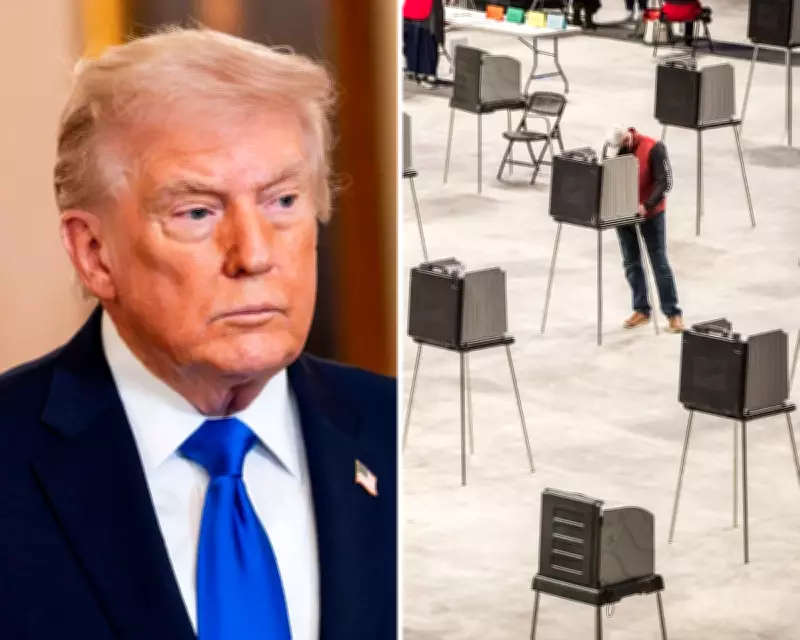
These developments point toward a scenario that Democratic voters have long feared: the federal government seizing voting machines across the country, which could severely disrupt the 2026 midterms. If digital voting machines were declared off-limits at the last minute, it would trigger emergency court hearings, leaving election directors scrambling to find alternative methods for printing and counting ballots. Early voting could plummet, Election Day operations might be curtailed, and results could be delayed for weeks.
Historical Context and Broader Efforts
Historically, midterm elections often disadvantage the party of a newly-elected president, a trend Trump has acknowledged. His administration's efforts to counteract this include directing Republican-controlled states to gerrymander congressional districts and backing challenges to voting rights laws through the Department of Justice's civil rights division. Bruce Spiva, senior vice-president of the Campaign Legal Center, argues that these actions are interconnected, noting that the FBI's seizures, Trump's calls for nationalization, and DOJ lawsuits for voter data are not coincidental.
State election leaders have expressed concerns particularly after an executive order in March, which aimed to decertify voting machines and allow DHS access to voter registration information. Although a federal judge blocked this order in October, citing state control over elections under the Constitution, other initiatives persist. Legislation to enact Trump's order has advanced in Congress, and justice department officials continue to press for voter data.
Investigation into Puerto Rico and Election Security
The investigation into Puerto Rico's voting machines, conducted by Gabbard's office, is seen as a significant step in a broader probe into election security and foreign interference. Puerto Rico, a U.S. territory without a vote in presidential races, began using electronic machines from Dominion Voting Systems in 2020, but technical issues plagued the primary elections. Software glitches led to incorrect vote totals, with some machines reporting zero votes for candidates. The territory ended its contract with Dominion in 2024, switching to a paper ballot system.
Gabbard, who has a history of promoting conspiracy theories and faced scrutiny for her ties to foreign leaders, was confirmed as Director of National Intelligence in February. Her office denies seeking evidence of a hack by Venezuela's government, a claim popular in right-wing circles. Instead, ODNI states it found "extremely concerning cyber security and operational deployment practices" in Puerto Rico's systems, highlighting vulnerabilities exposed at events like the Def Con Voting Machine Hacking Village.
Legal and Expert Perspectives
Experts worry that Gabbard's investigation is part of a larger effort to curtail digital voting machines, similar to Trump's blocked executive order. Under current law, Gabbard can investigate foreign interference within 45 days, but Puerto Rico had already addressed vulnerabilities by switching to paper ballots. In communications with Congress, Gabbard cited various statutes, including executive order 13848, which allows sanctions for foreign election interference.
Miles Taylor, former chief of staff at DHS, criticized the administration's justification, stating that the actions in Puerto Rico and Fulton County are unrelated to genuine foreign interference. Joohn Choe, a disinformation researcher, noted that amendments to laws could enable the blocking of voting machines without proof during investigations, potentially denying states access to certify results. However, former White House counsel Bob Bauer believes any attempt to use executive orders for such purposes would face immediate and successful legal challenges.
Conclusion
As the 2026 midterms approach, the combination of Trump's rhetoric, federal investigations, and legal maneuvers creates a volatile environment for election integrity. While experts doubt the success of any large-scale seizure of voting machines, the ongoing actions underscore deep concerns about authoritarian overreach and the potential for significant disruption to democratic processes.