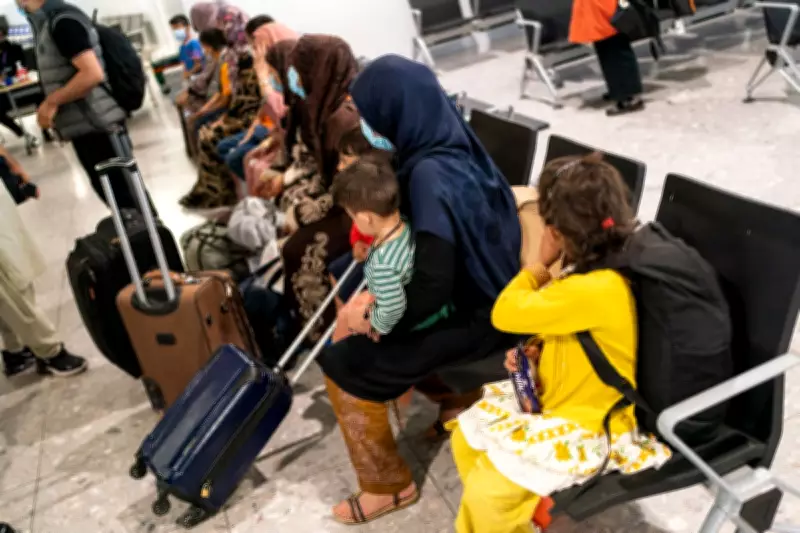
Thousands of Afghans Remain in Uncertainty Over UK Sanctuary Five Years After Kabul Fall
The UK government is facing severe challenges in its efforts to relocate Afghan families to safety, with tens of thousands still awaiting decisions on their futures. A damning report from the National Audit Office (NAO) has issued a stark warning that without urgent intervention, the target of completing Afghan resettlement by March 2029 will not be met.
Resettlement Schemes Struggle Amid Mounting Backlogs and Funding Concerns
By the end of 2025, official figures show that 37,950 individuals had arrived in the UK under various Afghan resettlement initiatives. Nearly half of these were evacuated in 2021 following the Taliban takeover of Kabul. However, a staggering 29,655 people remain in limbo, uncertain whether they will be granted sanctuary in Britain.
The combined cost of these schemes is projected to reach £5.7 billion, with £3.1 billion already spent and a further £2.6 billion allocated through 2033. The schemes closed to new applicants in July 2025, shortly before revelations emerged about a significant Ministry of Defence data breach that compromised applicant details and endangered thousands of lives.
Systemic Failures and Operational Hurdles Impede Progress
The NAO report highlights multiple critical issues hampering the Afghan Resettlement Programme:
- Insufficient resources to process thousands of complex cases efficiently
- Deportation of Afghans from Pakistan before they can be transferred to the UK
- Severe housing shortages in Britain leading to higher-than-expected homelessness rates among arrivals
- Departmental coordination problems exacerbated by a Ministry of Defence superinjunction that restricted information sharing
Officials estimate that approximately 9,741 additional individuals currently in the resettlement system will be relocated to the UK by 2029, but this falls short of the government's comprehensive relocation commitment.
Government Response and Parliamentary Scrutiny
Gareth Davies, head of the NAO, acknowledged that government departments had worked together in challenging conditions to resettle thousands of at-risk Afghan citizens but emphasized that more must be done to successfully complete the program.
Sir Geoffrey Clifton-Brown, chairman of the Commons Public Accounts Committee, criticized the government's handling, stating the NAO report provided much-needed transparency on costly figures, chaotic arrangements, and inefficient decisions. He noted that while merging schemes into the Afghan Resettlement Programme showed some progress, significant risks persist, including poor data management and inadequate affordable housing.
A government spokesperson defended the program, highlighting that approximately 38,000 Afghans have already been settled and reaffirming commitment to the 2029 target. The spokesperson pointed to recent improvements including new performance indicators, better case handling times, and an online eligibility self-checker for applicants.
Human Impact and Ongoing Challenges
The difficulties extend beyond bureaucratic hurdles to profound human consequences. Reports document Afghan families struggling to find suitable housing despite substantial council funding allocations. One former Afghan special forces soldier described his ongoing battle to secure appropriate accommodation for his family, illustrating the program's real-world shortcomings.
The Ministry of Defence data breach, covered by a nearly two-year superinjunction, not only endangered applicants but also hindered cross-departmental cooperation essential for effective resettlement. This breach represents one of several systemic failures that continue to jeopardize the safety and wellbeing of vulnerable Afghans who supported UK forces during the conflict.