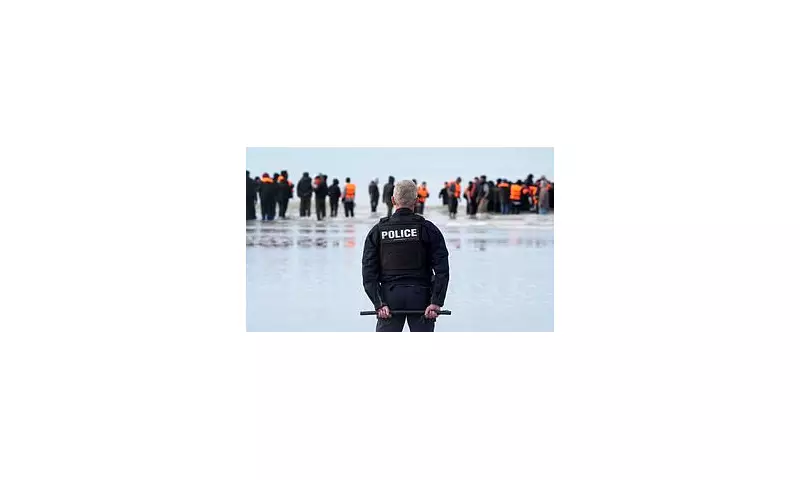
French Human Rights Advisor Demands Halt to 'Disproportionate' Police Tactics Against Channel Migrants
France's leading human rights advisor has issued a stark warning that police must immediately stop using rubber bullets and tear gas to prevent migrants attempting small-boat crossings to Britain. Claire Hédon, the influential Defender of Rights, stated in an official report that tactics deployed on the beaches of Calais and Normandy are 'disproportionate' and endanger the thousands of young men seeking to reach the UK.
Watchdog Calls for Radical Change in Police Approach
In her comprehensive 18-page report, Ms Hédon wrote: 'The objective of preventing departures is understandable given the danger of the crossing, and law enforcement plays a protective role, but this cannot be done at any cost. The use of intermediate force weapons endangers people.' The 56-year-old advisor specifically demanded that the use of 'flash ball' guns firing rubber bullets and riot-control tear gas should be 'excluded...when the sole purpose of the security forces is to prevent people from boarding a boat.'
Ms Hédon further called for 'an intervention doctrine' to ensure stricter control over how police treat migrants, including a mandatory requirement for officers to always activate their body-worn cameras during operations. As France's security forces watchdog, her recommendations carry significant weight and are frequently implemented by the country's notoriously risk-averse government.

Political Backlash and UK Agreement Concerns
The recommendations have sparked immediate political controversy, with UK Shadow Home Secretary Chris Philp branding them 'crazy' and warning they would create 'a green light for people smugglers and illegal migrants.' He expressed serious concerns that if the French government adopts these measures, it would 'make the UK Government's agreement with France completely meaningless' and lead to even greater numbers of Channel crossings.
Philp added that the situation fuels Conservative arguments that Britain must withdraw from the European Convention on Human Rights to enable faster deportations. This comes amid growing tensions over the UK's £500 million agreement with France, signed in March 2023, to strengthen border patrols and increase interventions against sea crossings.
Escalating Police Measures and Migrant Confrontations
French police have significantly escalated their tactics in recent months, including:
- Using knives to slash inflatable boats and scupper planned crossings
- Employing pepper spray, tear gas and rubber bullets against migrants
- Making their first interception at sea last week by boarding a small boat off Calais
Specific incidents detailed in the report reveal the intensity of confrontations. On April 26, 2024, police fired 10 rubber bullets and used 37 tear gas grenades near Gravelines against migrants throwing rocks and projectiles. Earlier that month, officers prevented a boat departure near Calais using 14 tear gas grenades, one stun grenade and eight rubber bullet rounds.
Charity Reports and Mounting Casualties
Charity organizations have documented increasing violence, with Utopia 56 reporting 40 complaints about police violence since 2022. Amélie Moyart from the charity stated: 'There were 78 deaths related to crossing attempts in 2024, and we link this to the police presence on the beaches, where they use tear gas indiscriminately and from a distance.'
The charity provides food, shelter and legal support to migrants before they attempt Channel crossings from France. Meanwhile, up to 42,000 migrants crossed the Channel in small boats organized by people smugglers last year, with most subsequently claiming asylum in the UK.
Government sources indicate French ministers fear potential lawsuits and prosecutions of officers if they fail to follow Ms Hédon's advice. The UK Home Office has declined to comment on the developing situation, which threatens to undermine cross-Channel cooperation on migration control.